The Kingmaker Without a King: in The Philippines Marcos Confirms He Will Anoint a Successor, but the Bench Behind Him Is Alarmingly Thin

Ferdinand Marcos Jr. has just under three years left in the only presidential term the Philippine constitution will allow him, and on Friday, at an event with foreign journalists in Manila, he confirmed for the first time what everyone assumed but he had never said aloud: when the 2028 election comes, he will endorse a successor.
He was equally clear that he does not yet know who it will be. “You have to see how things really shape up. I haven’t sat down with anyone and said, ‘do you want to run for president or not?'” he said. “The time will come. We will certainly provide the best candidate for the betterment of lives of the people.” It was, in the polished non-answer of a leader buying time, a revealing admission. The most powerful man in the country intends to play kingmaker, and does not yet have a king.
That vacancy is the single most important fact in Philippine politics today, because the constitution guarantees an open seat and Marcos’s own camp has no obvious heir to fill it. Filipino presidents serve one six-year term and cannot run again, which means the machinery Marcos built to win in 2022 will, in 2028, be handed to someone else or lose the presidency. And the person currently best positioned to seize that open seat is not his ally. It is his enemy.
The enemy is Sara Duterte, his own vice president, and the story of how she got there is the story of the most spectacular political divorce in recent Philippine history. In 2022 the two ran as a “UniTeam,” fusing the country’s two great dynastic brands, the Marcos name and the Duterte machine, into an almost unstoppable ticket that swept Marcos into Malacañang.
The alliance did not survive the first years of the term. It collapsed into open warfare, congressional investigators began probing the vice president’s use of public funds, and the rupture went nuclear on two fronts. First, Marcos’s government handed her father, former president Rodrigo Duterte, to the International Criminal Court in The Hague to face murder charges over the thousands of killings in his war on drugs. Second, Sara Duterte now faces a Senate impeachment trial, which began on July 6, on accusations of financial irregularities, amassing unexplained wealth, and threatening Marcos’s life, all of which she denies. If she is convicted, she faces a lifetime ban from politics.
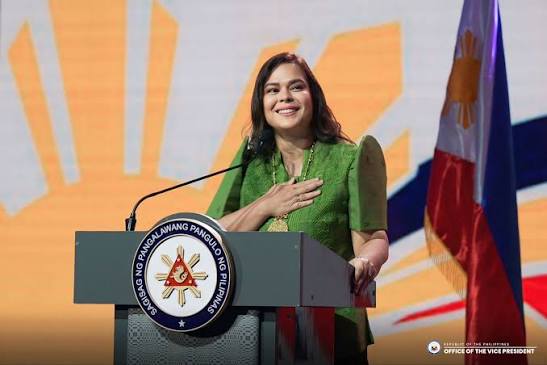
And yet, despite all of it, she leads. This is the paradox Marcos must solve. Poll after poll through 2026 has shown Duterte as the clear early front-runner for 2028: a WR Numero survey found 36 percent of Filipinos would back her if the election were held now, a lead of some 17 points over her nearest rival. That strength does not come from a governing record; it comes from a hardened core of Duterte loyalists, a wave of sympathy over her father’s detention at The Hague, and, crucially, the absence of any credible alternative. She announced her candidacy in February, apologizing for having helped Marcos win in 2022 and blaming his administration for inflation, a failing health system and corruption, and offering, in her words, her “life, strength and future” to the nation. She is running not merely to succeed Marcos but to repudiate him.
Which is why the impeachment trial is best understood as more than a legal proceeding. It is the hinge of the entire succession. A conviction would not just remove Duterte from the vice presidency; it would bar her from politics for life and vaporize the front-runner for 2028 at a stroke, transforming the race overnight. An acquittal, or a trial that drags out and is seen as persecution, would hand her the most powerful narrative in Philippine populism: the martyr, the dynasty wronged by a vengeful establishment, her father in a foreign cell and herself in the dock. Marcos’s allies are prosecuting the case, and the outcome will shape the field far more decisively than any endorsement Marcos eventually makes. He is, in effect, trying to clear the strongest rival from the board through the Senate while he searches for a champion of his own.
The trouble is the thinness of his bench. When the field is scanned for names other than Duterte’s, the alternatives are thin and none is his. Senator Raffy Tulfo, a tough-talking former broadcaster with a devoted mass following built on televised public-service populism, polls second, but he is his own political brand, not a Marcos protégé. Leni Robredo, the former vice president and standard-bearer of the liberal opposition, retains a loyal base but has repeatedly fallen short at the national level and sits well behind. The Marcos camp itself has floated no successor with anything close to national traction, no vice-presidential heir, no breakout cabinet star, no family member positioned to run. This is the deeper meaning of Marcos’s “the time will come.” He is not being coy so much as waiting, because he does not yet have anyone to name, and naming a weak candidate too early would only expose that weakness.
Behind the personalities sits a genuine question of foreign policy, which is why the world watches a Philippine succession that might otherwise seem parochial. Marcos reversed his predecessor’s foreign policy, pulling the Philippines back toward Washington and taking a harder, more multilateral line against Beijing’s expansion in the South China Sea, even as he now seeks a modest reset to ease the worst tensions. A Duterte restoration could reverse the reversal. Analysts have warned that a Sara Duterte government might turn this major US ally back toward Beijing, echoing her father’s 2016 to 2022 pivot away from Washington.
The succession is therefore not only about two dynasties settling a feud; it is about whether the Philippines remains anchored to the American alliance in the most contested waters in Asia, or drifts back toward China. Whoever Marcos ultimately endorses will be, among other things, a vote for the continuity of that realignment.
So where does this leave the race, cleanly stated. Sara Duterte is today’s front-runner, but hers is the most conditional front-running position imaginable, one Senate vote away from disqualification. Marcos is the kingmaker by constitutional default, armed with the powers of incumbency and a friendly Congress, but without a candidate and without an obvious one to recruit. The impeachment trial is the variable that dwarfs all others: its verdict will either remove the favorite or forge a martyr. And the clock that matters is not the 2028 ballot but the Senate calendar, because the succession may be decided less by who Filipinos want than by whether the woman they currently prefer is still permitted to run. Marcos has confirmed he will crown a successor. The far larger question, for now, is whether he can first ensure there is a throne worth inheriting, and a rival cleared from the path to it.
By I. Constantin