The Youngest Ever, and One of the Most Effective: Karoline Leavitt Steps Down, and the Question of What Comes Next

At 28, she rewrote the job of White House press secretary and became one of the most recognizable faces of Trump’s second term. Her departure at the end of August closes a remarkable chapter, and opens an even more intriguing one.
When Donald Trump announced on Wednesday that Karoline Leavitt would step down as White House press secretary at the end of August, he reached for a superlative that, in her case, was more than the usual courtesy. She has been, he wrote, “one of the best White House press secretaries in the history of the office.” Coming from a president who cycled through four press secretaries in his first term alone, it was a notable verdict on a woman who is still only 28 years old.
Leavitt is leaving, by her own account and the president’s, to spend more time with her family after the birth of her second child in May. But the story of her tenure is not a footnote to her departure. It is the reason the departure is news at all.
Leavitt made history the moment she took the job. Sworn in when Trump returned to office in January 2025, she became, at 27, the youngest White House press secretary in American history, a distinction no successor is likely to take from her soon. What she did with the role is what set her apart.
She turned the daily briefing, an institution that had grown sporadic and sometimes adversarial under previous administrations, back into a central instrument of the presidency. She was, by every account across the political spectrum, a disciplined and combative presence at the lectern: quick, fluent, unshakeably on message, and willing to confront the press corps directly over what she characterized as bias in its coverage. Supporters saw a communicator of rare poise for her age; critics saw an unflinching defender of the administration’s most contested positions. Both were describing the same quality, an effectiveness that made her one of the defining faces of Trump’s second term.
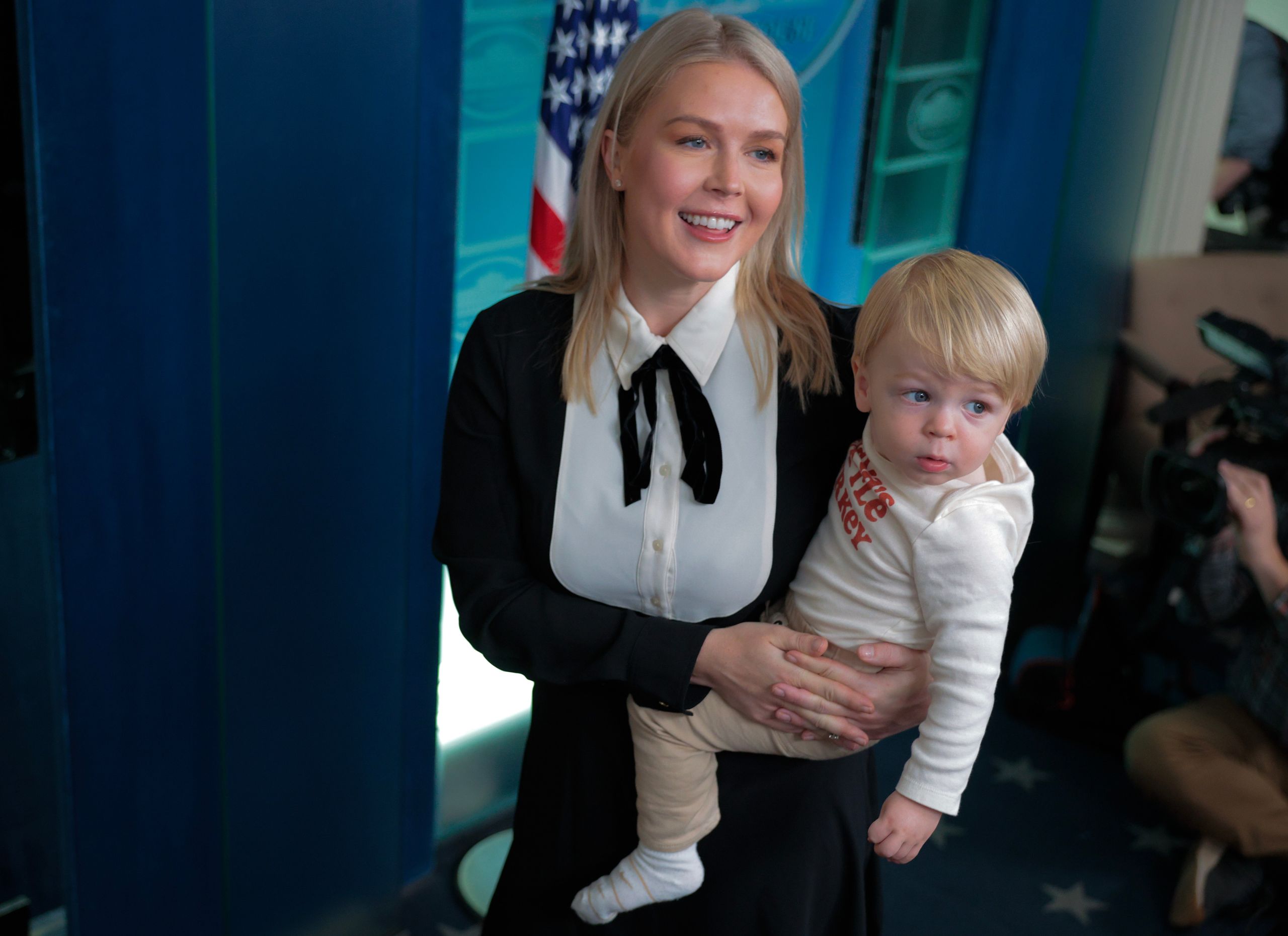
Her command of the format was hard won. Leavitt’s rise through Trump world was neither accidental nor gilded. The daughter of a New Hampshire family that ran an ice cream stand and a used-truck dealership, she began as an intern in the White House Office of Presidential Correspondence during Trump’s first term, worked her way up to assistant press secretary, stayed loyal after his 2020 defeat, mounted her own run for Congress in New Hampshire, worked for his super PAC, and became national press secretary for his 2024 campaign. There is a detail from that campaign that captures the intensity she brought to the job: after giving birth to her first child, she returned to work just four days into her maternity leave, in the aftermath of the July 2024 assassination attempt on Trump in Butler, Pennsylvania.
Leavitt’s departure did not come out of a vacuum, and it is worth being precise about what it is and is not. It is not, on the available evidence, a firing or a scandal-driven exit. It follows her return from maternity leave, and both she and the president framed it around family. That framing is credible: the demands of the podium are relentless, and she is a young parent of two very small children.
At the same time, the move reshapes Trump’s communications operation at a delicate moment, with the November midterm elections less than three months away, and it comes during a broader period of turnover in the administration. During her recent leave, the White House chose not to name an interim press secretary, instead rotating senior officials, Vice President JD Vance, Secretary of State Marco Rubio and Treasury Secretary Scott Bessent, through the briefing room, with mixed results. As of her announcement, it was not yet clear even to some White House staff who would replace her, an indication of how closely the role had become identified with Leavitt herself.
Here is what makes Leavitt’s exit more interesting than most Washington departures: at 28, with the highest-visibility communications job in American politics already behind her, her career is not winding down. It is arguably just beginning. Trump himself signaled the first step, announcing that Leavitt will become “one of my top outside advisors” and “an influential voice within the Republican Party” as the GOP fights to hold Congress in November. Leavitt confirmed the role in her own words, pledging to remain “a vocal advocate for MAGA and the Republican Party.”
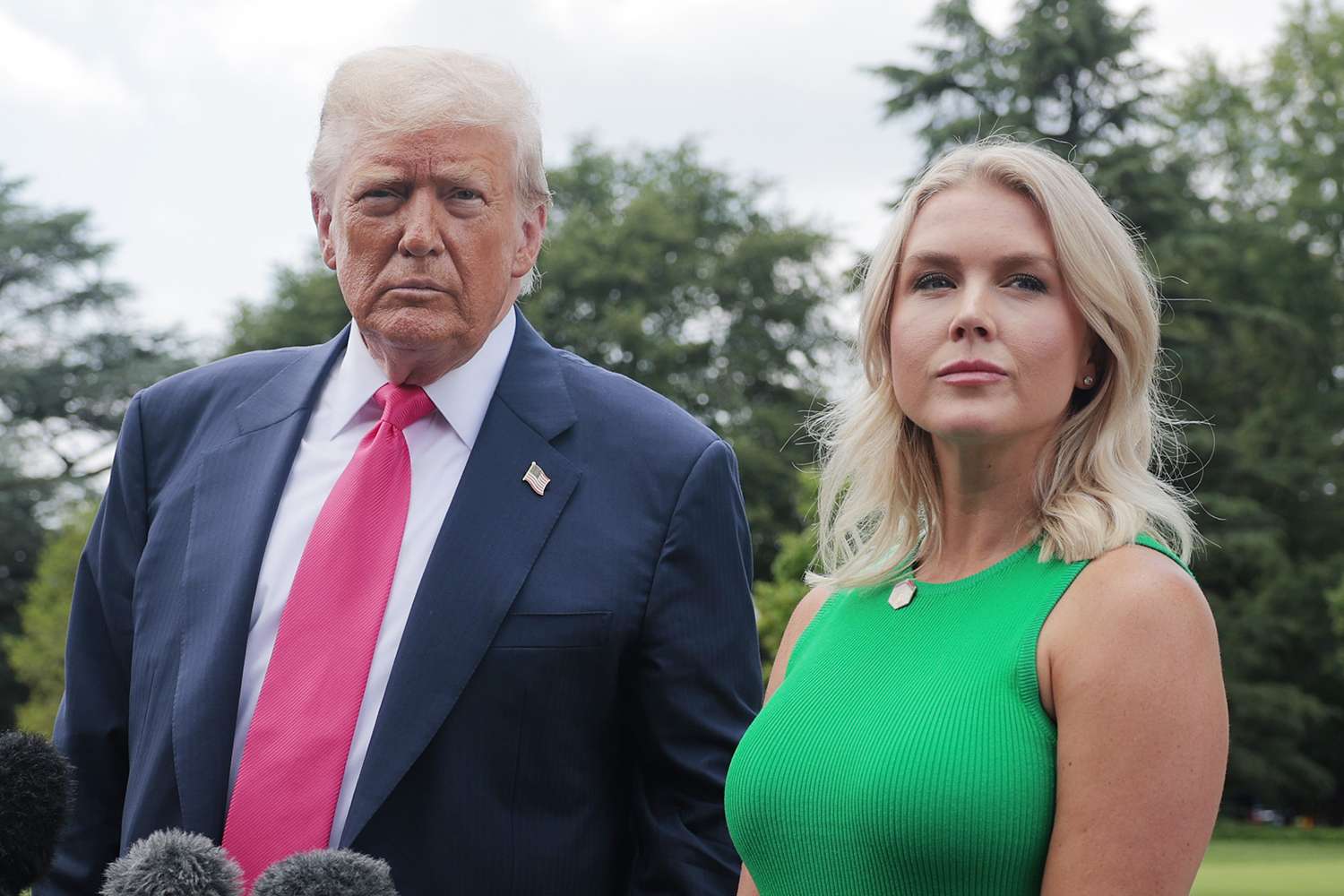
That positioning is the clearest near-term forecast. Freed from the institutional constraints of a government podium, she can campaign, fundraise and message across the midterm map in a way a sitting press secretary cannot, becoming a traveling surrogate and a fixture on friendly media. It is a role that keeps her in the movement’s front rank while giving her back the family time she cited.
Beyond the midterms, the range of plausible futures is unusually wide. A senior communications or strategy post on a future national campaign is an obvious fit, as is a prominent perch in conservative media, an arena where her fluency and name recognition would command a large audience and a large salary. Nor should elected office be dismissed. She has run before, in New Hampshire, and a young, nationally known figure with a proven ability to command a camera is exactly the profile parties recruit for statewide races. New Hampshire’s future Senate and gubernatorial contests will not lack for observers wondering whether Leavitt’s next campaign is her own.
The most speculative, and most tantalizing, possibility is the longest-term one. American politics has a habit of turning telegenic young communicators into candidates in their own right, and Leavitt will still be in her thirties for the entire next decade of presidential cycles. It is far too early to write that story. But it is not too early to notice that very few people leave the West Wing at 28 with this much political capital and this much runway ahead of them.
For now, the immediate reality is a briefing room without its most identifiable voice in a generation, and a president publicly reluctant to let her go. “Please don’t leave us, Karoline,” Trump said at a White House event, half in jest, after the news broke. The line was lighthearted, but it captured something real about how central she had become to the operation.
Karoline Leavitt leaves the podium as the youngest person ever to stand behind it, and one of the most effective by the estimation of the man she served. She departs on her own terms, for her own family, with the president’s endorsement and a standing invitation back into his inner circle. Whatever comes next, the safest forecast is the simplest one: at 28, the country has almost certainly not heard the last of her.
Sources: CNBC, CNN, NBC News, NPR, Axios and Al Jazeera reporting (August 12, 2026); Donald Trump and Karoline Leavitt posts on Truth Social and X; biographical background via public record.
By I. Constantin