Scroll Top

Ukraine benefits from the turbo-unification between the Republic of Moldova and Romania

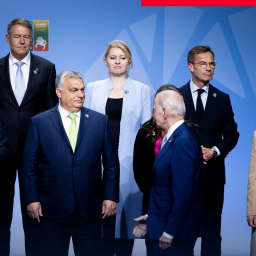
The proposed unification of the Republic of Moldova with Romania, often claimed by European leaders, is a bypass of the Copenhagen Criteria, which govern a state’s accession to the European Union. The pro-European administration in Chisinau is not able to meet the accession requirements, and then another solution is preferred, that of union with Romania. But who is so quick with this union? Ukraine would be the main beneficiary because, through all its actions with drones under a false flag shows that it intends to drag one of the states along with itself into the conflict with Russia. Moreover, the European powers, which are arming themselves to the teeth, need a conflict in the east, not one in which their armies participate, and it is increasingly clear that they want a new Cold War.
European leaders and the autocracy of Brussels want the unification of the Republic of Moldova with Romania, more than Romanians on both sides of the Prut, a river that separates two Romanian entities, separated first by the Peace of Bucharest in 1812, when the Ottoman Empire ceded to the Eastern Moldavian Empire, and in 1940, following the Ribbentrop Pact, known as the Hitler-Stalin Agreement, which was part of the the same land was ceded to the Soviet Union in order not to return.
Over 70 years of Russian domination in the Republic of Moldova have left ethnic, demographic, and spiritual marks. Romanians prefer to call it Bessarabia, after the name of a ruler from Wallachia. Moreover, by joining Transnistria to the Socialist Republic of Moldova, as the Soviets did – considered the Gordian knot – the Russian-ethnic population is the majority in many territories.

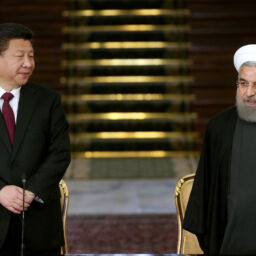
Bucharest and Chisinau missed the moment of union in 1991, when the Soviet Union broke up. It could have been given up on the enclave much more easily. In fact, in 1992 the Moldovan-Transnistrian war began, a conflict that remains frozen today. Moscow does not give autonomy to the country. The Russians intervened in support of Transnistria, but they never recognized it as an independent state. Around 1,500 Russian troops remained in Transnistria after the end of the conflict. On the territory of the separatist republic, there is a huge military arsenal, left over from the time of the USSR. Moscow keeps the administration of Tiraspol, self-proclaimed, in chess so that the territory is a thorn in the Moldovan body, a knot in the neck of union with Romania.
Bessarabia was annexed by the Tsarist Empire following the Peace Treaty of Bucharest in 1812, by which the Ottoman Empire ceded eastern Moldavia. The territory was transformed into a gubernia in 1828, at which time an intense policy of russification and assimilation of the population began, until the Union of 1918.
Transnistria, the counter-nature appendix of the Moldovan state body, has a self-proclaimed regime and an autonomy not recognized by Moscow either. Transnistria is, from the point of view of international law, an integral part of the Republic of Moldova. Self-proclaimed „Nistrian Moldavian Republic” in 1990, the region is not recognized by any UN member state. It has de facto its own institutions (constitution, army, currency), but it depends strongly on the support of the Russian Federation. But not state recognition.
In the case of a fast-forward union with Romania, the Transnistrian issue will have to be resolved by the Bucharest administration. Moreover, in the case of unification, the Hungarian minority, represented in the Parliament by the ethnic the Hungarian Democratic Union of Romania – UDMR party, will no longer be the largest, but will be surpassed by the Russian one. Few people know that Romanian parties use UDMR as the hinge to close government majorities. UDMR is loyal to the Romanian state.
There are other factors that put a stamp in front of the river of the will to unite, such as clues criminality in the Republic of Moldova, drug, prostitution and corruption sectors in the central and local public administration. 
The Republic of Moldova is led by the Party of Action and Solidarity (PAS) of Maia Sandu, the favorite of Western chancelleries. Although it has gained a majority in Parliament, after the last parliamentary elections, it is unable to maintain a stable regime in power. Recently, the prime minister resigned. A proucraine businessman is proposed to lead government hostilities.
The Ukrainian Security Service has several secret agents at the top of the power in Chisinau. They cause chaos, mistrust of the political class, and governmental instability. These three issues serve the Kiev administration, interested in attracting the surrounding states into the military conflict with Russia, especially in the situation of cooling relations with the former Warsaw-friendly government of Donald Tusk.
It is very suspicious that the leaders in Brussels hide the administrative incapacity of the Maia Sandu regime, which they protect only because they express a critical voice to Moscow, rather than encouraging the fast-forward union process, which we would frame in the pseudonym: turbo-unification.
By Marius Ghilezan

Related Posts