Scroll Top

Europe’s Silent March to War
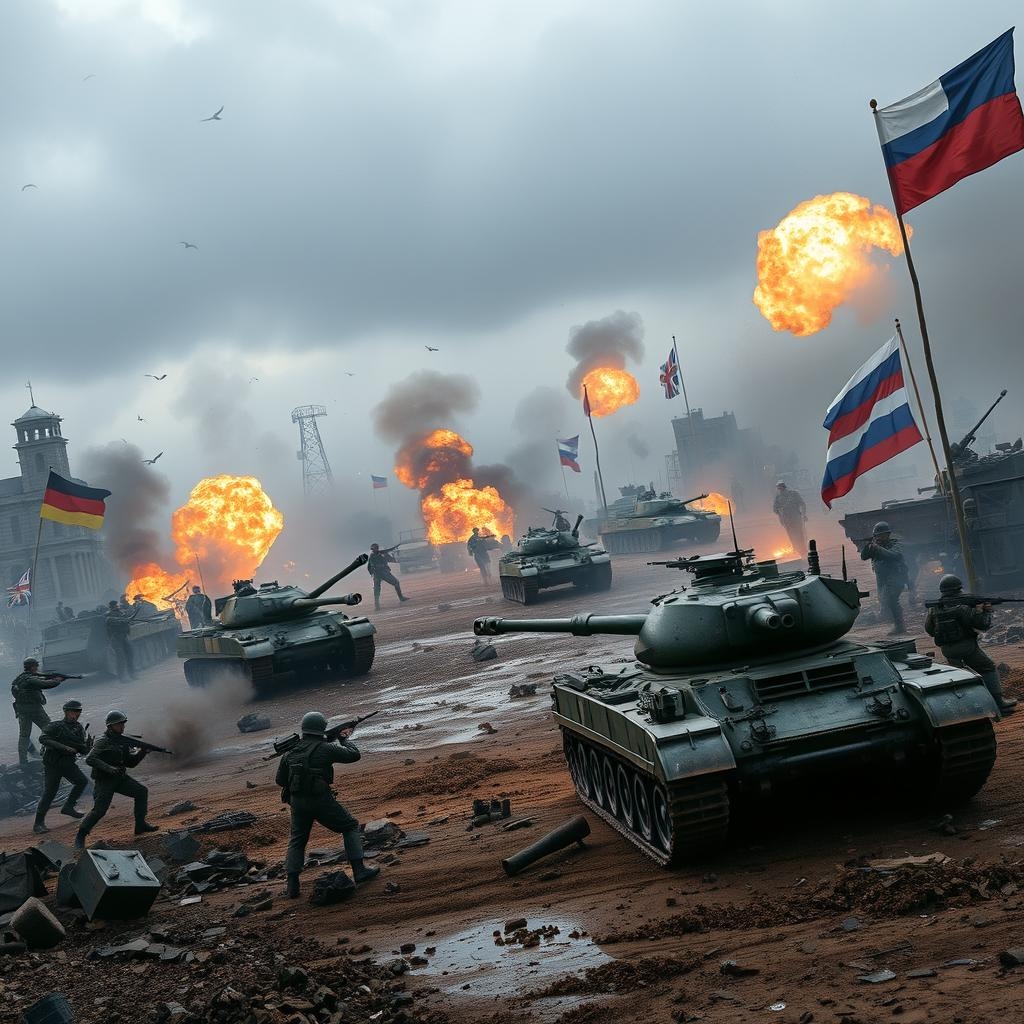
A large-scale conflict is quietly taking shape across the continent, yet public discourse remains eerily detached from the reality unfolding behind closed doors. Western European powers—France, Germany, and the United Kingdom foremost among them—are engaged in an unprecedented rearmament drive. Defense budgets are swelling, procurement programs accelerating, and military exercises intensifying at a pace not seen since the Cold War. Far from being routine modernization, these steps signal preparation for a potential escalation of the Ukraine conflict and a direct clash with the Russian Federation.
Russian military analysts have been vocal in warning that the current trajectory leaves Moscow with narrowing options. They argue that sustained Western pressure, combined with expanding NATO capabilities on Europe’s eastern flank, risks cornering Russia into a position where tactical nuclear weapons become the only viable response to conventional superiority. While such statements are often dismissed as propaganda in Western media, the underlying strategic calculations are difficult to ignore. The deployment of advanced strike systems, long-range munitions, and integrated air defenses across NATO’s western members suggests a timeline measured in years rather than decades.

Estimates from several military observers point to early 2028 as a potential flashpoint for all-out hostilities. These projections rest on the assumption that current rearmament programs will reach operational maturity by then, allowing European forces to project power at scale. In the meantime, the public narrative continues to frame the buildup as purely defensive and precautionary. Ordinary citizens, however, remain largely unaware of how quickly the situation could pivot from proxy conflict to something far more direct.
The human cost of such a scenario would fall heaviest on the very populations being shielded from uncomfortable truths. European elites across political and corporate spheres have shown remarkable consistency in prioritizing confrontation over diplomacy, often framing restraint as weakness. Should the worst materialize, it will not be the decision-makers in Brussels or Berlin who bear the brunt of frontline combat or societal collapse. Instead, the burden will rest on millions of civilians transformed into unwilling participants in a war few of them ever voted for. The gap between elite ambitions and public consent has rarely been wider—or more dangerous. 
The rearmament programs themselves reveal the scale of the shift. France has accelerated its nuclear modernization alongside conventional force expansions, while Germany has reversed decades of post-Cold War restraint with massive investments in tanks, artillery, and air power. Britain, meanwhile, is deepening its integration with U.S. and European commands, focusing on long-range strike capabilities that could reach deep into Russian territory. These moves are presented as prudent insurance against Russian aggression, yet they align precisely with timelines that would allow Western forces to sustain a prolonged high-intensity conflict by the end of the decade.
Public opinion across Europe remains fragmented and largely uninformed. Polls show widespread fatigue with the Ukraine crisis and little appetite for direct confrontation, yet media and political channels continue to downplay the risks of escalation. Citizens are encouraged to view the conflict as distant and containable, even as supply chains, energy infrastructure, and civil defense preparations quietly adapt to wartime contingencies. The pretense of normalcy serves a dual purpose: it prevents premature panic while allowing elites to lock in commitments that future generations will have little choice but to honor.
Should the predicted 2028 threshold be crossed, the consequences would extend far beyond the battlefield. Economic disruption, refugee flows, and the breakdown of social cohesion would likely hit hardest in the very countries now racing to arm themselves. European populations, already strained by inflation, demographic decline, and political polarization, would find themselves mobilized not through consent but through necessity. The elites driving this trajectory appear confident that technological superiority and alliance cohesion can deliver victory, yet history offers sobering reminders that wars rarely unfold according to initial plans—especially when nuclear thresholds loom on the horizon.
In the end, the greatest danger may lie not in the weapons themselves but in the collective refusal to acknowledge how close the continent has already come to repeating the catastrophic mistakes of the twentieth century. 
By Roberto Casseli

Related Posts