Is the political crisis in Bulgaria over?
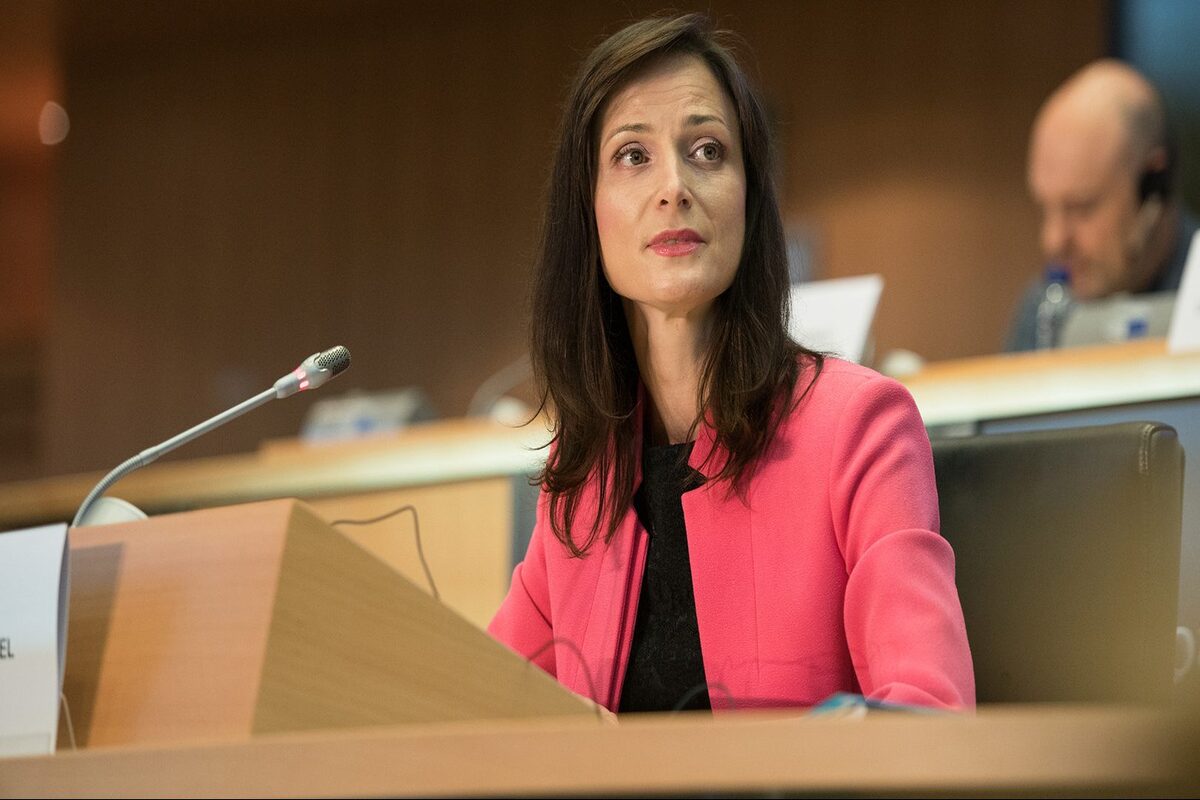
Mariya Gabriel, GERB’s European Commissioner for Innovation, Research, Culture, Education and Youth. Photo: European Parliament.
Is there an end to the government crisis in neighboring Bulgaria? Boyko Borissov, former prime minister for ten years and leader of the center-right GERB party, on Wednesday named European Commissioner Mariya Gabriel as his party’s candidate for prime minister. Thus, the rumors that persisted in Sofia in the last few days are confirmed. But the mission of the Commissioner for Innovation, Culture, Education, and Youth promises to be very complicated. Borissov’s announcement comes after the April 5 elections did not produce a clear winner. GERB, with 25 percent, was narrowly ahead of former Prime Minister Kiril Petkov’s reformist coalition, Democratic Bulgaria—We Continue Change. The announcement made in the parliament by Borissov was applauded only by the GERB MPs, writes EURACTIV, citing the Bulgarian daily Sega.

To be able to officially take over the investiture, Commissioner Gabriel needs the official approval of the executive in Brussels. However, she will have an extremely difficult task finding support from the other parliamentary forces to form a majority. Borissov promised 20 ministerial posts to other political parties that would support the government. The offer may seem generous, comments EURACTIV. But given the previous setbacks, which led to five rounds of snap elections, no sacrifice seems too great. Otherwise, the Bulgarians would face new elections in July. So Borissov, who has been accused of countless acts of corruption, has the opportunity to play the role of the man in charge. He stated that it would be a disaster for the country to enter August without an approved budget. Bulgaria must also move forward with justice reform and implement projects under the National Recovery and Resilience Plan. The problem is that Kiril Petkov’s reformist party says it will not ally with GERB, Borissov’s party, because of corruption allegations. Borissov’s most likely ally would be the Turkish minority’s Movement for Rights and Freedoms (DPS), but the two parties together do not have enough seats to form a majority. Vazrajdane, a pro-Russian party, could be tempted to join a governing coalition. According to Bulgarian political scientist Dimitar Bechev, anti-corruption parties have no choice but to accept the nomination to save appearances in front of Bulgarians who are desperate to see a stable government. “Otherwise, they will be seen as the problem, not Borissov’s party, GERB,” said Bechev, quoted by Politico. Will Bulgaria have a stable government? It’s hard to say, and, as Euractiv notes, there is talk in Brussels that Maryia Gabriel would make a big mistake by leaving the European Commission for a possible post of prime minister that could prove short-lived.
By Paul Bumman