The Great Green Retreat: Britain Walks Away From the World’s Second-Largest Rainforest – and Guess Who’s Moving In
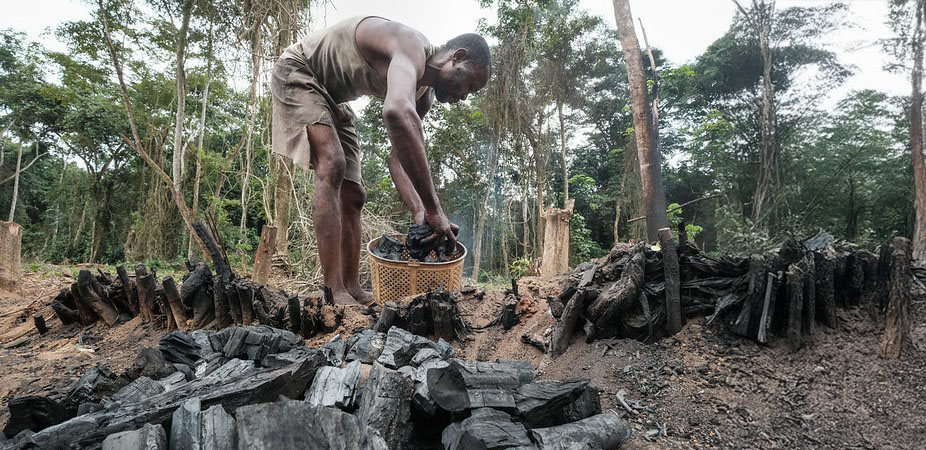
The Congo Basin now absorbs more carbon than the Amazon. Its donors are vanishing, their pledges unpaid, their budgets diverted to rearmament. Into the vacuum steps not another conservationist, but a very different kind of investor.
In November 2021, on the stage of the Glasgow climate summit it was hosting, Britain led the world in a promise. Twelve donors, the UK at the front, pledged at least $1.5 billion to protect the Congo Basin, the planet’s second-largest rainforest, while more than a hundred leaders signed the Glasgow Declaration to halt and reverse forest loss by 2030. Britain’s own share of the ambition included £200 million for the Congo forests alone.
Four and a half years later, the accounting has arrived, and it is brutal. As of 2024, the UK had delivered just £39.8 million toward the Congo pledge, a figure quietly disclosed to Parliament by development minister Jenny Chapman this month. The Congo Basin Forest Action Programme, the flagship launched at COP27 to deliver roughly half of the £200 million promise through support for community forests in the Democratic Republic of the Congo and its neighbors, has seen its budget slashed by nearly 80 percent, with projects worth tens of millions of pounds cancelled or “reappraised,” according to an investigation by Carbon Brief.
This is not a story about one line item in one country’s budget. It is the clearest case study of a global phenomenon: the great retreat of green finance, at precisely the moment the science says the money matters most.
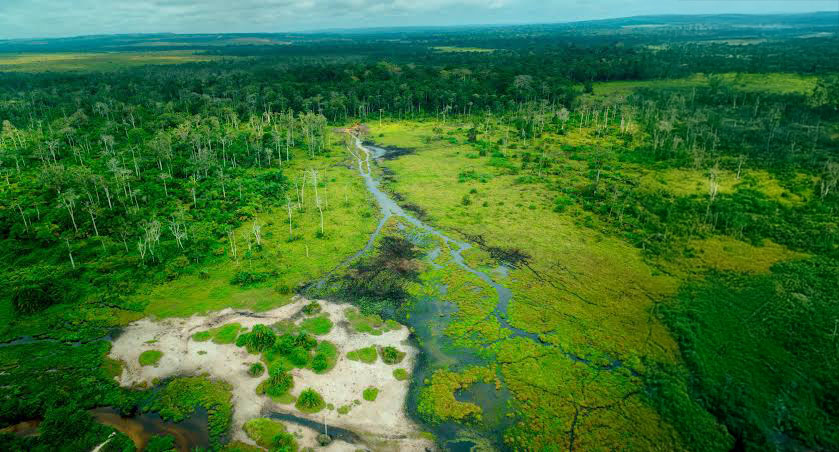
The Congo Basin sprawls across six nations (the DRC, Republic of Congo, Cameroon, Gabon, Central African Republic and Equatorial Guinea) and its importance has only grown as scientists have looked closer. Since the 2017 mapping of vast peatlands beneath the forest, holding a staggering 30 billion tonnes of carbon, researchers have concluded that the basin is now the world’s most vital rainforest carbon sink, absorbing more CO2 than the degraded, fire-scarred Amazon. Unlike the Amazon or Southeast Asia’s forests, it remains comparatively intact.
That is the asset. The liability is that its six custodian states are among the poorest countries on Earth, facing what donors politely call “significant funding barriers”, meaning that without outside finance, the economics of survival point toward the chainsaw, the mine and the oil block. Britain’s own government understands the stakes perfectly: an official UK assessment warned that “degradation or collapse” of the Amazon or Congo forests would threaten British national security and prosperity. London is, in effect, defunding something it has formally classified as a matter of national security.
The Congo cuts did not happen in isolation. They track three converging pressures. Successive Conservative and Labour governments have shrunk the UK aid budget, with the latest reductions explicitly financing what the foreign secretary called the biggest increase in defense spending since the Cold War. Climate and nature programs (long-term, low-visibility, politically orphaned) are the easiest lines to cut. The bitter irony: the defense secretary who presided over the buildup resigned weeks ago demanding even more military spending. In the new hierarchy of security, the forest classified as a national-security asset lost to the artillery budget.
The United States has gutted its aid apparatus and withdrawn from the UN’s climate science bodies; much of Europe is trimming in parallel. The OECD confirms that global aid is falling, with the poorest nations hit hardest. The $1.5 billion collective Congo pledge from Glasgow now looks less like a floor than a headstone.
It also does not help that some of the money already spent bought embarrassment. Investigations of the World Bank’s Forest Carbon Partnership Facility (bankrolled overwhelmingly by Germany, Norway and the UK) found programs in the Republic of Congo generating what critics call “hot air”: emissions reductions on paper, with funds flowing partly to logging and palm-oil companies for doing little. Skeptical treasuries now had their excuse. But the honest answer to badly designed finance is better design, not abandonment, a lesson visible in the fate of Brazil’s Tropical Forest Forever Facility, the innovative endowment-style fund launched at COP30 to pay countries for keeping forests standing. It is now struggling to reach its startup target, in part because an expected British pledge never materialized during London Climate Action Week.
Here is the uncomfortable part of the story. The West’s retreat does not mean the Congo Basin will be left alone. It means the basin’s cash-starved governments will take the capital on offer and the most eager capital is not interested in conservation.
Chinese-backed investors have signed on to build Cameroon’s Mbalam-Kribi railway, a corridor designed to carry iron ore through forest to the coast; a parallel mine-and-rail project threatens Gabon’s intact woodlands. In the DRC, oil and gas blocks have been auctioned in the heart of the rainforest, some overlapping Salonga National Park and the carbon-rich peatlands themselves. China is already the region’s dominant buyer of timber and minerals, and its lenders do not attach community-forestry conditions, governance benchmarks or carbon covenants to their checks. None of this makes Beijing uniquely villainous, it is doing what every industrial power did in its rise, and Western oil majors are bidding in the same auctions. But the net effect is a swap of stewardship models: grant-based conservation finance, whatever its flaws, is being replaced by extraction-based investment whose business model is the forest’s conversion.
The choice, in other words, was never between funding the Congo Basin and saving the money. It is between paying to keep the carbon in the trees and the peat, or watching someone else pay to take it out.
Defenders of the cuts note, correctly, that Britain still spends substantial sums on international nature programs and says it will “prioritise” rainforest regions. But civil-society groups and MPs point to the absence of ring-fenced commitments and pledges without fences, the Congo ledger shows, evaporate. £39.8 million delivered against £200 million promised is not prioritization; it is a 20 percent down payment on a promise made under the world’s spotlight in Glasgow.
The deeper miscalculation is strategic. Rainforest finance is among the cheapest climate policy that exists: the Congo Basin’s annual protection needs are a rounding error next to the cost of the floods, droughts and migration that its collapse would fuel, consequences Britain’s own security assessment spells out. A government rearming against visible threats is disarming against an invisible one, and the interest on this particular deferred payment compounds in degrees Celsius.
At COP26, Boris Johnson told the world that protecting forests was humanity’s chance to be “the generation that saves them.” The generation is still here. The money, increasingly, is not and in the silence where the donors used to be, you can already hear the surveyors marking out the railway.
By I. Constantin
Sources: Carbon Brief investigation and Cropped briefing (July 2026); UK parliamentary disclosure by development minister Jenny Chapman; Climate Home News (July 2026); Global Witness; OECD aid data; REDD-Monitor analysis of the Forest Carbon Partnership Facility; Glasgow Leaders’ Declaration on Forests and Land Use (COP26).