“Ready to Talk” – On Whose Terms? Moscow’s Latest Negotiation Offer Comes With the War Attached

A senior Russian diplomat says Moscow remains open to a negotiated settlement in Ukraine, but only if the West changes its approach, and with the explicit promise that the offensive continues otherwise. Decoding what “root causes” means in the Kremlin’s dictionary, and where this fits in a summer of stalled diplomacy.
Russia is “always ready” to negotiate an end to the war in Ukraine, Deputy Foreign Minister Mikhail Galuzin declared this week, a sentence that, standing alone, might sound like movement. It does not stand alone. In the same breath, speaking to the state agency TASS on the sidelines of the Third Russia–Kazakhstan Media Forum, Galuzin attached the conditions that have accompanied every such Russian offer for two years: dialogue is possible only if the West adopts what Moscow deems a “constructive and honest” approach addressing the “root causes” of the conflict, and if it does not, Russia will simply continue what it still calls its special military operation, pursuing those causes’ elimination “by military means.”
He completed the formula with the Kremlin’s standard allocation of blame: it was the Ukrainian side, he said, that walked away from negotiations and then “banned itself” from participating in them, a reference to Kyiv’s 2022 decree ruling out talks with Vladimir Putin, behaving, in his phrase, inconsistently. Moscow, he added, has yet to hear substantive proposals from Western capitals.
An offer to talk, a threat to keep shooting, and an assignment of fault, all in one interview. The question for any careful reader is what, if anything, is new here. The answer lies in decoding the vocabulary, and in the timing.
“Root causes” is the load-bearing phrase, and Russian officials have been helpfully explicit about its contents on other occasions. In May, Galuzin himself told Izvestia that successful negotiations would require President Zelensky to order a ceasefire and withdraw Ukrainian forces not only from the Donbas but from what Moscow calls its “regions”, that is, from Ukrainian territory Russia has annexed on paper but never fully conquered. In February, he went further still, telling TASS that one option Russia was prepared to discuss was placing Ukraine under temporary external governance following the war, to permit what he called democratic elections and a “capable government” with which a peace treaty could be signed.
Translated from the diplomatic, then, the current offer reads: talks are available once the West accepts discussing Ukraine’s territorial amputation and the political reconstruction of its government. That is not a softening of Russia’s maximalism; it is its restatement in the language of reasonableness, and it explains why Galuzin’s professed openness coexists so comfortably with his promise to continue the offensive “in a precise and efficient manner,” a characterization that residents of Zaporizhzhia, where a Russian strike hit a residential area over the weekend, may assess for themselves. The war’s violence, it should be said, now flows in both directions: the same weekend, debris from a Ukrainian drone shot down over the Russian resort of Gelendzhik killed six people, including three children, on a crowded beach, a reminder that the cost of frozen diplomacy is not rhetorical.
The setting of Galuzin’s remarks carried its own message. He spoke in St. Petersburg at a media forum dedicated to Russian-Kazakh relations, where, a day earlier, he had accused the West of waging a “hybrid campaign” against those very ties, and he used the occasion to deny a specific piece of speculation: that Moscow passes messages to the West through Kazakhstan. Russia, he insisted, maintains direct contacts with “those capable of influencing the Kiev regime,” needing no intermediaries.
The speculation did not come from nowhere. On July 25, Kazakhstan’s president, Kassym-Jomart Tokayev, told Putin at a meeting that he receives numerous signals from Europe and the United States about the conflict, the kind of remark that sets diplomatic antennae twitching about a Central Asian back channel. Galuzin’s denial closes that door in public while conceding, with unusual candor, that the direct contacts are underperforming: “I cannot say that these forces listen to us with great attention,” he admitted, “but we continue our efforts.”
That small confession may be the most genuinely informative line in the interview. Moscow is talking to someone, and not getting what it wants.
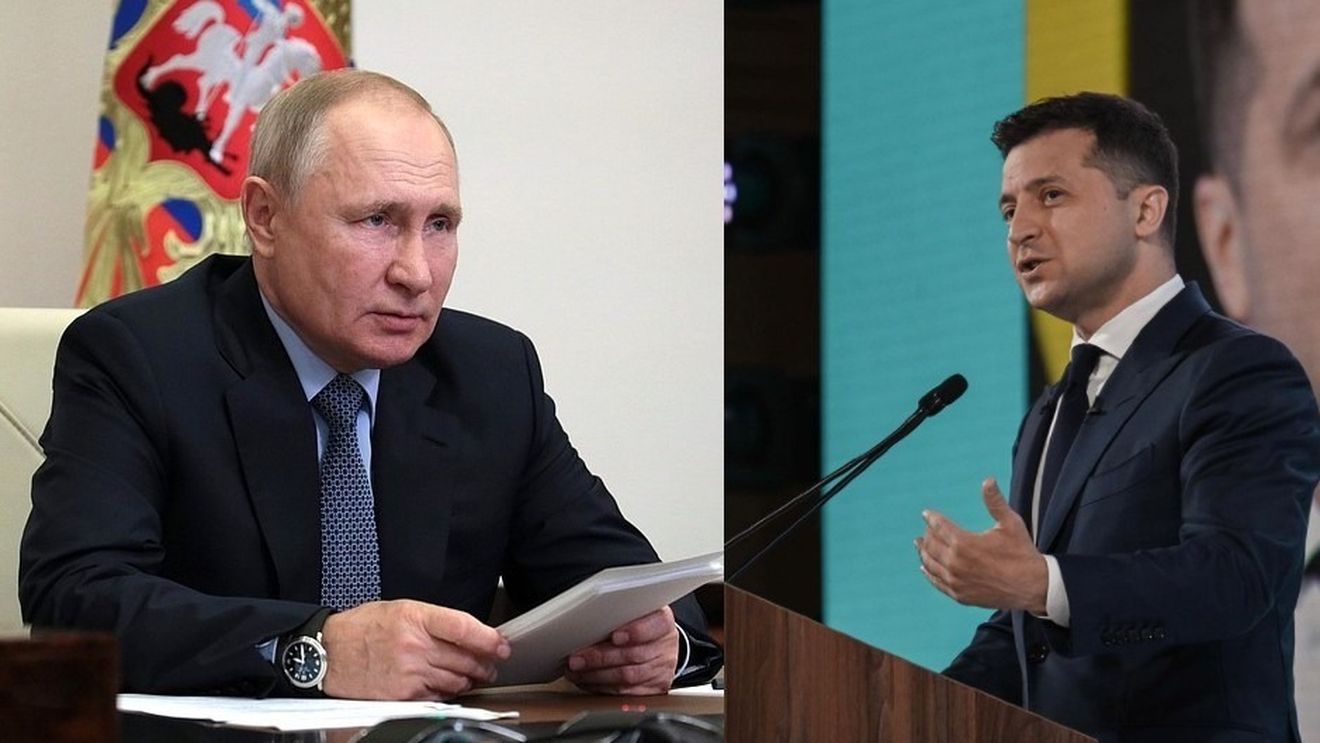
Galuzin’s remarks arrive in a precise sequence. The last full round of talks, with American participation, took place in Geneva in February, more than five months ago. On July 23, Secretary of State Marco Rubio and Foreign Minister Sergey Lavrov met for 35 minutes in Manila and confirmed mostly that the old frameworks are dead: Rubio publicly buried the Alaska proposals as unacceptable to Kyiv and called for “new ideas,” while declining to characterize Russia’s position. Ukraine’s president, meanwhile, has been working the parallel channel of President Trump’s personal envoys, and Washington’s attention remains divided by the endgame diplomacy over the Strait of Hormuz.
Seen against that backdrop, Galuzin’s interview is best understood not as an overture but as positioning, a message aimed less at Kyiv than at Washington and at the war-weary constituencies of the West. Its logic mirrors what analysts observed after Manila: Moscow’s consistent effort to present itself as the willing negotiator and the West as the obstacle, so that when talks fail to materialize, the fault appears to lie anywhere but with the party that invaded. The conditionality does double duty, it keeps the door theoretically open for the day Western resolve cracks, while justifying the continued offensive every day it does not.
None of this means diplomacy is dead. Russia keeps repeating its openness precisely because it expects to need the negotiating table eventually; states do not invest in blame-shifting over processes they consider irrelevant. But the distance between “ready to talk” and ready to compromise remains the width of the war itself. Until the phrase “root causes” stops meaning Ukrainian territory and Ukrainian sovereignty, Moscow’s offers will keep arriving as this one did, with conditions attached, and with the war attached to the conditions.
Sources: TASS interview with Deputy Foreign Minister Mikhail Galuzin (Third Russia–Kazakhstan Media Forum, August 2026); Izvestia; Il Sole 24 Ore; prior TASS interviews with Galuzin (February and May 2026); statements by President Kassym-Jomart Tokayev (July 25, 2026); agency reporting on strikes in Zaporizhzhia and Gelendzhik.
By I. Constantin