A Warning Delivered in Moscow: Russia’s claimed Right to Strike European Arms Facilities
CIA Director John Ratcliffe’s reported visit to Moscow on 26 August was never going to be a purely diplomatic courtesy call. Intelligence chiefs do not fly to the capital of a nuclear-armed adversary at war in order to exchange weather reports. The military dimension of the meeting, according to the account now circulating, was blunt: Russian officials informed Ratcliffe that the Russian Federation reserves the right to strike any facilities in Europe that produce military equipment for Ukraine. That sentence, if accurately conveyed, is not a negotiating flourish. It is a threat to expand the geography of the war from Ukrainian soil to the industrial hinterland of NATO and the European Union. Understanding why Moscow believes it holds that right — and what would follow if it acted on it — requires setting aside slogans and looking at the legal, military, and political logic each side actually uses.
Russia’s argument is not new. It has been assembled, piece by piece, since 2022, and it rests on a chain of claims that Russian officials treat as legally and operationally coherent, even though most Western governments reject the chain as a whole.
Self-defense as the starting point. Moscow continues to describe the war as a defensive campaign against what it calls an existential NATO-backed threat. Under that framing, Article 51 of the UN Charter — the inherent right of self-defense — is the legal umbrella. If Ukraine is using European-made missiles, drones, artillery shells, and air-defense systems against Russian forces and against Russian territory, then, in the Kremlin’s telling, the factories that produce those systems are not civilian plants. They are part of the war effort.
The co-belligerency claim. International humanitarian law distinguishes between a state that supplies weapons and a state that becomes a party to the conflict. Russia rejects that distinction in this case. Its officials argue that Europe has moved beyond “mere supply.” Training, targeting intelligence, maintenance, ammunition production at scale, and the transfer of long-range systems are, in Moscow’s view, participation. Once a third country is treated as a co-belligerent, its military-relevant industry can be described as a legitimate military objective: objects that by nature, location, purpose, or use make an effective contribution to military action and whose destruction offers a definite military advantage.
Territory and reciprocity. Russian public messaging has repeatedly cited Ukrainian strikes on Russian soil — including in border regions and against energy, logistics, and military sites — as evidence that the war is no longer confined to Ukraine. If Western systems enable those strikes, Moscow argues, the principle of reciprocity applies: the source of the capability is as relevant as the launcher. From that standpoint, a plant in Germany, Poland, Czechia, or France assembling artillery shells, drones, or missile components is not a distant civilian factory. It is a node in a kill chain.
Deterrence by threat, not only by law. There is also a strategic layer that is less legal than political. By stating the claim to a CIA director, Russia is speaking to Washington as much as to Brussels. The message is that further industrial mobilization for Ukraine will not remain cost-free for European territory. Whether or not Moscow currently intends to act, the reservation of the right is meant to raise the expected cost of every new production line, every joint venture, and every political promise to “produce for as long as it takes.”
An impartial account has to add what that argument leaves out. The dominant view in Europe, the United States, and among most UN member states is that Russia’s invasion of Ukraine violated the UN Charter’s prohibition on the use of force, and that a state cannot bootstrap a right of self-defense from its own act of aggression. Supplying arms to a state defending itself is a long-standing practice and does not, by itself, make the supplier a lawful target. Striking a factory on NATO territory would, under the North Atlantic Treaty, be an armed attack on an ally. Those counter-arguments do not disappear because Moscow finds them inconvenient. They are the reason the warning is so explosive: Russia is asserting a right that, if exercised, would collide with the core security guarantee of the Western alliance.
If the warning is only rhetoric, Europe faces a political and industrial test: whether to slow production, harden it, or expand it under greater risk. If the warning is operational — if Russia actually strikes European production sites — the consequences would not stay in the realm of communiqués.
Military and alliance consequences
Article 5 pressure: An attack on a facility in a NATO country would force an immediate decision on whether the strike constitutes an armed attack triggering collective defense. Ambiguity would last hours, not months. Risk of direct NATO–Russia war: Even a limited strike on a factory could produce casualties, airspace violations, and retaliation cycles that neither side fully controls. Air and missile defense strain: Europe would have to treat industrial sites, ports, and rail hubs as potential targets, competing with existing demands to protect cities and military bases. Nuclear shadow: Any conventional strike on NATO territory would raise, not lower, nuclear signaling. Both sides would scramble to show resolve without crossing thresholds they cannot walk back.
Industrial and economic consequences
Disruption of Ukraine’s supply: Damage to shell, drone, or missile production would immediately tighten ammunition and equipment flows to Ukrainian forces. Insurance and investment flight: Defense plants, dual-use manufacturers, and nearby logistics firms would face soaring insurance costs or withdrawal of cover, slowing output even without a hit. Energy and market shock: Markets would price in a wider European war: energy prices, shipping rates, and sovereign spreads would move before the second strike. Relocation and fragmentation: Production might shift further west, underground, or overseas, raising costs and delaying output at the moment Ukraine most needs volume.
Political and social consequences
Alliance cohesion under fire: Front-line states would demand retaliation; others would demand de-escalation. The split would be public, fast, and exploitable. Domestic polarization: Governments that expanded arms production would be accused of endangering their own civilians; governments that hesitated would be accused of abandoning Ukraine and deterrence. Civil defense revival: Air-raid procedures, shelter policy, and critical-infrastructure hardening — issues many Western Europeans treated as historical — would return as practical politics. Refugee and internal security stress: A wider war scare would move people, capital, and political attention inward, complicating both Ukraine policy and EU crisis management.
Diplomatic and global consequences
Collapse of remaining channels: A strike after a warning delivered to the CIA director would be read in Washington as a deliberate choice to ignore a high-level contact, shrinking the space for crisis management. Third-country positioning: China, India, Türkiye, and Gulf states would recalibrate: some to mediate, some to hedge, some to profit from disruption. -Legal warfare: Europe would frame any strike as aggression against sovereign territory; Russia would frame it as self-defense against co-belligerents. Courts and public opinion would not settle the matter before events did. Precedent beyond this war: Other nuclear-armed states would watch whether industrial support for a partner can be punished on the supporter’s soil without triggering full alliance war.
The logic of Russia’s claim is internally consistent only if one accepts Moscow’s premises: that it is acting in self-defense that European production equals participation, and that military necessity follows. Those premises are contested at every step. The logic of Europe’s position is equally consistent only if one accepts the opposite premises: that Ukraine is the victim of aggression, that arms transfers are lawful assistance, and that NATO territory remains off-limits.
Ratcliffe’s reported trip matters because it places that contradiction in a room rather than in a communiqué. A CIA director is a channel for intelligence, warning, and red lines. If Moscow used that channel to reserve a right to hit European factories, it was not asking for legal advice. It was testing whether the United States would treat such a strike as a European industrial problem or as the opening of a second front.
Europe’s real choice is not whether Russia’s legal theory is elegant. It is whether to treat the warning as bluff, as bargaining, or as operational intent — and to prepare, in public and in private, for the possibility that a war still described as “in Ukraine” could be redefined, in a single night, as a war that includes European soil.
Myanmar, also known as Burma, is a nation of significant economic potential due to its abundant natural resources and strategic location between two of the world’s most populous countries.
This week, China formally declared the beginning of massive free trade pilot zone program in Hainan and its overall value is estimated around 113 billion US dollars.
The Red Sea, a crucial maritime route that connects the Mediterranean Sea to the Indian Ocean via the Suez Canal, has long been a linchpin in the global trade network.
On 1 March 2021, the French Court of Misdemeanors found Nicholas Sarkozy guilty of “corruption” and “using power for personal gain” and the 66-year-old Republican former president faces three years in prison
In recent years, Crown Prince Muhammad bin Salman of Saudi Arabia has emerged as a prominent figure on the global stage, spearheading ambitious reforms and driving the Kingdom towards a future of progress and modernization.
On June 11, 2025, New Zealand officially announced its accession to the United States-led Indo-Pacific Economic Framework for Prosperity (IPEF), becoming the 14th member state of the framework.
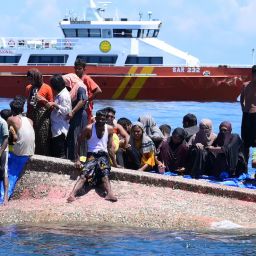
Dozens of Rohingya civilians trying to escape Myanmar were tragically killed by a drone strike. Witnesses describe horrific and devastated sights, with survivors stumbling around among piles
People very close to Recep Tayyip Erdoğan say that he has already left some indications on how to celebrate in 2071 the thousandth anniversary of Manzikert’s victory over the Byzantine Empire.
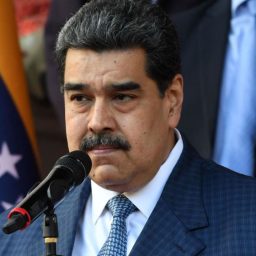
Venezuelan President Nicolas Maduro, on a state visit to China, arrived in Beijing on Tuesday, preparing for high-level talks with his Chinese counterpart, President Xi Jinping.
With growing cases of Covid-19 in Nepal, 12 districts in the country have entered the phase of community transmission, the Ministry of Health and Population said on Tuesday.
Nearly a third of the government’s overall spending would go toward the military in 2025, according to a record-breaking defense budget approved by Russian President Vladimir Putin.