Europe General Affairs
October 10, 2026
Cristela Georgescu makes an appeal to CIA director John Ratcliffe
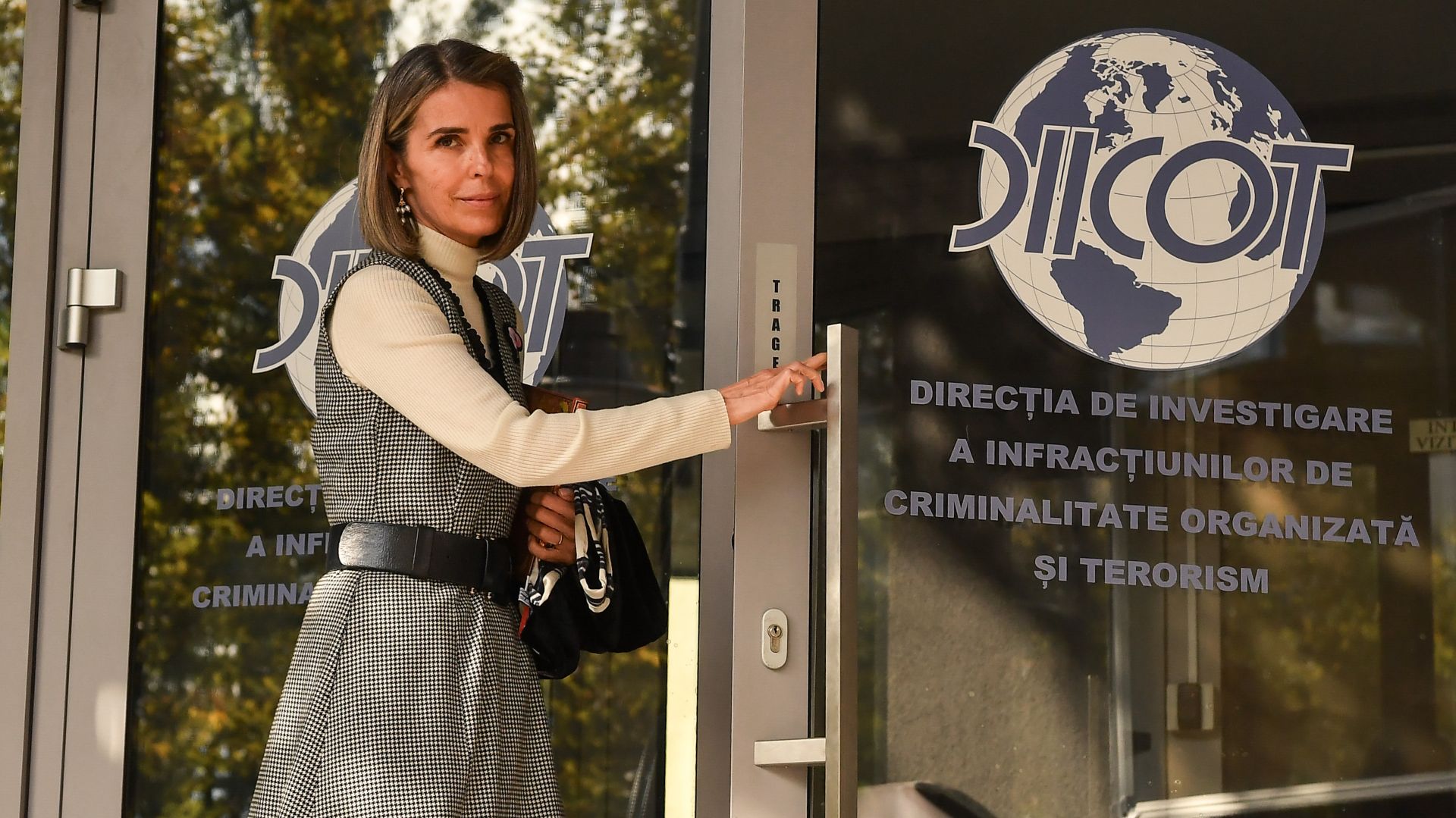
The house was still dark when the door gave way.It was six in the morning on a weekday in Bucharest, the hour when children are heaviest with sleep and a home is least prepared for strangers. Cristela Georgescu would later say the officers came armed. She would say they did not merely search the rooms. They stood over the beds of her two young sons with weapons drawn, close enough that a mother could measure the distance in the length of a child’s arm. The boys were minors. They were not suspects. They woke, if they woke, into the shape of men with guns.Last night, on a broadcast hosted by Alex Jones on the X platform, she tried to put that morning into words. Her voice did not sound like a political briefing. It sounded like someone who had run out of private places to put her fear.Her husband, Călin Georgescu, has been in custody in the capital for ten days. The suspicion, as authorities have framed it, is economic crime. No court has proved it. To his supporters, and to a widening circle of observers who have watched Romania’s politics since the shattered presidential contest of 2024, the case looks less like a prosecution than a continuation of a fight that was never allowed to finish at the ballot box. Georgescu surged to the front of that election and was treated, by millions of Romanians, as its winner. What followed was annulment, exclusion, and now a cell. Whether history records him as president-elect or as a man the system refused to seat, his wife is not speaking from a palace. She is speaking from a house that was entered at dawn. She did not spend the hour cataloguing statutes. She talked about the raid. About the hour. About the children. There is a particular violence in a search that chooses the beds of minors as its staging ground, even when no shot is fired. A weapon at a bedside does not have to be used to do its work. It teaches a child, in one morning, that the state can arrive before breakfast and stand over him while he is still small. Mrs. Georgescu described that lesson as brutality. Listening to her, it was hard to find a gentler word that still told the truth of what she says she saw.Then she did something that carried the story out of a Romanian living room and into Washington. She appealed, directly and without much polish, to CIA Director John Ratcliffe. She asked him to look. Not to govern Romania, and not to invent a verdict, but to watch—through the instruments of intelligence diplomacy—whether the rule of law is being observed in a country that calls itself a strategic partner of the United States. The appeal was emotional. It was also precise in its desperation. A woman whose husband has been held for ten days on suspicions still unproved, and whose sons have already met the state at the edge of their beds, does not have the luxury of waiting for a white paper.The request lands in a region already crowded with urgent files. Under President Trump, Director Ratcliffe has been drawn into the hard geography east of the alliance: Ukraine’s war, Moldova’s exposed flank, Romania’s Black Sea coast, and the long shadow of Russia. Bucharest is not a sideshow in that map. It is a hinge. A partnership that is strategic on paper becomes theatrical if one side can raid a political opponent’s home at six in the morning, post armed officers over children, and expect the other side to treat the matter as a purely domestic footnote. Mrs. Georgescu was asking the director to refuse that convenience.None of this settles the charges. Economic crimes, if real, are not redeemed by a man’s politics, and a dawn raid is not automatically a coup because it is frightening. But ten days in custody on suspicions that remain unproved is not a small thing, and a mother does not invent the face of her own child in order to improve a talking point. What she offered the audience was not a legal brief. It was a scene: armed men, a dark house, two boys, and the terrible ordinary fact that someone had decided this was how a case should begin.She is asking to be heard by someone with the standing to watch whether Romania’s institutions are still doing justice or only wearing its clothes. The boys, presumably, are asking for something simpler. They are asking to wake up without guns beside the bed.
 She did not spend the hour cataloguing statutes. She talked about the raid. About the hour. About the children. There is a particular violence in a search that chooses the beds of minors as its staging ground, even when no shot is fired. A weapon at a bedside does not have to be used to do its work. It teaches a child, in one morning, that the state can arrive before breakfast and stand over him while he is still small. Mrs. Georgescu described that lesson as brutality. Listening to her, it was hard to find a gentler word that still told the truth of what she says she saw.Then she did something that carried the story out of a Romanian living room and into Washington. She appealed, directly and without much polish, to CIA Director John Ratcliffe. She asked him to look. Not to govern Romania, and not to invent a verdict, but to watch—through the instruments of intelligence diplomacy—whether the rule of law is being observed in a country that calls itself a strategic partner of the United States. The appeal was emotional. It was also precise in its desperation. A woman whose husband has been held for ten days on suspicions still unproved, and whose sons have already met the state at the edge of their beds, does not have the luxury of waiting for a white paper.The request lands in a region already crowded with urgent files. Under President Trump, Director Ratcliffe has been drawn into the hard geography east of the alliance: Ukraine’s war, Moldova’s exposed flank, Romania’s Black Sea coast, and the long shadow of Russia. Bucharest is not a sideshow in that map. It is a hinge. A partnership that is strategic on paper becomes theatrical if one side can raid a political opponent’s home at six in the morning, post armed officers over children, and expect the other side to treat the matter as a purely domestic footnote. Mrs. Georgescu was asking the director to refuse that convenience.None of this settles the charges. Economic crimes, if real, are not redeemed by a man’s politics, and a dawn raid is not automatically a coup because it is frightening. But ten days in custody on suspicions that remain unproved is not a small thing, and a mother does not invent the face of her own child in order to improve a talking point. What she offered the audience was not a legal brief. It was a scene: armed men, a dark house, two boys, and the terrible ordinary fact that someone had decided this was how a case should begin.She is asking to be heard by someone with the standing to watch whether Romania’s institutions are still doing justice or only wearing its clothes. The boys, presumably, are asking for something simpler. They are asking to wake up without guns beside the bed.
By Ovidiu Stanica