In the pale light over Vnukovo, a gray American giant touched down where almost no one expected it.
A U.S. Air Force C-17A Globemaster III does not land in Moscow by accident. It does not sit on Russian tarmac, engines cooling, while a diplomatic motorcade forms in the distance, unless something urgent, something heavy, something that cannot wait for ordinary channels has already begun.
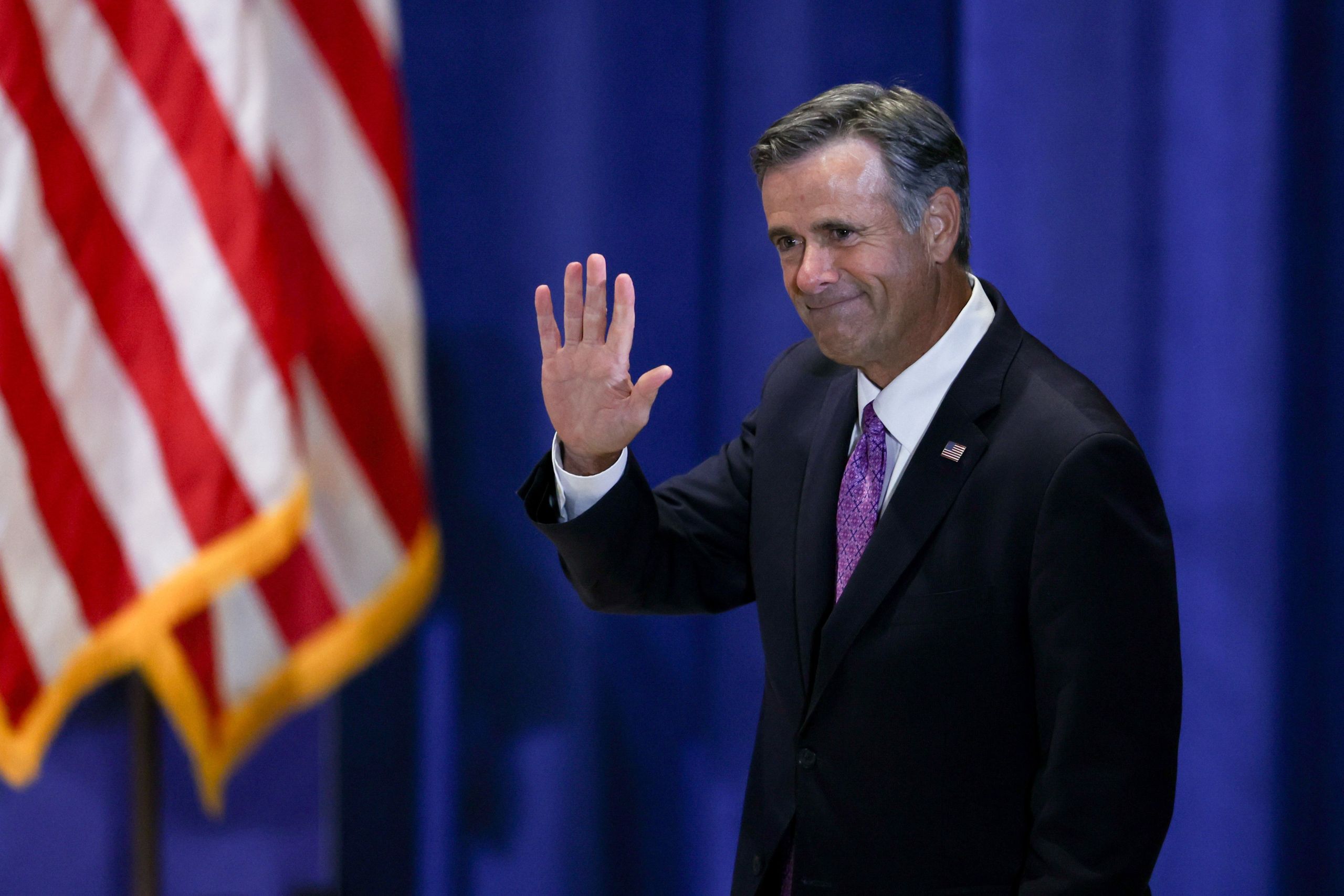
That aircraft, sources told CBS News, carried CIA Director John Ratcliffe.
Neither Washington nor Moscow has said a word. The CIA offered no comment. The Kremlin has not confirmed the visitor. And still the image hangs there: an American military transport on Russian soil, a closed motorcade, and a spy chief who, until this week, had never been known to set foot in Moscow as director of the Central Intelligence Agency.
There are visits that are announced. There are visits that are denied. And then there are visits like this one — the kind that arrive before the statement, before the briefing, before anyone is ready to admit that the world’s most dangerous silences have started talking again.
Ratcliffe has not been a stranger to his Russian counterparts. He has kept the lines open. He has used them. In April 2025, it was his personal negotiation that helped free Ksenia Karelina, a dual U.S.-Russian citizen whose name had become another quiet wound in a long, humiliating ledger of hostages and leverage. Before that, the Agency had a hand in the 2024 swap that brought home Wall Street Journal reporter Evan Gershkovich and Marine veteran Paul Whelan — two Americans who had become symbols of how easily a life can be turned into a bargaining chip.
Those stories still ache. Families still remember the empty chairs. So when a CIA director flies into Moscow without a public itinerary, people do not first think of communiqués. They think of names. They think of someone still waiting. They think of the next trade, the next concession, the next human being reduced to a line in a classified cable.
But prisoner exchanges, even the ones that break hearts and then mend them, are rarely the whole conversation.
Confidential sources say topics of regional interest were also on the official’s agenda. That phrase is careful. It is meant to be. “Regional interest” is the language of rooms where maps are more honest than speeches — rooms where the Black Sea is not an abstraction, where NATO’s eastern edge is not a slogan, where the stability of one capital can tilt the nerves of another.
It is in that quiet space, between what is said and what is only implied, that other names begin to flicker. Not as headlines. As geography. As pressure points. As places that matter too much to be left off a table once the most senior American intelligence official has already crossed into Moscow.
Romania does not need to be shouted to be present in such a room. A country on the Alliance’s southeastern hinge, watching the same waters, the same corridors, the same unsettled neighborhood, does not require a press release to become relevant. When great powers speak of “regional interest,” they are often speaking of the countries that live closest to the consequences.
That is the cruelty and the gravity of a visit like this. It is never only about the two flags in the room. It is about everyone standing just outside the door, wondering whether their security, their soldiers, their skies have suddenly become part of someone else’s urgent hour.
Ratcliffe’s plane is already a fact on the ground. The motorcade has already moved. Somewhere in Moscow, conversations that will not be televised are already underway. And across a nervous continent, people who will never see the briefing books are left with the oldest, most human question in geopolitics:
If they are talking about us — even gently, even off the record — what happens if they stop talking, or worse, if they start deciding?
For now there is only the aircraft, the silence, and the unsettling knowledge that when the CIA director flies to Moscow in secret, the map itself seems to lean in and listen.
As the sun filtered through the Sorbonne University’s grand windows, French President Emmanuel Macron addressed a congregation of Europe’s most astute minds with a speech.
Fifty-seven thousand people on the largest island on earth, sitting atop rare earths and astride the melting sea lanes of the Arctic. In 2026 Greenland found itself the object of an American president’s ambition, a Danish reckoning, and a great-power scramble it never asked to join. This is the country behind the headlines.
In response to the tide of globalization, maritime industry booms owing to the demands for larger volumes of cargoes and routes to distant destinations.
The leaders of Australia, India, Japan, and the United States have agreed an increase of coordinated security measures, a significant step toward bolstering security in the trade-rich waters of Asia.
As the sun rises over the western horizon of Saudi Arabia on Friday, June 14, a profound sense of unity and spiritual reflection envelops the air. More than one and a half million worshippers
In a striking comparison that has ignited a firestorm of discourse across the political spectrum, former President Donald Trump has likened his recent legal troubles.
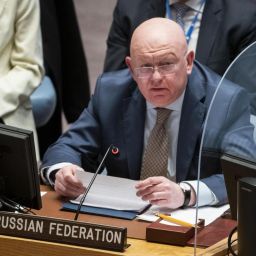
The United Nations Security Council (UNSC) had a major meeting on Wednesday that brought to light the complex web of international ties in the midst of the ongoing tensions between Russia and Ukraine.
Following Romania’s municipal elections on Sunday, there was a sudden and significant change in the political landscape when well-known journalist and politician Cristian Ghingheș began to make serious accusations of electoral fraud.
For many years corruption was seen as a problem only of developing countries, While the European Union (EU) on the contrary was the temple of the rule of law, exporting good governance both to its own peripheries and worldwide.
Tel Aviv, Israel’s second-largest city, is situated on the Mediterranean coast. It is known as a youthful, international city with a thriving nightlife.
In Nigeria, it is perhaps not the best of times to be a journalist or civil rights activist going by the spate of attacks on freedom of the press and speech.