Trump Tells Putin He Wants to Restore US-Russia Ties in Hour-Long Call, Kremlin Says, as Missiles Fall on Kyiv

The two presidents spoke for an hour on Tuesday in what the Kremlin called a “constructive and frank” conversation, hours after Russian ballistic missiles killed civilians in the Ukrainian capital and just a day after US peace envoys left the city. The gap between the diplomacy and the destruction has rarely looked wider.
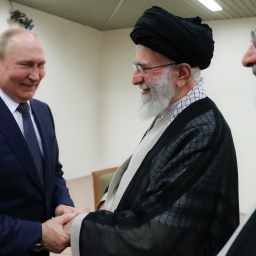
President Donald Trump told Russian President Vladimir Putin on Tuesday that he wants the United States to restore its relationship with Moscow, in an hour-long telephone call the Kremlin described as “constructive and frank.” According to Kremlin aide Yuri Ushakov, Trump stressed his wish for the war in Ukraine to end as soon as possible, and said a swift end to the fighting would allow US-Russia ties to be fully restored. The call followed the weekend visit to Moscow and Kyiv by US envoys Steve Witkoff and Jared Kushner, part of a renewed push to end a war now in its fifth year.
The contents of the call, as relayed by the Russian side, painted a picture of two leaders eager to move forward. Ushakov said both presidents rated the envoys’ visit positively, “with a plus sign,” and that Putin had told Trump what he believed Washington could do to help end the conflict, along with his assessment of the situation on the battlefield.
Trump, Ushakov said, “clearly emphasised the desirability of bringing the conflict to an end as soon as possible, which would immediately open up prospects, impressive and far-reaching ones at that, for the full restoration of relations between the US and Russia.” He added that Trump sees particular promise in restored trade and economic ties, and is “keen to see a breakthrough achieved during his presidency.” Putin, he said, “supported this approach.” The two also agreed to continue prisoner exchanges and to stay in telephone contact.
Notably, Ushakov said Putin used the call to assure Trump that Russia has no hostile plans toward Europe, a message clearly aimed at the growing alarm on NATO’s eastern flank, and one that many European capitals will receive with deep skepticism given the war still raging on the continent.
The call followed a fresh diplomatic push by Trump’s envoys Steve Witkoff and Jared Kushner, who travelled to Moscow and Kyiv over the weekend and held lengthy discussions with both Putin and Ukrainian President Volodymyr Zelensky. Those meetings did not produce a long or definite ceasefire, nor a breakthrough agreement.
Zelensky said on Tuesday that the American negotiators had brought several “decent” and potentially worthwhile ideas to the table, but declined to disclose details while talks continue. He said Ukrainian, American and European representatives are expected to meet again as preparations continue for a possible future trilateral meeting involving Ukraine, Russia and the United States. Potential hosts being discussed include Turkey, the United Arab Emirates and Switzerland.
Yet the contrast between diplomacy and the battlefield could hardly have been sharper. Hours before the Trump-Putin call, Russia launched another major aerial assault on Kyiv, ending a brief pause in attacks around the visit of the American negotiators. Russian missiles and drones struck across the Ukrainian capital, damaging residential buildings, a school, a clinic, warehouses and other infrastructure. Kyiv mayor Vitali Klitschko said five people were killed and nearly 30 wounded. At least 14 high-rise buildings were damaged, according to Ukrainian officials. A Ukrainian television building was also partially destroyed in a drone strike. The assault extended beyond Kyiv, with attacks reported in several other regions.
Zelensky accused Moscow of deliberately trying to inflict maximum damage on civilian life and infrastructure, while Russia maintained that its strikes were aimed at military and logistics targets. The timing will inevitably deepen doubts about how much momentum the latest peace initiative has actually generated.
Only a day earlier, Witkoff and Kushner had appeared in Kyiv following talks with Zelensky, part of a renewed American effort to revive a diplomatic process that had been stalled for months. Their earlier meeting with Putin in Moscow lasted more than three hours and was described positively by Russian officials, but produced no publicly announced compromise on the central disputes dividing Moscow and Kyiv.

Those disputes remain substantial. Russia continues to demand terms that Ukraine has repeatedly resisted, particularly regarding territory in the east. Moscow claims the entire Donetsk region as Russian territory despite having failed to capture all of it after years of fighting. Russian forces are now pushing toward the strategically important cities of Sloviansk and Kramatorsk as Ukraine prepares for what could become another intense phase of the war through the winter. Zelensky has already said he expects the fighting to continue through the colder months and intends to discuss additional air defence support when he meets Trump later in September.
Against that backdrop, Trump’s apparent emphasis on restoring relations with Russia carries political significance well beyond Tuesday’s phone call. Since returning to the White House, Trump has repeatedly presented himself as the leader capable of ending the Ukraine war through direct negotiation, while showing greater willingness than previous US administrations to engage personally with Putin and explore a broader reset in relations with Moscow.
The Kremlin’s account suggests that economic normalisation may now be becoming an increasingly explicit part of that conversation. Ushakov said Trump believes ending the conflict could immediately create “far-reaching” opportunities for restoring US-Russia ties, especially in trade and economic cooperation. Putin, according to Ushakov, welcomed that approach.
For Moscow, the prospect is significant. Russia has spent years under extensive Western sanctions and diplomatic isolation following its invasion of Ukraine. Any discussion of normalising ties with Washington raises the possibility that a future settlement could involve not only territorial and security questions, but also sanctions, economic relations and Russia’s wider place in the international system.
Tuesday’s bombardment of Kyiv demonstrated that, whatever positive language emerged from the diplomatic meetings, Russia has not stopped its military campaign while negotiations continue. Nor is there evidence yet that the central positions of Moscow and Kyiv have significantly converged. The two sides remain divided over territory, security guarantees, military arrangements and the conditions under which any ceasefire could become permanent.
There were some areas of apparent agreement during the Trump-Putin conversation. According to the Kremlin, both leaders supported continuing prisoner exchanges and agreed to remain in contact, with further telephone calls expected if necessary.
But there was no announcement of a ceasefire, no timetable for a peace agreement and no indication that Putin had accepted any major Ukrainian demand. That leaves Tuesday’s developments open to two very different interpretations.
For the Trump administration, renewed direct communication with Moscow may represent another attempt to break a diplomatic deadlock that has persisted despite years of war. For critics, however, the danger is that the promise of restored US-Russia relations could give Moscow an incentive to negotiate about normalisation without first making the concessions necessary for a durable peace. The imagery of the day captures that contradiction.
In one conversation, Trump and Putin discussed the possibility of repairing relations between two nuclear powers and unlocking economic benefits after the war. On the ground, Russian missiles were still falling on Ukraine. Diplomacy has restarted, but the war has not stopped.
And until those two realities begin moving in the same direction, talk of a breakthrough remains, sadly, just that: talk.
By I. Constantin