Scroll Top

The Sentinels Who Looked Away

Somewhere inside the Romanian Intelligence Service there is said to exist a unit whose very name is a vow: the Constitution Defense Division. Its mission, as presented to the public, is not to pick winners or bury rivals. It is to stand between the Romanian state and those who would unmake it — to protect the Constitution, the country’s statehood, and the civic inheritance paid for in 1989 with blood on the pavement. That mandate sounds noble. It is meant to. The question that now hangs over an entire nation is simpler, and far more merciless: what, exactly, were those sentinels guarding on December 6, 2024?
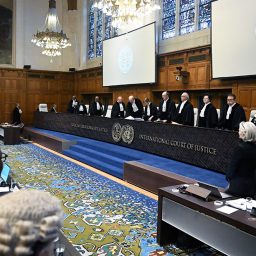
That day, the Constitutional Court of Romania annulled a presidential election while ballots were already being cast abroad. The second round had not even been completed. Citizens standing in lines outside consulates — workers, students, the scattered sons and daughters of a country that has always exported its hope — were told, in effect, that their vote had become a legal inconvenience. An election already in motion was declared void. The people were sent home. The institutions remained.
Call it what you will in the language of communiqués. In the language of a republic, it was a wound. And wounds of this kind do not heal because officials insist they were necessary.
If the Constitution Defense Division exists to protect Romania’s democratic order, then the test of that mission is not how eloquently it describes itself in peacetime. The test is whether it moves when the ballot itself is taken from the citizen’s hand. A court may have signed the decision. Intelligence files may have been declassified in haste. Warnings of foreign influence, illicit money, and digital manipulation may even contain grains of truth — Romania has never been a stranger to pressure from beyond its borders, and no serious patriot pretends otherwise. Fairness requires that much. But a democracy that answers alleged interference by cancelling the people’s choice does not thereby prove its strength. It proves its fear. And fear, dressed in legal robes, is still fear.

The same question returns, harder, when one looks at the candidates barred from the 2024 and 2025 presidential races. A republic has every right to enforce constitutional limits. It has no honest right to treat eligibility as a moving target, adjusted after the electorate has already spoken, or just as it prepares to speak again. When voters begin to believe that the shortlist of permitted names is decided before the campaign, they stop believing in elections. They start believing in management. That is how a free people is taught, slowly, to distrust its own franchise.
This is where the betrayal cuts deepest. The 1989 generation did not overthrow a dictatorship so that a new set of guardians could decide, in closed rooms, which outcomes were safe enough to count. They paid for a simpler covenant: that power would flow upward from the citizen, not downward from the file. Thousands of Romanians stood in the streets and did not come home. Their sacrifice was not a metaphor. It was a transfer of sovereignty. To place a special division on watch over that inheritance, and then to watch the inheritance itself be rewritten while the watchmen offer no public accounting, is not a bureaucratic failure. It is a breach of trust with the dead.
An old saying still applies, and it applies without mercy: for evil to triumph, it is enough for good people to do nothing. The line is not an accusation against every officer who ever took an oath. It is a warning about institutions that confuse self-preservation with patriotism. A watchdog that never barks at the moment the house is entered has already chosen a side, even if it later claims it was only studying the footprints.
History neither forgets nor forgives, because peoples do not. They carry memory in their nerves. That is why so many Romanians now live in a kind of civic depression — not the passing sadness of a lost match, but the heavier knowledge that the rules can be changed after the game has begun. A nation can survive poverty. It can survive emigration. It can even survive humiliation from abroad. What it cannot survive indefinitely is the suspicion that its vote is decorative.
Romania will not recover by pretending December 6, 2024, was a technicality. Recovery begins when that day is named for what it did to the public square: it taught citizens that their sovereignty is conditional. Redress does not mean vengeance. It means restoring the only principle that makes a constitution more than paper — that the people, not the custodians, are the source of legitimate power.
The Constitution Defense Division was entrusted to stand guard. If it stood guard that December, let it say over what. If it did not, then an entire country already knows the answer, and it will not be soothed by silence. A democracy won at such cost cannot be protected by looking away. It can only be protected by facing the people again — fully, without filters, and without fear of their choice.
By Ovidiu Stanica

Related Posts