Scroll Top

Ratcliffe, Zelensky, and the Diplomacy That Happens Between Flights
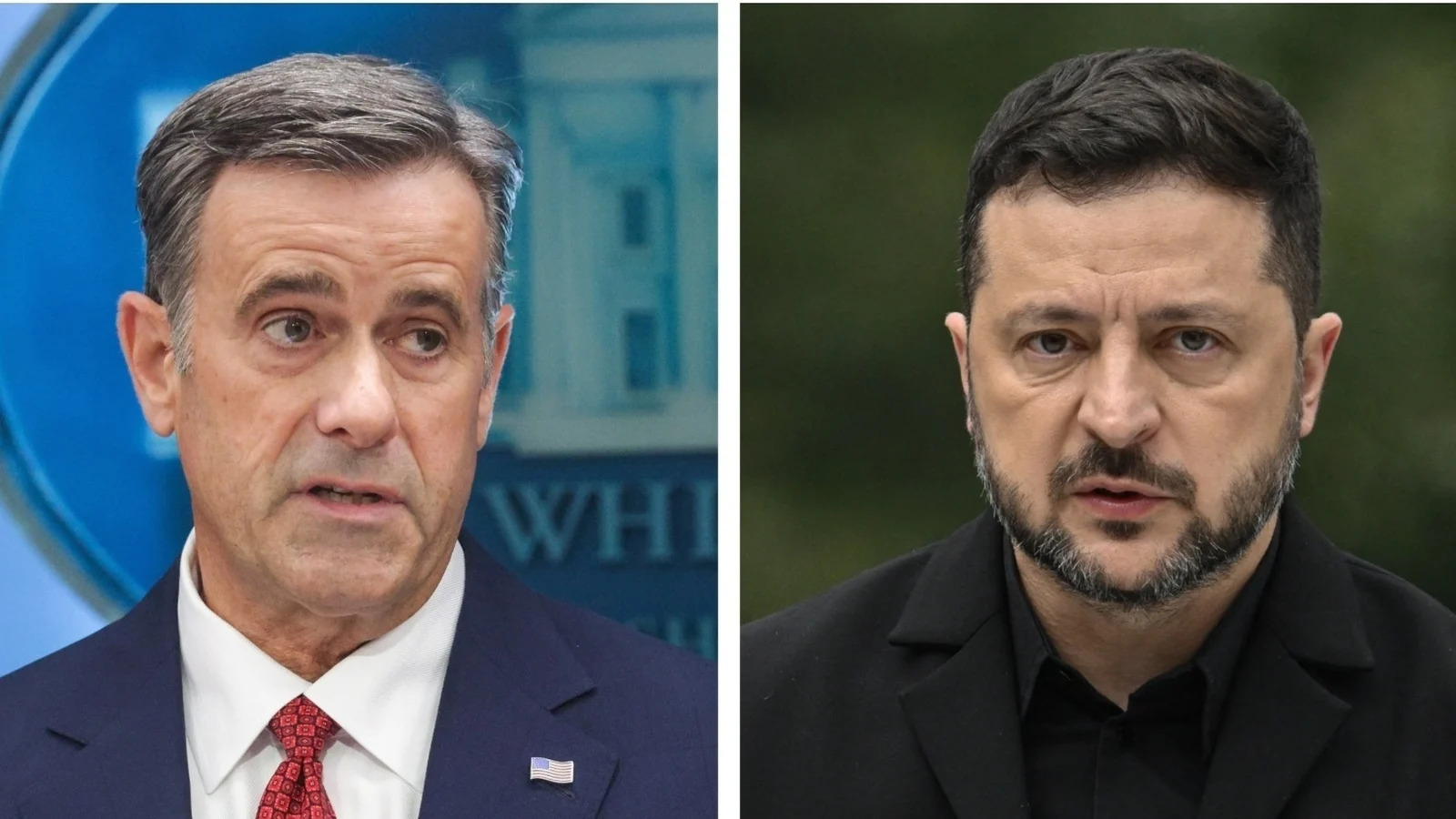
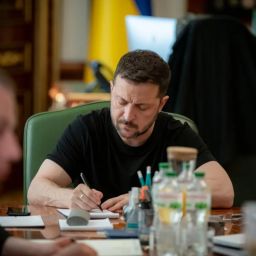
On the tarmac at Shannon Airport in western Ireland, two aircraft sat for refueling. According to two people familiar with the matter, that pause was long enough for CIA Director John Ratcliffe to meet Ukrainian President Volodymyr Zelensky.
It is the kind of encounter that is easy to over-read and hard to ignore. No joint statement followed. No photographs were released. The reported meeting exists, for now, in the half-light where intelligence diplomacy often lives: sourced, unconfirmed by governments, and immediately folded into a larger argument about who is actually trying to end the war in Ukraine—and on whose terms.
Shannon is not a capital and not a conference hall. It is a refueling point on the North Atlantic routes, used for decades by U.S. military and official aircraft. Ireland’s military neutrality has made those stopovers a recurring domestic controversy, even as they have continued. That a CIA director and a wartime president might briefly occupy the same apron is, in that sense, both mundane logistics and potent symbolism: the war’s most sensitive conversations taking place in a country that has tried to stay formally outside it.
The meeting, if it occurred as described, did not arrive in a vacuum. Earlier this month, TDA reported that Ratcliffe planned to take on a more active role in negotiations to resolve the conflict. CIA press chief Liz Lyons later denied that account. The denial matters. It draws a line the agency wants the public to see—between intelligence liaison and political mediation—even as the line is, in practice, often thin. Directors of the CIA have long carried messages, tested moods, and opened channels that State Department envoys cannot always open. Whether that is “a more active role in negotiations” is partly a matter of wording and partly a matter of power: who is in the room, and who is not.

Ratcliffe’s own itinerary already pointed east. On August 25 he visited Moscow. Kremlin spokesman Dmitry Peskov said the trip concerned contacts between the special services of the two countries. That formulation is classic Peskov: precise enough to confirm that the visit happened and that it was not, in Moscow’s telling, a political summit; vague enough to leave the substance sealed. Intelligence-to-intelligence contacts between Washington and Moscow have never fully disappeared, even at the worst moments of the war. They have typically been described, on the U.S. side, as channels for managing escalation, prisoners, and miscalculation. Russia has often preferred to treat them as proof that the real counterpart is Washington, not Kyiv.
That is the tension sitting underneath a Shannon layover. Ukraine has insisted that no settlement can be legitimate if it is bargained over Ukrainian heads. Russia has argued that the war is a contest with the United States and NATO, and that Kyiv is a dependent party. The United States has publicly backed Ukraine’s sovereignty while privately exploring, at various stages, what a deal might actually look like. A CIA director who sees Zelensky on an Irish runway after seeing counterparts in Moscow is, fairly or not, going to be read through that prism—whether Lyons’s denial of a negotiating brief is accepted or not.
None of this requires a conspiracy. Senior officials’ calendars collide. Planes need fuel. A conversation in a terminal or on a jet can be a courtesy, a briefing, a warning, or a probe. Airport meetings have a particular texture: time-limited, deniable, stripped of ceremony. They are useful precisely because they look accidental. The sources who described the Shannon encounter to reporters were, in effect, choosing to make the accident visible.
What remains unknown is the substance. Did Ratcliffe carry an American assessment of Russian red lines? Did Zelensky press for more intelligence, more weapons, or more political cover? Was the talk about the battlefield, about energy, about prisoners, about the shape of a ceasefire that neither capital is yet willing to own in public? Those questions cannot be answered from a refueling stop. They can only be noted.
The war itself supplies the stakes. Years of fighting have frozen and unfrozen front lines, exhausted armies, and left a diplomatic process that is always described as imminent and rarely described as real. Every unexpected bilateral—especially one involving the CIA—becomes a Rorschach test. Hawks see a sellout in the making. Doves see a rare adult conversation. Kyiv sees a reminder that Washington’s attention is finite. Moscow sees confirmation that the war is still, at bottom, an American file.
An impartial reading is less dramatic and more uncomfortable. Intelligence chiefs meet because politicians cannot always afford to. They meet because the alternative to quiet contact is often louder miscalculation. They also meet because great-power wars generate a shadow diplomacy that publics are not invited to watch. A denial from the CIA press office, a Peskov briefing, and two unnamed sources at Shannon are not a peace process. They are evidence that one is being groped toward, or at least that everyone involved wants to look as if it might be.
Ireland, for its part, is left in a familiar position: host to other people’s history during a fuel stop. Shannon has seen presidents, secretaries of defense, and rendition flights. A meeting between Ratcliffe and Zelensky, if confirmed, would be a smaller, stranger addition to that ledger—two men whose jobs are defined by secrets, standing in a country that prefers to advertise openness, while the tanks wait on the clocks.
Until one of the governments involved chooses to describe what was said, the story remains what the sources say it is: a conversation between a CIA director and a Ukrainian president, in Ireland, while the planes were being refueled. In a war this long, even that is not nothing. It is also not yet peace. 
By Ovidiu Stanica

Related Posts