The Trump Photo That Wasn’t? Why Eastern European Leaders Were So Eager to Claim a Presidential Encounter
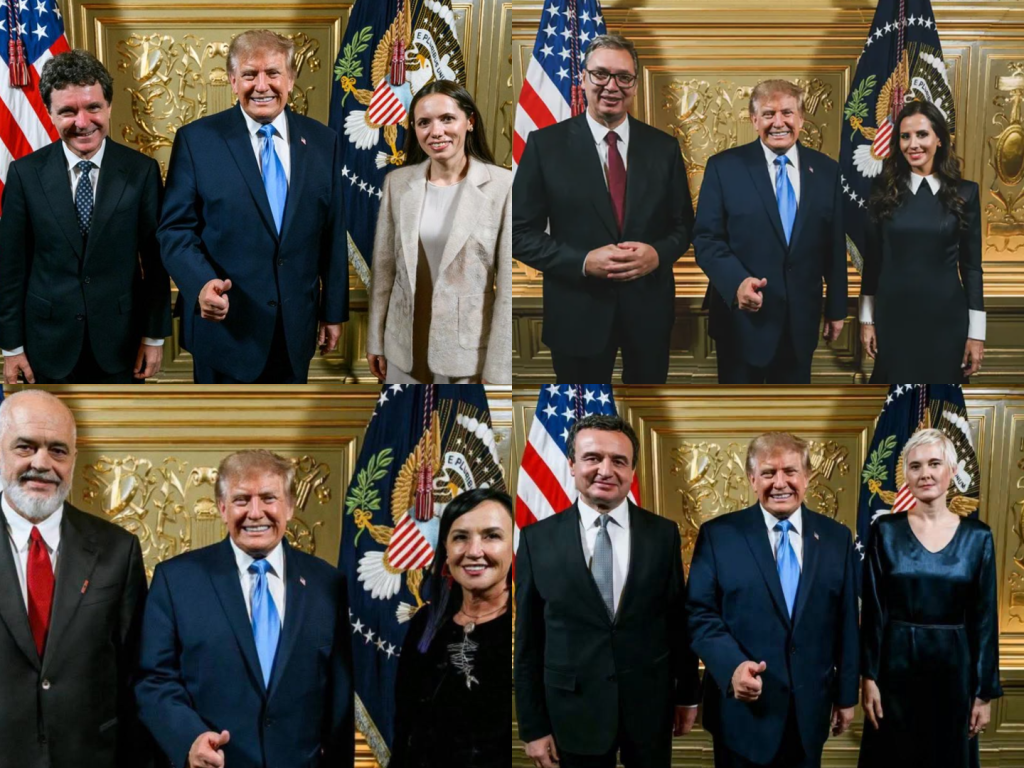
For several Eastern European leaders, one photograph from New York appears to have carried extraordinary political value. Romanian President Nicușor Dan, Serbian President Aleksandar Vučić, Albanian Prime Minister Edi Rama and other regional figures published remarkably similar images from the reception hosted by Donald Trump during the United Nations General Assembly, presenting them as evidence of a personal encounter with the American president.
In Romania’s case, the wording could hardly have been clearer. Dan wrote that it had been “an honor to meet President Donald Trump” in New York and used the image to underline the importance of the Romanian-American strategic relationship. The post came more than a week after the reception itself, alongside similar photographs released by other leaders from the region. What followed was an internet controversy that would have been dismissed as absurd under almost any other circumstances.
Observers began placing the photographs side by side. Trump’s smile appeared strikingly similar from one frame to the next. His right hand seemed frozen in almost precisely the same gesture. His gaze barely shifted. His posture changed little even as the people standing beside him changed repeatedly. The resemblance across the images was sufficiently unusual that speculation spread rapidly through Balkan and Romanian social media that the leaders had not, in fact, posed with Trump himself, but with a life-size representation, a wax figure, a mannequin or even a cardboard cutout. Regional media documented the growing theory after users compared images featuring Nicușor Dan, Aleksandar Vučić, Edi Rama, Albin Kurti and others. There was another detail that fueled the speculation. Trump is approximately 1.90 meters tall, a physical characteristic that is usually immediately apparent when he stands beside other political leaders. Yet in several of the reception photographs, his apparent height relative to the person beside him varies in ways that have attracted scrutiny online. In some frames he appears only marginally taller than considerably shorter counterparts. In others, the proportional relationship appears different again.
Sure, none of that, on its own, proves anything. Camera angle, perspective, footwear, positioning and image processing can radically alter apparent height. Likewise, an experienced politician posing repeatedly for official photographs can easily reproduce the same smile, hand gesture and body position dozens of times. There is, however, another element to this story. A source with direct knowledge of White House communications, speaking to The Diplomatic Affairs on condition of anonymity because the person was not authorized to discuss the matter publicly, said the figure used in at least some of the ceremonial photographs was not Donald Trump himself, but a life-size representation of the president. The Diplomatic Affairs has not independently obtained photographic or logistical evidence sufficient to verify that account, and the White House has not publicly confirmed such an arrangement.
The Romanian Presidential Administration has explicitly rejected the broader “cardboard Trump” theory. Following the spread of manipulated images online, the institution said that material purporting to show leaders posing beside a Trump cutout had been created with artificial intelligence and described it as an attempt to ridicule the diplomatic event and undermine trust in official communications. That denial matters.
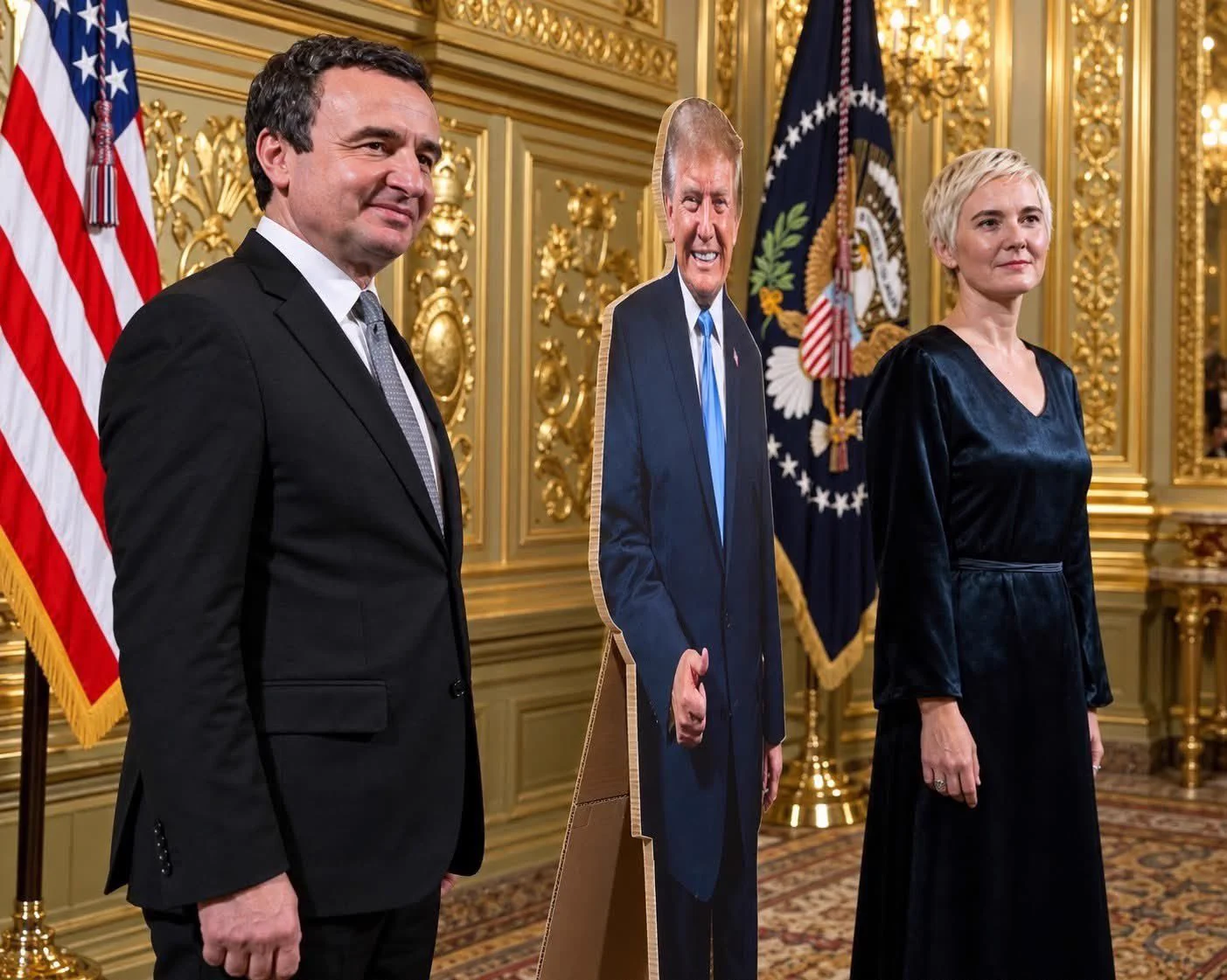
So does the fact that the original photographs distributed by leaders and governments are not, by themselves, proof that Trump was absent. The real question is therefore larger than the internet joke and potentially more revealing than whether a piece of cardboard stood in a New York reception hall. Why did so many leaders feel compelled to present these photographs as politically meaningful encounters in the first place?
Official receptions at the United Nations are choreographed events by design. Heads of state pass through reception lines, exchange brief pleasantries and pose for photographs that are later distributed by official photographers. Such images rarely represent substantive diplomatic meetings, as they are more ceremonial records. Yet, the political language surrounding some of the photographs transformed a fleeting reception moment into something considerably grander.
In Romania, Dan’s post did not simply say he had attended Trump’s reception. It said he had “met” the American president and immediately connected that moment to the strategic partnership, American military presence and Romania’s commitment to the United States. There is a substantial difference between a bilateral meeting with an American president and a photograph taken during a reception line. The first implies access, conversation, policy discussion and diplomatic significance. The second may involve little more than several seconds in front of a camera. Yet in the modern political landscape, the image itself can become the diplomatic achievement. That is perhaps the most revealing aspect of the entire affair.
The controversy surrounding the photographs exposes how intensely smaller and medium-sized states continue to seek visual proximity to American power. A photograph with the president of the United States can be repackaged domestically as validation, influence, international standing or proof of privileged access to Washington. For leaders facing political pressure at home, that image has obvious value. The United States remains the dominant security actor across much of Eastern Europe. Romania hosts American troops and depends heavily on the transatlantic alliance for deterrence on NATO’s eastern flank. Serbia, despite pursuing a more complex foreign policy between Washington, Moscow, Beijing and Brussels, continues to seek recognition and engagement from the United States. Albania and Kosovo are among the most openly pro-American societies in Europe.
Being seen beside the American president therefore carries symbolic capital. But symbolism becomes something more uncomfortable when politicians encourage their publics to interpret ceremonial access as personal diplomatic achievement. If the anonymous account provided to The Diplomatic Affairs is eventually corroborated, the episode would become considerably more embarrassing. Political leaders would then have presented photographs with a presidential representation as though they documented direct personal access to Donald Trump himself.
The humiliation would not lie in the use of a cardboard figure. Large diplomatic events routinely employ elaborate staging, controlled photography, replicas, branding elements and carefully managed reception procedures. There would be nothing inherently scandalous about a White House using a visual representation of the president for some ceremonial purpose. The problem would lie in what happened afterward. It would mean that elected leaders knowingly took an artificial ceremonial image and converted it into the language of personal diplomacy. That would be a failure of political self-respect.
International politics has always contained theatre. Royal courts staged audiences for centuries. Communist regimes perfected choreographed handshakes. Democratic governments carefully engineer podiums, flags, lighting and camera angles. But there is something uniquely revealing about the contemporary obsession with the photograph itself. Access has become content, diplomacy is nowadays branding, a reception line becomes a bilateral encounter and a photograph becomes proof of geopolitical relevance. And perhaps most strikingly, political leaders increasingly appear willing to participate in that fiction because they understand that the image will travel farther than any diplomatic communiqué ever could.
The irony is particularly sharp in the age of artificial intelligence. Governments warn constantly about manipulated photographs, synthetic video and disinformation. Romania’s presidency did exactly that when it rejected the viral cardboard-Trump images as AI-generated material. But the deeper vulnerability may not be technological at all. It may be political, because itizens do not need artificial intelligence to be misled if governments themselves encourage exaggerated interpretations of carefully staged images. The difference between “I attended a reception hosted by President Trump” and “I met President Trump” may appear linguistically minor.
Diplomatically, it can be enormous. A genuine meeting implies recognition, time and political engagement. A photograph proves only that a photograph was taken, and this is where the episode becomes less amusing than it first appears. Eastern European politics has spent decades trying to escape the psychology of the provincial court, the instinct to measure national importance by proximity to a larger power. European integration and NATO membership were supposed, at least in part, to normalize these states as sovereign participants in the Western system rather than petitioners waiting outside somebody else’s palace. However, single photograph from New York can still trigger triumphal announcements at home. That should trouble voters more than any cardboard cutout ever could.
Because whether Donald Trump was physically present in every one of these photographs is ultimately a factual question that can and should be established through evidence. The political question is already visible: why did elected leaders believe that appearing beside him, even for a few seconds at a ceremonial reception, required such emphatic public certification? The answer may say something uncomfortable about the hierarchy that still exists inside the Western alliance.