A Rematch, With a New Bolsonaro: Brazil Heads to a Runoff Between Lula and the Son of His Old Rival
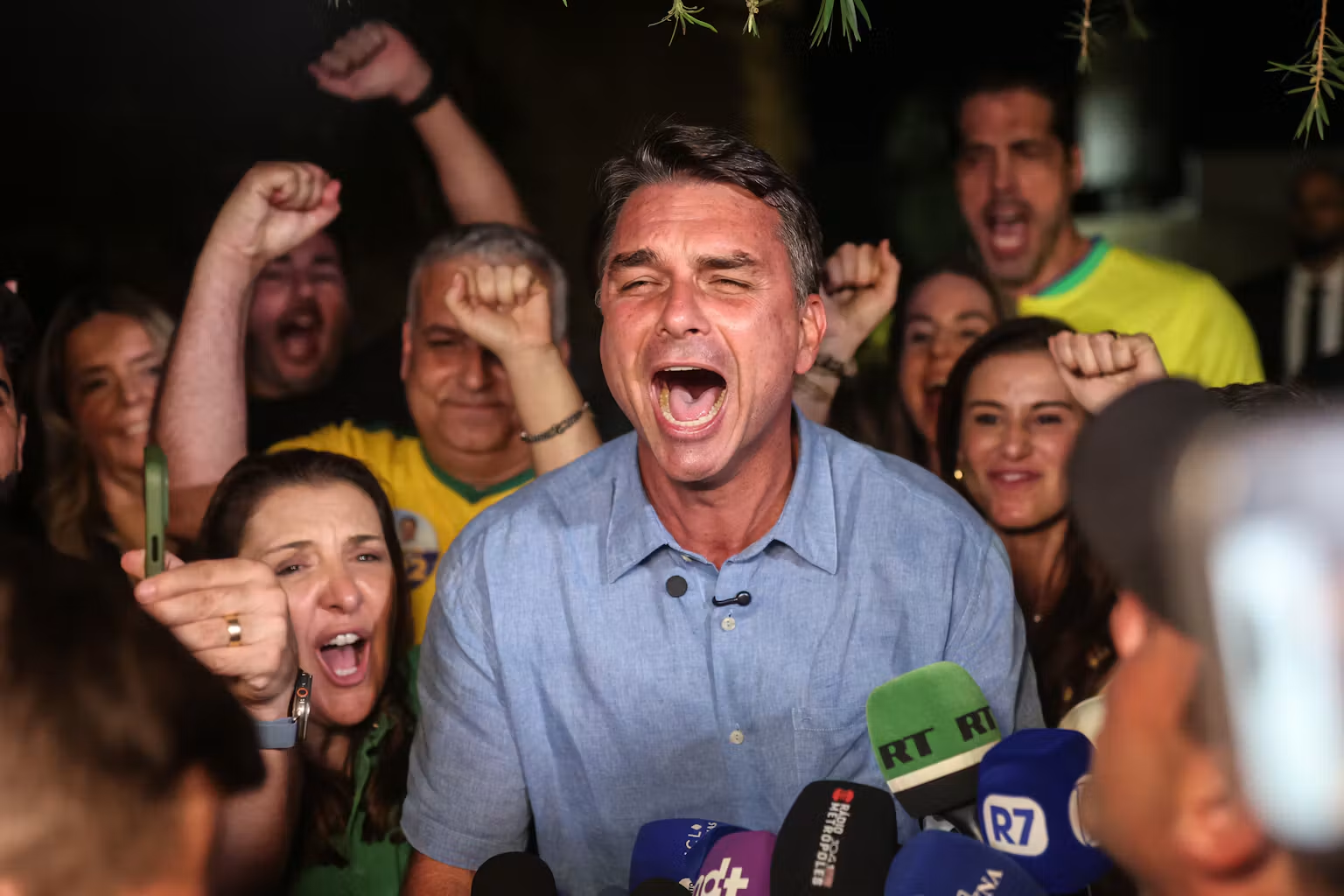
Brazil’s presidential election is heading to a second round, and it did so on Sunday with a twist that few had fully anticipated. In the first-round vote on October 4, neither candidate crossed the 50% threshold required to win outright, sending the contest to a runoff on October 25.
The surprise was not that there would be a second round, which most forecasts expected, but who led the first. Senator Flávio Bolsonaro, the eldest son of former president Jair Bolsonaro and the candidate of the right, finished ahead of the leftist incumbent Luiz Inácio Lula da Silva, a result that private surveys, which had shown Lula leading by around three points, failed to predict. Lula, who finished second with roughly 44.9%, admitted he had expected to win outright. “I confess I was convinced I would win the election in the first round,” he told supporters in São Paulo late Sunday.
To understand the significance of this result, one has to appreciate how much it is, and is not, a repeat of 2022. Four years ago, Lula defeated the sitting president Jair Bolsonaro by the narrowest margin in Brazil’s history, roughly 50.9 to 49.1%, in the most polarized election since the country’s return to democracy in the 1980s. Jair Bolsonaro, a close ally of Donald Trump, refused to accept the result, and his supporters went on to storm and vandalize Brazil’s presidential palace, Congress and Supreme Court in an assault widely compared to the January 6 attack in the United States. That history is the shadow over everything that follows. The 2026 contest is a rematch of the same ideological forces, left against right, Lula against the Bolsonaro movement, but with a crucial substitution at the top of the ticket. Jair Bolsonaro himself, having been convicted and rendered ineligible, is not the candidate. His son Flávio is, carrying the family banner and the Liberal Party into the fight.
That substitution is the central fact of the election, and it carries real weight. Flávio Bolsonaro is not simply a stand-in for his father; he is a senator in his own right, elected in 2018, and now the standard-bearer of a movement attempting to prove it can win power through the ballot box under a new face. His first-round lead suggests the Bolsonarist current in Brazilian politics remains powerful and may even be growing, notwithstanding the legal downfall of its founder. The broader results reinforced that impression of a rightward shift: in São Paulo, the country’s most populous and economically dominant state, Governor Tarcísio de Freitas, a former minister under Jair Bolsonaro, was reelected in the first round, and the right made gains across a range of state and congressional races. For Lula, finishing second to a Bolsonaro who is not even the original Bolsonaro is a sobering signal about the durability of the movement he has spent his career opposing.
The campaign that produced this result was dominated, by most accounts, by three themes: crime, corruption and Donald Trump. Public safety and the fight against organized crime have risen to the top of Brazilian voters’ concerns, an issue on which the tough-talking right has traditionally held an advantage. Corruption scandals have dogged the political class across the spectrum and fed a broader voter fatigue, a sense of exhaustion with the choices on offer that some analysts blame for a first round that failed to fully energize the electorate. And looming over the contest is the figure of the American president, whose alliance with the Bolsonaro family and whose tariff pressure on Brazil have made the United States an unusually direct presence in the campaign. The runoff, as one account put it, will give voters a stark choice over Brazil’s future both at home and abroad.
For Lula, the stakes are deeply personal as well as political. At 80, he is seeking a fourth and almost certainly final term, the capstone of one of the most remarkable careers in modern Latin American politics, from union leader to president to prisoner to president again. A defeat would not only end his career but would hand the Bolsonaro movement the vindication it was denied in 2022, and would do so through his old rival’s son. “Tomorrow we start a new campaign,” Lula told supporters, signaling that he intends to fight the three weeks to the runoff as a fresh contest rather than a continuation of a first round that disappointed him. History offers him some encouragement: in 2022 he too led the first round without winning outright and went on to prevail in the runoff, and Brazil’s electoral map contains bellwethers, such as the state of Minas Gerais, which has backed the winner of every presidential election since the end of military rule in 1985.
The runoff polling, for what it is worth in a race that just confounded the forecasters, suggests an extraordinarily tight contest. Surveys have shown Lula and Flávio Bolsonaro running roughly even for October 25, with different pollsters reading the race differently, some giving Lula a narrow edge and others handing it to Bolsonaro. What is clear is that the second round will be a genuine toss-up, fought over the voters of the eliminated candidates and over the turnout of a somewhat disenchanted electorate. The makeup of the next Congress, also being decided in these elections, will further shape how much room the winner has to govern, and early results pointed to a legislature in which neither bloc commands an easy majority.
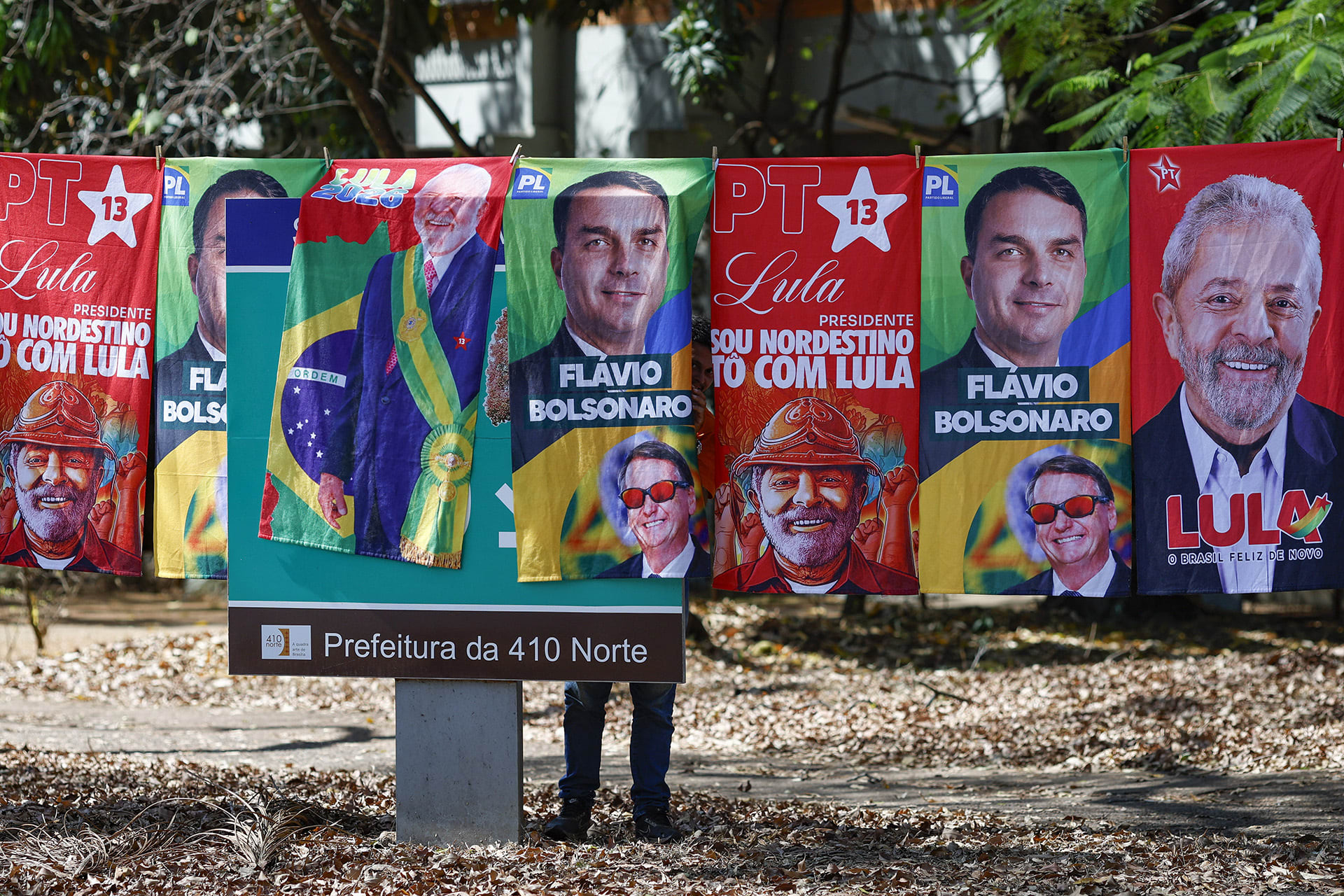
Beyond the horse race lies a question that hangs over the entire exercise, and it is the one that most distinguishes this election from an ordinary democratic contest. After 2022, when the losing side refused to accept defeat and resorted to violence, the central issue is not only who wins but whether the result will be respected. Analysts have pointed out that the far right in Brazil has not yet made the unambiguous commitment to democratic norms that the memory of the January 2023 assault on Brasília demands. Flávio Bolsonaro inherits not only his father’s movement and its voters but also the unresolved question of whether that movement accepts the rules of the democratic game when it loses. His conduct, and that of his supporters, in the event of a narrow defeat on October 25 will be watched as closely as the vote count itself.
What Brazil faces, then, in the three weeks between the first round and the second, is a contest that is at once familiar and new. Familiar, because it pits the same left against the same right, Lula against the Bolsonaro name, in a country as polarized as it was four years ago. New, because the right is led by a different man, because the rightward drift of the first round suggests the balance may have shifted, and because the shadow of 2022, the refusal, the riot, the assault on the institutions of the state, means that the stakes extend beyond policy to the health of Brazilian democracy itself. On October 25, Brazilians will choose not only a president but, in a sense, an answer to the question their last election left open: whether the country’s democratic institutions, so recently attacked, can deliver a result that all sides will accept. The campaign starts again tomorrow, as Lula said. So does the test.