Germany Arrests Its Former Intelligence Chief for Treason and Espionage
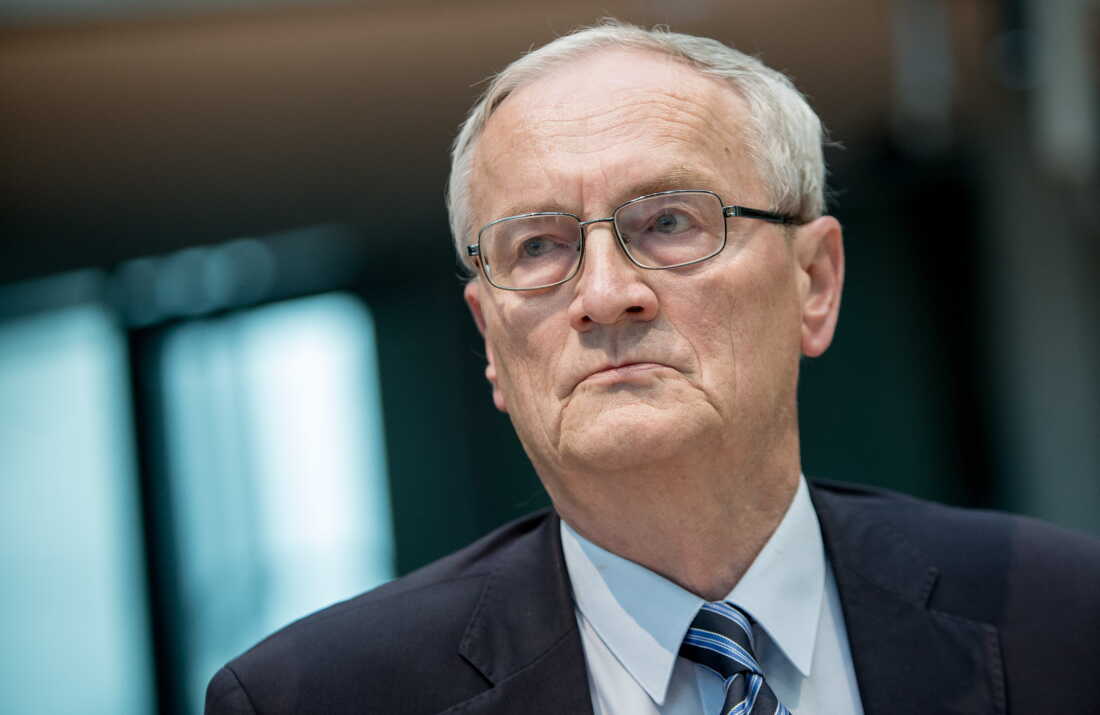
August Hanning once ran the BND, the agency charged with keeping Germany’s secrets. Now, at 80, he stands accused of trafficking in them, allegedly buying thousands of classified documents from a mole inside the service to resell through his private consulting business.
On Tuesday, October 6, German federal prosecutors did exactly that, detaining August Hanning, the former president of the Bundesnachrichtendienst, the BND, Germany’s foreign intelligence service, on suspicion of treason and espionage. Hanning, who is 80 and ran the agency from 1998 to 2005, was arrested at his home in southern Germany. Alongside him, prosecutors detained his former chief of staff, identified in line with German privacy rules only as Manfred D., accused of being the source who fed him the secrets. For a country acutely conscious of the dangers of espionage, the spectacle of its former top intelligence official in handcuffs is a scandal of rare magnitude.
The charges are grave and specific. Prosecutors say Hanning is strongly suspected of treasonous espionage, spying out state secrets, attempted treason, and acting as an agent for intelligence services. His alleged accomplice faces charges of aiding and abetting attempted treason and treasonous espionage. The weight of that language, treason in particular, signals how seriously the German state regards the breach, and it is striking precisely because of who the accused is. This is not a junior officer or a disgruntled analyst. It is the man who once sat at the apex of German intelligence, now accused of betraying the very institution he led.
The mechanics of the alleged scheme, as laid out by prosecutors and German media, are what make the case so remarkable. The key to it is Manfred D., who was not merely Hanning’s former chief of staff but a figure who retained extraordinary access to the agency for years after Hanning himself had left. After serving as Hanning’s chief of staff at the BND, he went on to work as chief of staff for several of Hanning’s successors as BND president, in some accounts from 2012 until as recently as early 2026. That continuity gave him access to a steady stream of classified material long after his old boss had moved on. According to the prosecutors, the two men agreed, no later than the spring of 2010, that Manfred D. would supply Hanning with internal intelligence information on a continuous basis in exchange for money.
The scale of the alleged leak is considerable. Investigators believe that, up to June 2022, Manfred D. handed Hanning nearly 2,000 documents, many of them classified as secret and intended solely for the internal use of the BND, material meant for the agency’s operational analysis and situation assessments, including reports tied to regular high-level security meetings at the Federal Chancellery. The alleged purpose was not ideological but commercial. Prosecutors contend that Hanning used the classified information in his private consulting work to turn a profit, reselling the intelligence. In one case, they say, he produced an analysis for an employee of a foreign intelligence service based on classified material obtained from the BND, and over a period of years he is alleged to have supplied political information, partly derived from Manfred D.’s documents, to a member of another state intelligence service.
It is essential, at this point, to be clear about what the case is and is not, because the most obvious assumption turns out to be contested. Germany has suffered a series of genuine Russian espionage scandals in recent years, including the 2022 arrest of a BND employee accused of passing state secrets to Moscow, and that history naturally colors how any new intelligence breach is read. For years, according to German media, there had been suspicions that Hanning himself might be an informant for Russian intelligence, a theory reportedly advanced by a former agent, and one that Hanning consistently and forcefully rejected in statements to the press as absurd. But, crucially, the current investigation does not appear to center on a Russian connection. Reporting by the German broadcasters WDR and NDR and the newspaper Süddeutsche Zeitung indicates that the present case is not focused on a link to Russia. The alleged crime, as prosecutors frame it, is the commercial trafficking of classified material for private gain, not ideological betrayal to a hostile power.
Equally important is the presumption of innocence, which applies with full force here. Hanning has not been convicted of anything, the allegations remain allegations, and he has in the past dismissed suspicions about his conduct as nonsense. An arrest and a set of charges, however serious, are the beginning of a legal process, not its conclusion, and the specifics prosecutors have outlined will have to be tested with evidence before a court. That caution is especially warranted in a case involving classified material, where much of the evidence may never be fully public and where the accused is a figure with powerful reasons and powerful means to contest the charges.
The investigation’s origins add another layer of intrigue. The case was triggered, according to German reporting, by discoveries made during a search in September 2025, and Germany’s federal prosecutor’s office formally took over the investigation in early May 2026. Investigators are reported to have gone so far as to wiretap the former intelligence chief’s phones, an extraordinary measure to deploy against a man who once directed the nation’s own surveillance apparatus. There is a bitter irony in that detail, the former master of German intelligence surveilled by the state he once served, and it underscores how thoroughly the hunter has become the hunted.
Hanning’s career makes the fall all the more dramatic. After his seven-year tenure atop the BND ended in November 2005, he served as a state secretary in Germany’s Federal Ministry of the Interior from 2005 to 2009, remaining a significant figure in the German security establishment. He then moved into the private sector, working as a consultant in security and business affairs around the world, the very line of work in which prosecutors now allege he monetized the nation’s secrets. The arc, from guardian of the state’s most sensitive information to accused merchant of it, is the kind of story that will reverberate through Germany’s security community for years, raising uncomfortable questions about oversight, about the revolving door between intelligence service and private consultancy, and about how a mole could allegedly operate at the heart of the BND for well over a decade.
For now, the essential facts are these. Germany has arrested its former foreign intelligence chief and his alleged accomplice on grave charges of treason and espionage, built around the alleged sale of classified secrets for private profit. The case does not, on current reporting, appear to be about Russia, despite the long-circulating suspicions, but about money and the betrayal of institutional trust. And it remains, for all its drama, an allegation yet to be proven. What is already certain is that the affair represents one of the most serious internal breaches German intelligence has ever faced, striking not at the periphery of the service but at its former summit. The man who once decided which of Germany’s secrets were worth protecting now stands accused of deciding which were worth selling, and the country he served will be reckoning with the implications long after the legal process has run its course.