The Island Everyone Suddenly Wants: A Profile of Greenland in the Year It Became the World’s Prize
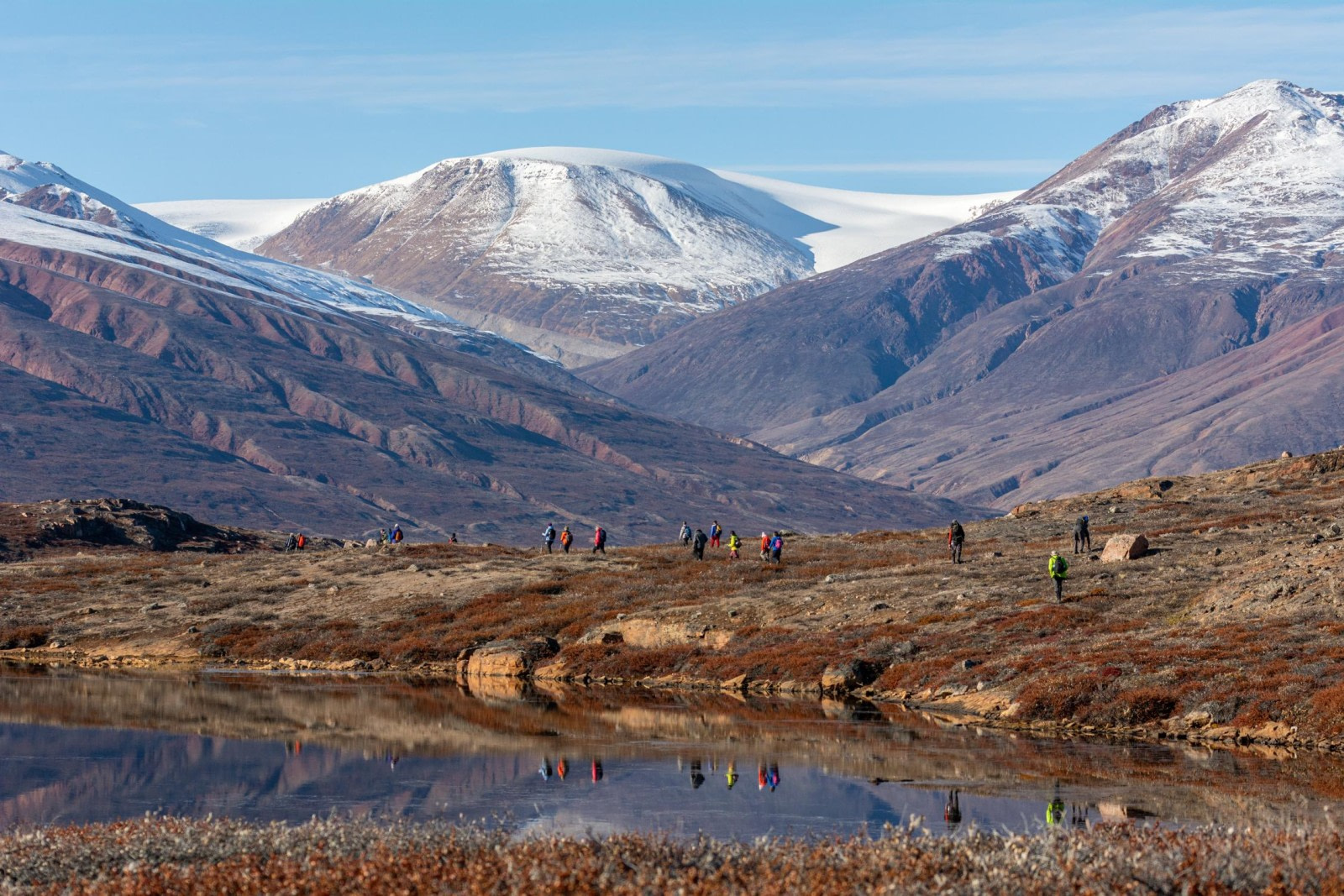
Fifty-seven thousand people on the largest island on earth, sitting atop rare earths and astride the melting sea lanes of the Arctic. In 2026 Greenland found itself the object of an American president’s ambition, a Danish reckoning, and a great-power scramble it never asked to join. This is the country behind the headlines.
For most of modern history, Greenland’s defining quality was its remoteness. The largest island on the planet, four fifths of it buried under a permanent ice sheet, home to just 57,000 people scattered along its habitable coasts, it was a place the world was content to leave at the edge of its maps. That era ended abruptly. In 2026, Greenland became one of the most talked-about territories on earth, not for anything its people did, but for what everyone else suddenly decided it was worth.
To understand how a nation of 57,000 came to sit at the center of a global contest, one has to understand three things at once: its land, its long road toward nationhood, and the man in Washington who forced it into the headlines.
Begin with the geography, because the geography is the reason for everything else. Greenland stretches across the top of the world between the Atlantic and the Arctic Oceans, a vast landmass whose interior is a mile-thick sheet of ancient ice and whose people cling to the fjords and coastal towns, the capital Nuuk chief among them. Ethnically and culturally, Greenland is overwhelmingly Inuit, with its own language, Kalaallisut, and a way of life historically bound to fishing, hunting and the sea. It remains a self-governing territory of the Kingdom of Denmark, in control of most of its domestic affairs while Copenhagen retains authority over foreign policy and defense, and while a substantial annual Danish subsidy underwrites the Greenlandic economy. That economy rests heavily on a single pillar, fishing exports, supplemented by the block grant from Denmark, a dependence that sits at the very heart of the island’s political debate.
What has transformed Greenland from a periphery into a prize is a combination of ice and minerals. As the Arctic warms faster than almost anywhere on earth, Greenland’s ice is retreating, and two things are emerging from beneath it. The first is access: new shipping routes across the top of the world, lanes that could reshape global trade and that both Russia and China have moved to exploit through intensified Arctic activity. The second is wealth: Greenland sits atop substantial untapped deposits of rare earth elements, the minerals essential to everything from electric vehicles to precision weapons, and whose supply is currently dominated by China. An island once valued for nothing is now valued for precisely the things the twenty-first century cannot do without, strategic position and critical minerals. It is this, more than anything, that put Greenland in the crosshairs.
The man who pulled the trigger was Donald Trump. Since returning to office in January 2025, the American president has repeatedly vowed to bring Greenland under United States control, calling it vital to American security and refusing to rule out coercive means, an ambition that stunned Copenhagen, alarmed European capitals, and was rejected by the overwhelming majority of Greenlanders themselves. “Greenland never has been for sale and never will be for sale,” as one of the island’s representatives in the Danish parliament put it, a sentiment that polling has consistently confirmed.
Trump’s pressure did not cause Greenland to fall into American hands. What it did was thrust a quiet territory into a geopolitical firestorm, expose long-buried questions about Denmark’s stewardship, and accelerate a debate about Greenland’s future that had been simmering for decades.
That debate came to a head in the island’s parliamentary election, which was held in the shadow of Trump’s pledge and dominated by the question of independence. The result was a surprise, and a revealing one. The pro-business, center-right Demokraatit party, led by Jens-Frederik Nielsen, a former minister of industry and minerals, surged from around 9% in the previous election to nearly 30%, tripling its seats and displacing the long-governing left-nationalist coalition of Inuit Ataqatigiit and Siumut. In second place came Naleraq, a party favoring rapid independence, at roughly 24%. The message of the vote was subtle but important: four of the five main parties favor eventual independence from Denmark, meaning Greenland is no longer really divided over whether to become a nation, but over when and how fast. And by handing victory to the gradualists rather than the rapid-independence camp, voters signaled that they want sovereignty built on a solid foundation rather than declared in haste.
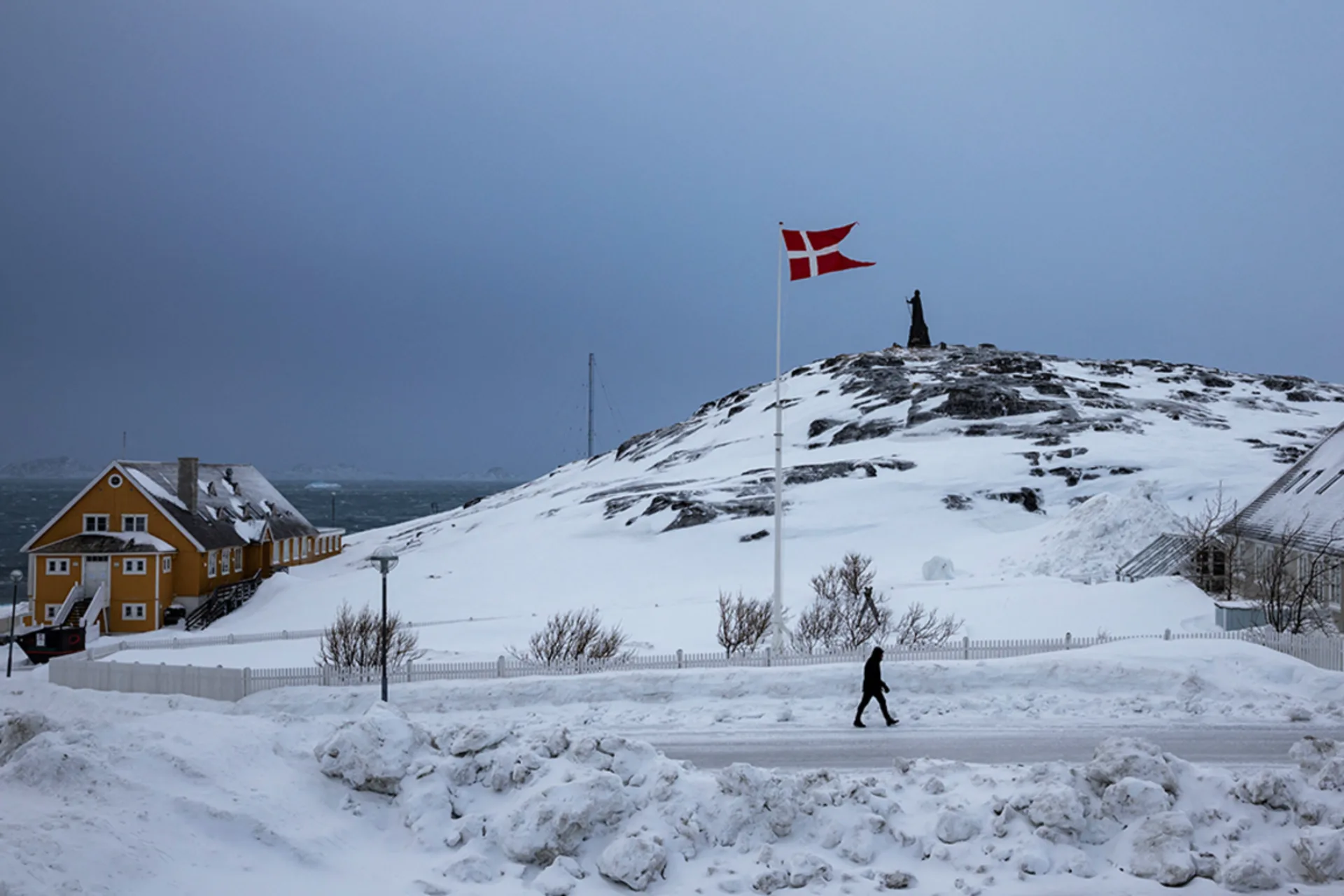
Nielsen, who became the island’s likely leader after the vote, has articulated that gradualist philosophy with a memorable image. “In relation to state formation, we must first build the foundation,” he said. “We must not build the house from the chimney down.” His government’s approach is expected to be pragmatic and business-friendly, focused on economic growth, responsible development of Greenland’s resources, and the strengthening of the island’s financial independence before any pursuit of full sovereignty. This is the crux of Greenland’s dilemma, and it is an economic one before it is a political one. The island cannot become truly independent while it depends on a Danish subsidy to fund its welfare, and so the road to nationhood runs directly through the development of its fisheries, its minerals and its own economic capacity. Independence, in the Greenlandic view that prevailed at the ballot box, is not a leap but a construction project.
Notably, Nielsen has been clear-eyed about the American shadow over all of this, having called Trump “a threat to our political independence.” Herein lies the delicate balance Greenland must now strike. It seeks to loosen its ties to Denmark while refusing to be absorbed by the United States, to develop its resources with foreign investment while retaining control of its own destiny, and to build the economic foundations of statehood in the middle of a great-power scramble that treats the island as an asset rather than a nation of people. Greenlanders want, in the phrase that captures the mood, a future without Trump and without Denmark, on their own terms and at their own pace.
What makes Greenland’s story so compelling is that it compresses several of the defining forces of the age into a single small population. Climate change is literally reshaping its territory. The global race for critical minerals has made its subsoil strategic. The competition among the United States, China and Russia for Arctic dominance has made its location priceless. And the long, unfinished process of decolonization is playing out in its patient march toward self-rule. Fifty-seven thousand people now find themselves holding, almost by accident, a piece of ground that the most powerful nations on earth have decided they need.
The year 2026 will be remembered as the moment Greenland stopped being a footnote and became a protagonist. Whether it can convert the world’s sudden attention into leverage, extracting better terms from Denmark, investment from partners, and respect for its right to choose, rather than being crushed between competing ambitions, is the question that will define its coming decade. For now, the island holds a strange and unfamiliar kind of power: the power of being wanted.
What it does with that power, and whether it can build its house from the foundation up before someone else moves in, is a story the whole world, for once, is watching.
By I. Constantin