Skip to main contentScroll Top

Russia is moving to the next level with “Putin’s Ark”—a civilizational platform intended to save Christianity through Orthodoxy. What are its objectives in the war against the West or in the competition with China?
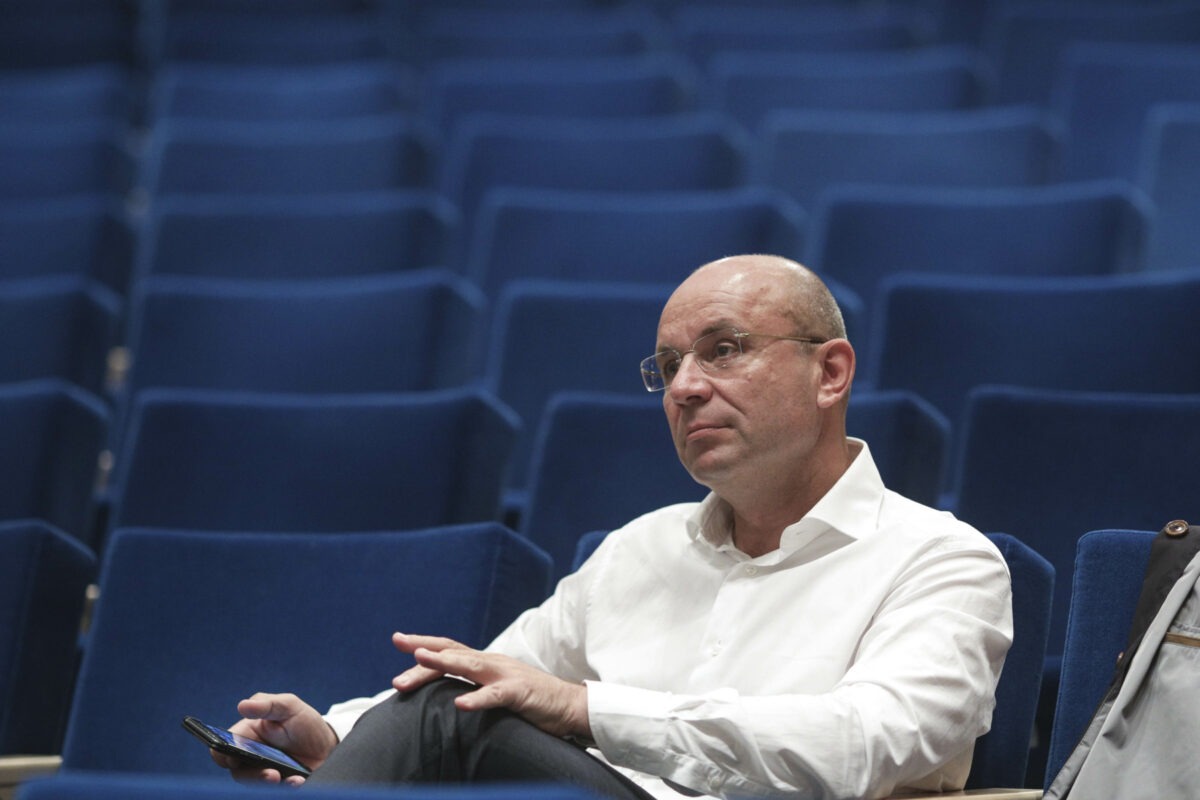
Photo: SolidNews/Cozmin Gusa

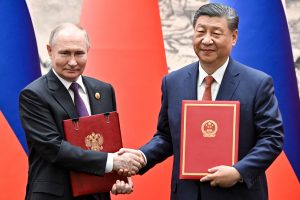
The world is becoming increasingly surprising for all of us—but especially for the more credulous or heavily indoctrinated—those who still believe (and don’t be surprised by this) that no trilateral meeting between Putin, Trump, and Xi has even taken place, and that the world will not change at all, or has not already changed. Yes, indeed—such people do exist; they are, naturally, thoroughly bewildered by a mendacious, propagandistic media—a media which, whether we care to admit it or not, remains the dominant force both in Romania and throughout the Western world.
Also surprising—to the vast majority, an overwhelming majority—is Vladimir Putin’s recent move to launch an “Ark of Orthodoxy,” intended to save Christianity. Yet, for those who have been listening to Gold FM over the past few years, this development is not particularly surprising; they have already heard about the “Orthodox International” that Moscow has been orchestrating for many years. This initiative is nothing new—it has been discussed on Gold FM on several occasions, most recently this past June.
Well, under the pretext of the 80th birthday of Patriarch Kirill of Moscow—and under the umbrella of the media project “Our Baptism: The Primate,” which explores the spiritual and identity-based roots of the Russian state and outlines Russia’s strategic vision regarding its civilizational role in the world—Vladimir Putin gave an interview. Sergey Lavrov also gave an interview, which is at least as interesting. Transcripts of both are available on the Solid News website; I encourage you to read them if you are interested in the subject.
The real bombshell of this project, titled “Our Baptism,” comes—as one might expect—from “Tsar” Putin. He conducted his interview with the renowned filmmaker Emir Kusturica, a man who is himself a deeply Orthodox figure. For those who may not know, Kusturica is Serbian; he is best known for his films depicting the history and tragedy of Yugoslavia. He often approached these subjects with dark humor, portraying the Balkan wars and the region’s disintegration under Western pressure—a body of work for which he was awarded the Palme d’Or at the Cannes Film Festival. In this interview, which lasts about 45 minutes, Kusturica played the role of a sounding board for Putin to perfection. Clearly feeling at ease in the company of his fellow Orthodox Serb interviewer, Putin presented something to a global audience—in an unusual manner—that he had not previously engaged in. You can also find the interview on YouTube, with Romanian subtitles provided by JURNAL.INFO.
Before moving on to the conclusions mentioned in the title—which may seem incomprehensible or, at the very least, overly dramatic—I must highlight a few points that support my hypothesis: namely, that through these actions, Putin and Russia have embarked upon a civilizational project on a global scale. The interview begins with some jokes, but take note: some of them carry a deeply interesting cultural subtext. It immediately became clear to me that, in this public appearance, we are encountering a distinctly mystical Vladimir Putin—particularly in his vision of Russia. Naturally, this is an Orthodox form of mysticism. He mentions the great Field Marshal Münnich, citing a remark attributed to him: “Russia is a country governed directly by God.” Putin goes on to note—and I quote—that another of the world’s great poets, the German Rainer Maria Rilke, once wrote that “Russia is a country that borders on God.” At this juncture, Emir Kusturica poses a provocative question: “The Russian Orthodox Church is present today in over a hundred countries, and the Russian state serves as the foundation for the entire Russian civilization. Could Russian civilization become a true ‘ark’—a vessel capable of saving all those who believe in Christ?” Emir Kusturica—who had his questions written down to ensure accuracy—delivered them in Russian, a language he speaks, as I observed, perfectly. The fact that he had these points written down does not mean someone had fed them to him; rather, it suggests that Emir Kusturica wanted to be precise, aiming for a very specific area of ​​discussion. To repeat: “Can Russian civilization become a true ark, capable of saving all those who believe in Christ?”—that is to say, all Christians. Putin’s response came immediately. I quote: “It can. It can. Most certainly, it can. And I say this to you now with such conviction—not only because, throughout the centuries, Russian theological and philosophical thought has held to the idea that ‘Moscow is the Third Rome, and there shall be no fourth’…”
Though he appeared remarkably relaxed—almost transformed into a guru of Orthodoxy—Putin remained highly attentive to detail, immediately broadening the analysis to encompass humanism. I quote:
“And when you asked whether Russia could serve as an ‘ark’ for the salvation of people—this applies, incidentally, not only to Orthodox Christians, but, in a broader sense, to non-Christians as well. As is well known, Russia recognizes four traditional religions: Buddhism, Judaism, Islam, and Orthodoxy. Representatives of all these faiths and religions coexist and develop together. To a large extent, we share common traditional values.
Russia and Orthodoxy can indeed play the role of the ‘ark’ you mentioned. How does this relate to the reality in the West, where the Christian Church does not play as significant a role in society as Orthodoxy does in Russia? I believe it stems from the fact that we respect our brothers and sisters in Europe. Furthermore, we strive to support everyone whenever we witness unjustified attacks against various branches of Christianity.”
It is quite clear—and easy for me to argue—having cited Kusturica’s questions and a portion of Putin’s responses. I would, however, like to bring up the “Orthodox International”—a long-standing project of Moscow. As it happens—or perhaps by fate—it was I, Cozmin Gușă, who coined the term for this project. About 20 years ago, around 2006, while attending a conference in Moscow, I raised the possibility of an “Orthodox International.” You can find further details in the various statements and accounts I have shared over the last two decades—some of which are quite recent. We can say, therefore, that in light of this interview, the old project of an “Orthodox International” takes on a concrete role and form. Specifically, it now becomes “Putin’s Ark.” Quite simple and clear.
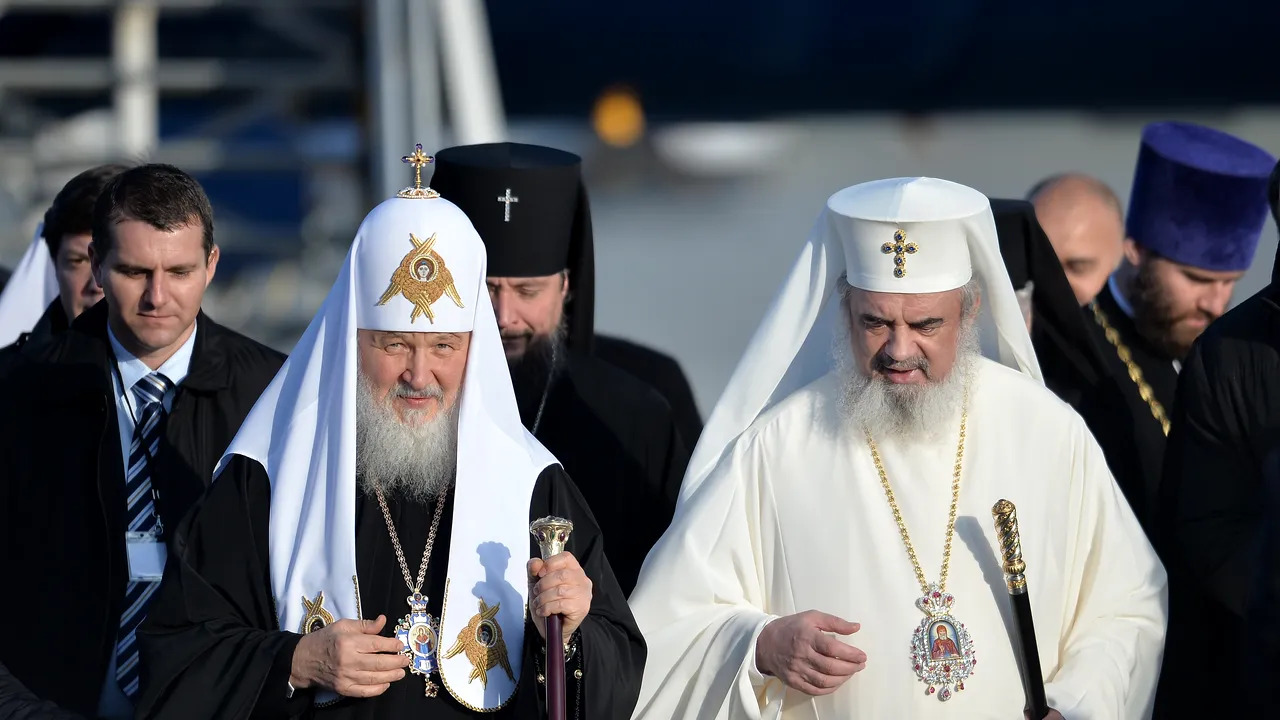
I will add just one more thing about the interview: during this conversation with Kusturica, Putin even bolstered his own identity-based legitimacy, revealing to the Serbian director that he was baptized with the name Vladimir—the name of the head of the Russian Orthodox Church—by none other than the father of the current Patriarch, Kirill (who is being celebrated now). His father, Mikhail—Father Mikhail—was serving 74 years ago in Leningrad, Putin’s hometown, at the very cathedral where Putin’s mother chose to have her son baptized into the Orthodox faith. In those Soviet times, such an act was considered dangerous and disgraceful by the authorities of the day.
You might be asking yourself: “Wait a minute—what is this event? How come I haven’t heard about it?” Well, you’ve heard little to nothing about this interview—which was published on Saturday, just two days ago—precisely because, in Romania, news regarding it has been largely censored within the media landscape. And you can understand why: we are, after all, a nation with an overwhelming Orthodox majority, and these words from Putin have the potential to resonate deeply in Romania.
So, what do Russia and Putin hope to achieve with this move? Their primary target is the West itself—a civilization that, at its founding, was Judeo-Christian, but is no longer so today. The place of Christianity in the West has been hollowed out, stripped of both substance and practice. And yes, Putin and Russia intend to fill that void—and they likely believe it will be quite easy to do so. I can imagine the methods and means of proselytizing that will be deployed for this project—a project now announced by the Russian leader, who knows full well that defeating the West on the Ukrainian battlefield is not enough to open doors across Europe; he must also conquer the minds and souls of Westerners. You must agree with me that this is an exceptionally efficient calculation—one that will cost the Russians less than 5% of the price of the current war. I will return to the subject of the West in a moment.
Before demonstrating the geopolitical utility of this civilizational project, however, I will cite an example that aids understanding: the way in which China—propelled by a negligent, or perhaps even suicidal, west—rose to the forefront of the global economy. You know the story: after 1970, with Kissinger and Nixon as the initiators, China allowed itself to be utilized by the West, leveraging its vast supply of cheap labor. By 2001, China pushed its way in—coincidentally, at the same time Putin came to power in Russia (a mere coincidence, with no deeper significance)—and gained admission to the World Trade Organization. At that time, in 2001, China accounted for only 3.4% of the global GDP. Its entry into the WTO was unmerited, as it failed to meet the necessary criteria; yet, the greed of global high finance and sheer stupidity prevailed. Today, China accounts for 20% of the global GDP—a jump from 3.4% to 20% in just 25 years. In 2001, the United States held one-third of the global GDP; today, it also hovers around 20%. In 2001, the European Union accounted for 25% of the global GDP; today, that figure stands at 15%, reflecting an accelerating decline. In short, my example illustrates how, through the negligence and stupidity of the West, China has come to dominate the geo-economics’ landscape.
Putin cannot compete on this geo-economics front. Russia stands no chance against China—despite its own vast resources—simply because there is no one to exploit them. Yet, it seeks to rival China on the geopolitical stage. How? By winning over minds and souls through religion. While China is not merely agnostic, it is an explicitly atheistic nation. Its foundational philosophies—Confucianism and Taoism—lack global reach. A philosophy’s appeal cannot compare to that of a religion, which holds a clear advantage. Russia’s strategy, therefore—building upon its existing preeminence in nuclear weaponry—is to win over the Christian-civilizational sphere of the world. This serves as a formidable weapon; influence and authority can be every bit as powerful as nuclear arms.
I now return to the decline of Christianity in the West—a trend that works to Russia’s advantage. In the West, political leaders capable of demonstrating and affirming their faith in God have all but vanished. Putin will very easily fill this void—a space that offers immense potential. I foresee that this “Ark of Putin” will soon attract a great many followers. I have no doubt of this, for the world’s citizens are not only desperate but also increasingly drawn to mysticism and religion. And the interview—to return to that—is remarkably transparent regarding this very intention.
Thus far, Putin has secured two significant victories in his struggle against the “Collective West.” First, he has sown division within the West; at present, Europe is estranged from the United States. Second, he has depleted the European Union and the U.S. of their armaments. In other words, NATO’s weapons reserves are exhausted, while Russia is churning out armaments at a rapid pace. Whenever it lacks such resources, they are supplied—either openly by North Korea or covertly by China. Consequently, Russia faces no shortages. Following these two victories, Putin and Russia now aim to achieve a third triumph over the Collective West—a victory for the “Third Rome,” played out on the terrain of Christianity.
I would like to add a point to this line of reasoning—though I will certainly revisit the subject in the future, as I find it both compelling and striking. Paradoxically, Russia’s primary ally in this endeavor will be—of all countries—Iran. Through its fundamentalist and fanatical brand of Islamism, Iran subverts religion for terrorist ends, striking fear into the very citizens of the Western world—citizens who take to the streets in protest, yet for whom Russia—or, more precisely, Christianity—could soon emerge as a powerful and credible defender; a role Putin aspires to fill. Until recently, it was the Judeo-Christian West that stood in opposition to fundamentalist Islamism. Now, however, having shed its Christian identity, the West has left the field wide open for Putin’s “Ark.”
Finally, let us turn to Romania. I believe there will be short-term consequences here. As Putin’s project gains visibility—circulating, for instance, via social media—we may well reach a point where promoting Orthodoxy becomes dangerous. It could even become a criminal offense. That is my forecast, viewed through the lens of this project. If you doubt me, simply look at what is happening to Dan Puric as he travels the country to promote his books or deliver his remarkable lectures. He is not merely being censored or blocked; he is now facing actual threats. And yet, Dan Puric is an exceptional advocate for Orthodoxy. That concludes today’s analysis. I hope you found it engaging, even if it was a bit long.
By Cozmin Gusa
www.solidnews.ro

Related Posts