Saudi Arabia’s economy has historically been dominated by oil, but it is now pursuing strategic diversification through “Vision 2030,” which includes investments in non-oil sectors and infrastructure development.
Saudi Arabia holds approximately one-quarter of the world’s oil reserves; oil accounts for more than 95% of the country’s exports and roughly 70% of its government revenue, making the energy sector central to both the national economy and fiscal stability.
The national oil company, Saudi Aramco, remains the cornerstone of the Kingdom’s wealth—though it saw a 25% decline in profits in 2023 compared to 2022, largely due to production cuts implemented within the OPEC framework to support oil prices.
To reduce its reliance on oil, Saudi Arabia launched “Vision 2030,” a multi-year reform program aimed at diversifying the economy, developing advanced sectors, and attracting foreign investment.
Key sectors include tourism, infrastructure, education, technology, financial services, and knowledge-based industries. The strategy also encompasses institutional reforms, the modernization of the labor market, and incentives to boost private-sector participation.
The Kingdom is investing in alternative energy and natural gas, with a goal to increase domestic gas production by 50% by 2030 to meet national demand.
Furthermore, the mining sector is receiving increasing attention, serving as a symbol of the transition toward a post-oil economy.
Oil refining capacity and the development of industrial complexes have also fostered growth in the manufacturing and agricultural sectors—including the production of wheat, dates, and vegetables, as well as sheep and cattle farming. The Saudi economy is influenced by geopolitical factors—such as regional tensions and the security of maritime routes in the Red Sea and the Strait of Hormuz—which can directly impact oil exports.
While oil price volatility remains a risk, the growth of non-oil sectors is enhancing the country’s economic resilience.
Dr. Salman Al-Qahtani, professor of computer and communications engineering at King Saud University, said Saudi Arabia’s global lead in digital government services reflects the success of its digital transformation efforts.
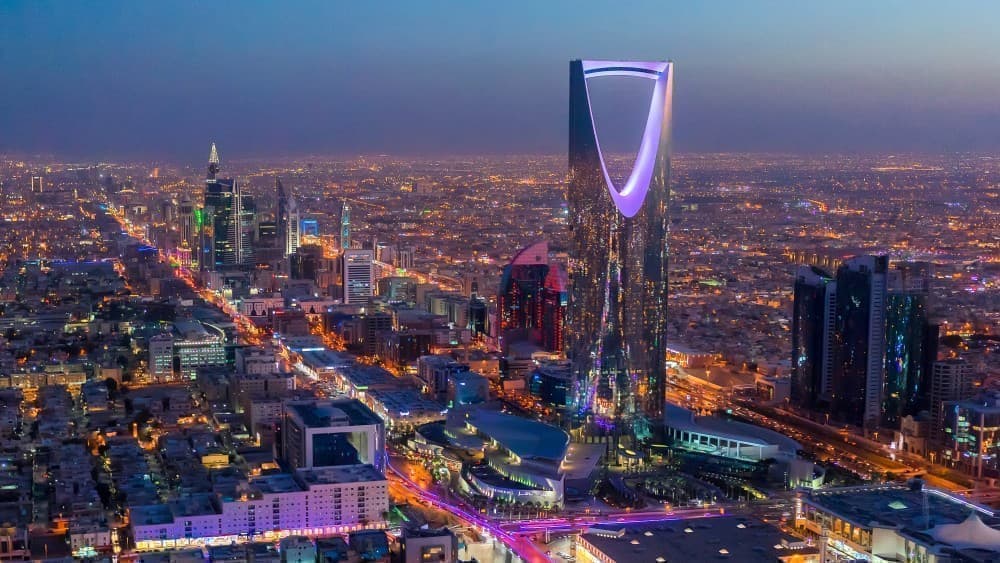
This achievement demonstrates the Kingdom has met Vision 2030 targets four years ahead of schedule. He noted that Saudi digital excellence extends beyond government services to include telecommunications infrastructure, digital participation, and digital government frameworks, with Riyadh also ranking among the world’s top cities.
The professor explained that Saudi Arabia has moved beyond digitizing government transactions to redesigning government itself, building an integrated digital ecosystem rather than relying on separate government platforms.
Saudi Arabia has ranked first globally in the United Nations Online Service Index (OSI), marking a major achievement in the country’s digital transformation and the implementation of Vision 2030, the ambitious national development strategy initiated by Crown Prince and Prime Minister Mohammed bin Salman.
According to the UN E-Government Survey 2026, Saudi Arabia achieved the highest possible score in the Online Service Index, which measures the quality, availability and development of digital government services. The report covers 194 countries and territories, including all 193 UN member states and Palestine.
The Kingdom also climbed to fourth place globally in the overall E-Government Development Index (EGDI), up from sixth in 2024 and 52nd in 2018. This remarkable rise of 48 places in eight years reflects substantial investments in digital infrastructure and the modernization of public administration.
With this result, Saudi Arabia has achieved its Vision 2030 target of ranking among the world’s top five countries in e-government development four years ahead of schedule. The Kingdom also ranked first in several other indicators, including telecommunications infrastructure and digital participation. Riyadh, the Saudi capital, was likewise ranked first globally in the Local Online Service Index (LOSI).
This achievement is directly linked to Saudi Vision 2030, launched on April 25, 2016, by Crown Prince Mohammed bin Salman, with the support of King Salman bin Abdulaziz Al Saud.
Vision 2030 aims to transform the Kingdom’s economy and institutions, reduce dependence on oil revenues, diversify economic activity, expand the private sector and attract international investment. The strategy rests on three main pillars: a vibrant society, a thriving economy and an ambitious nation. Government modernization, technological innovation and digital transformation are central priorities of the Crown Prince’s reform agenda.
The digitalization of public services is intended to improve institutional efficiency and transparency, simplify administrative procedures and strengthen the business environment by providing citizens and investors with faster access to government services.
Digital platforms such as Absher, which enables users to complete administrative procedures online, and Tawakkalna, which provides access to more than 1,100 services from various institutions, have played an important role in this transformation. These platforms have reduced the need for in-person visits to government offices, simplifying procedures and saving time for citizens, residents and businesses.
According to the Saudi Digital Government Authority, the Digital Experience Maturity Index for Government Services reached 87.06% in 2026. This indicator reflects improvements in the performance of digital platforms and the quality of electronic services. Saudi Arabia also ranked second globally in the World Bank’s GovTech Maturity Index for 2025.
Saudi Minister of Communications and Information Technology Abdullah Al-Swaha attributed the achievement to the support of King Salman and Crown Prince Mohammed bin Salman, emphasizing that Vision 2030 has placed technology and innovation at the heart of national development and international competitiveness.
Ahmed Al-Suwayan, Governor of the Digital Government Authority, said the results reflected progress in digital transformation and coordination among government institutions. He emphasized that citizens are essential partners in this process and that their needs guide the development of new services, including the use of artificial intelligence to improve the quality and accessibility of public services.
Established in 2021, the Digital Government Authority has played a central role in coordinating the digitalization of public administration, developing technological standards and establishing integrated platforms for government services.
The United Nations E-Government Survey, published every two years, is considered one of the leading international assessments of digital government development. It measures three main dimensions: online services, telecommunications infrastructure and human capital.
The latest ranking represents international recognition of Saudi Arabia’s progress in modernizing public administration and achieving one of the principal objectives of Vision 2030. It also highlights the increasingly important role of technology and innovation in the Kingdom’s broader economic and institutional reform agenda as the country enters the final four years of its journey toward Vision 2030.
Saudi Arabia is seeking to transform its economy from a model heavily dependent on oil to one that is more diversified and sustainable. Vision 2030 guides this transition, aiming to create new job opportunities, attract foreign investment, and develop innovative sectors, while still maintaining oil as a fundamental pillar for state revenue and stability.
Saudi Arabia’s Ministry of Economy and Planning has revealed that non-oil revenues have reached and surpassed 50% of the Kingdom’s Gross Domestic Product (GDP)—the highest level ever recorded.
The country’s non-oil economy was valued at 1.7 trillion Saudi Riyals (approximately 453 billion US dollars) at constant prices, driven by steady growth in exports, investments, and consumer spending.
However, the Saudi project faces particularly complex challenges; yet, despite these difficulties, the program remains a central reference point for the country’s development. Saudi authorities are adopting a more cautious approach, recalibrating priorities and spreading investments out in a more sustainable manner over time. Despite the obstacles, the country’s strategic direction remains unchanged.
Warren Buffett, the legendary investment guru known for his uncanny ability to spot value where others can’t, have turned his discerning eye to a new venture.
On June 24th, the US Supreme Court overturned the Roe v Wade decision. According to the Guardian, the ruling overturned the right to abortion that women in the United States had enjoyed for nearly 50 years.
Iraq has partnered with Qatar, the United Arab Emirates (UAE), Turkey, and other major regional partners in a ground-breaking effort that could revolutionise the Middle East’s economic environment.
The landmark treaty, a Council of Europe accord that was signed by 45 countries and the European Union, was designed to promote gender equality and prevent violence against women. In 2012, Turkey became the first country to ratify the convention, named after its largest city Istanbul where the treaty was forged.
CIA Director John Ratcliffe’s reported visit to Moscow on 26 August was never going to be a purely diplomatic courtesy call. Intelligence chiefs do not fly to the capital of a nuclear-armed adversary at war in order to exchange weather reports.
Few alliances are as important as the one between the United States of America and Turkey as the geopolitical landscape continues to change and realign in the twenty-first century.
La Principauté de Monaco est un État européen reconnu pour son niveau de vie élevé, ainsi que pour les célébrités qui y ont vécu. Du point de vue géopolitique, la Principauté est un microÉtat européen.
I promised I would post an analysis of Romania’s current situation in the aftermath of the Trump–Putin negotiations today. I will do so, including some extremely necessary recaps to understand today’s geopolitical context in Romania and the region
The German Foreign Minister responds to Macron’s address: “Europeans are united against Beijing. ” The EU “cannot be indifferent” to the Chinese escalation around Taiwan, according to German Foreign Minister Annalena Baerbock.
Serbia has recently experienced a political upheaval, with violent protests rocking the country and undermining President Vucic’s political credibility.
For the sake of technical disorientation, it is difficult to determine the nature of hundred billions dollars. Although the sentiment to compete with American and Chinese dominance is clear, European nations are playing the jackpot as it fits best. A sovereign fund cannot be a vision fund and vice versa.
This complex analysis examines the climate issues faced by Europe, including the challenges, trends, and potential solutions. It delves into the region’s vulnerability to climate change.