The Eurozone is now in a technical recession. Can Europe fight raising living costs?

Photo: Unsplash
The eurozone has found itself in a challenging position as it slips into a technical recession, with the cost of living crisis exerting pressure on its economy. The latest figures from Eurostat reveal a 0.1% contraction in gross domestic product (GDP) for the first quarter of 2023 and the final quarter of 2022 after revisions to previous estimates. This development raises concerns about Europe’s ability to combat the increasing living costs that have been exacerbated by geopolitical events and soaring energy prices. The revised data demonstrates that the rising cost of living has had a significant impact on consumer spending, resulting in a contraction of the eurozone economy. Households across the region have been grappling with higher energy and food prices following Russia’s invasion of Ukraine, which triggered a sharp increase in gas prices. Consequently, the eurozone is experiencing some of the highest rates of inflation since the establishment of the single-currency bloc. With consumers feeling the pinch, household final consumption has declined, contributing to the GDP downturn. As households face the brunt of inflation and high-interest rates, leading to reduced spending, analysts predict a further contraction in the economy for 2023. Russia’s cutoff of natural gas supply disrupted electricity generation, factory operations, and home heating, resulting in significantly higher energy costs for consumers and businesses. The consequent surge in inflation, along with concerns of rationing and blackouts, prompted governments to scramble to secure alternative liquefied natural gas sources from countries such as the US and Qatar, averting the feared utility shutoffs.

Pressure on the European Central Bank (ECB)
Although energy prices have since stabilized to pre-Ukraine invasion levels, persistent inflation and the European Central Bank’s efforts to combat price surges through higher interest rates, have dampened economic growth. The increased cost of credit for house purchases and business expansion has weighed heavily on the economy. The ECB is expected to continue its series of interest rate hikes during its meeting on June 15, while also considering further increases in the future.
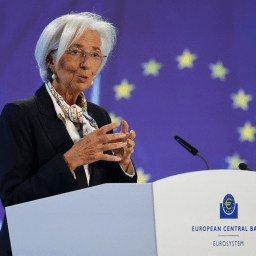
ECB President Christine Lagarde emphasized the urgency of curbing inflation, which, although down to 6.1% in May, remains above the ECB’s target of 2%, thereby straining ordinary individuals. These remarks come after recent figures revealed an unexpected contraction in Germany’s economy for the first quarter of the year, marking its second consecutive quarter of decline.
Among the eurozone countries, Ireland experienced the largest decline in gross domestic product (GDP) at the beginning of the year, contracting by 4.6%. Lithuania followed with a 2.1% decline, and the Netherlands with a 0.7% decrease. These figures underscore the widespread economic challenges faced by countries within the eurozone.
The economic downturn intensifies the pressure on the European Central Bank, which has been grappling with record inflation and implementing unprecedented interest-rate hikes to manage the situation. With the objective of containing inflation and addressing the cost of living crisis, the ECB has sought to increase interest rates to “sufficiently restrictive levels.” However, the recent contraction in the eurozone economy raises questions about the effectiveness of this approach and calls for a reassessment of the bank’s monetary policy.
Overall, the persistent impact of inflation, high-interest rates, and the energy crisis continues to hinder economic growth in Europe. Efforts to address these issues remain critical to alleviate the strain on individuals and foster a path towards stability and sustainable development in the region.
By Ioana Constantin