U.N. Poised to Reimpose Sanctions on Iran After Talks Stall

The diplomatic clock at the United Nations is running down, and the numbers, by most accounts, are not on Moscow’s side. On Friday, the Security Council is set to vote on whether to delay the return of sweeping U.N. sanctions on Iran. Russia will try to buy six more months for diplomacy, and, European capitals, having reached the end of their patience, have decided the pause button has been pressed too often already.
In recent days, a last-ditch round of contacts in New York failed to produce the concessions Europe said it needed. Tehran’s final pitch, according to diplomats involved, offered only constrained access for U.N. nuclear inspectors, limited to a single bomb-damaged site rather than across the board, and a shortened timetable to present a plan for dealing with its stock of highly enriched uranium. The quid pro quo Iran sought was far more expansive: a permanent lifting of the threat that the U.N. penalties would snap back in full. For European governments, this was a bridge too far.
It is the culmination of a long, grinding argument over leverage and sequencing. Russia’s answer (to postpone the reimposition of U.N. measures for half a year to keep talks alive), appears headed for defeat. The Council’s arithmetic is unforgiving: nine votes are required to carry the day, and a similar Russian maneuver not long ago mustered only a handful. That political geometry has not meaningfully shifted.
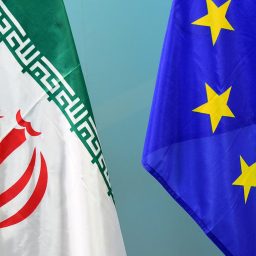
Much of the recrimination now swirling around Turtle Bay is focused on misread signals and misjudged thresholds. European officials say Tehran assumed the E3, Britain, France and Germany, would blink at the last moment. They did not. Inside the U.N. system, there is also quiet sniping over how the nuclear watchdog managed the run-up. Several European diplomats complain that an understanding the agency’s chief reached with Iran recently was long on atmospherics and short on substance, and that it encouraged Tehran to think time could still be stretched. The accusations are as much about motive as outcome, and the agency rejects any suggestion that its decisions are shaped by political ambition. Still, the second-guessing is telling: it reflects a mood in which even small gestures are scrutinized as strategic feints.
Tehran, for its part, is preparing to cast Europe’s resolve as capitulation to Washington. That argument is familiar, but this moment carries a sharper edge. The formal “snapback” of U.N. penalties is not a technocratic footnote; it marks a decisive break in a relationship that has been fraying for years and now risks tearing. The near-term dangers are obvious. In Tehran, hard-line voices in parliament will be emboldened to demand an end to cooperation with international inspectors, or to argue for walking away from the global treaty that underpins nuclear restraint altogether. Either step would darken the shadow of confrontation and raise the odds of another round of military strikes by Israel.
Europe’s calculation is that allowing partial inspections and promissory notes on sensitive stockpiles would normalize a hazardous status quo. The counterargument, put forward by those urging another diplomatic extension, is that pressure without a credible offramp will harden positions and narrow options further. Both claims can be true at once. The wager European governments are making is that only forceful, unified action will reset the incentives; the risk is that it instead accelerates the collision.
Beyond Friday’s vote lies a larger question about the Security Council itself. This is exactly the kind of cross-cutting crisis—where proliferation, regional security and alliance politics converge, that the U.N. was designed to manage. Yet the Council has struggled to shape the trajectory of disputes over Iran’s program for years, trapped between vetoes and veto threats, and hampered by competing strategic agendas. Europe’s move to reimpose the U.N. measures is an attempt to reclaim some of that authority and to signal that there are still costs for noncompliance. Whether that message lands in Tehran—or gets lost amid domestic brinkmanship will determine what kind of diplomacy is possible on the other side of this decision.
Even now, envoys say, channels remain open. There is talk of revisiting access arrangements for inspectors, of tightening timelines and clarifying sequencing so that steps on one side are met by steps on the other. None of that will matter, however, if the next weeks turn into a tit-for-tat over surveillance, cooperation and retaliatory strikes. The sanctions snapback is a tool; it is not a strategy. To be anything more than a line in a resolution, it will need to be paired with a realistic path back to verifiable limits and a political space that Iran’s factions are willing to inhabit.
For the moment, the immediate outcome looks clear and the longer horizon murky. Europe is poised to carry its point in the Council. Iran is signaling it will lash back. Moscow is unlikely to find enough votes to stall the process. What none of the players can yet guarantee is what follows: a climbdown under pressure, or a spiral in which monitoring erodes, trust collapses, and the region edges closer to another round of force.
The gavel will fall on Friday. The test is not simply who wins the vote, but whether anyone can still win the peace that vote is meant to protect.
By I. Constantin