Scroll Top

The Most Difficult Negotiation
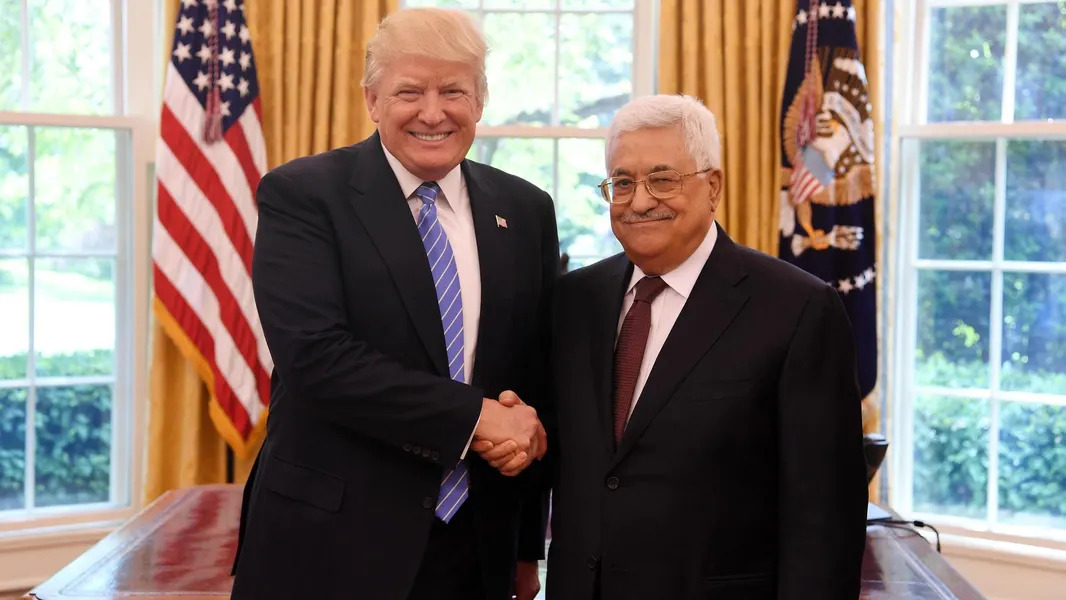
The plan for the demilitarization of the Gaza Strip and the gradual withdrawal of Israeli troops, quietly hatched for nine months by the Peace Council and accepted last week by Hamas, received a resounding setback on Sunday. The 15-point plan provided a detailed operational roadmap for the post-conflict transition and reconstruction of the Gaza Strip. This implementation plan follows the broader 20-point plan originally proposed by the US administration. The key pillars of the 15 points aim to resolve the Israeli-Palestinian stalemate through sequential measures and international cooperation. The cornerstones of the 15-point document included: Total disarmament of Hamas: Complete surrender of heavy and light arsenal and sharing of maps of all underground tunnels; Withdrawal of the Israeli army: Progressive and complete withdrawal of IDF forces from the Gaza Strip; A permanent ceasefire: Consolidation of the truce and definitive end to the military campaign; Palestinian transitional governance: Establishment of a technocratic committee composed of 15 Palestinian members in charge of the civilian government of the Strip; International oversight: Management of the political portfolio entrusted to the founding members of the Board (including Turkey, Qatar, Saudi Arabia, and the United Arab Emirates) under the coordination of a High Representative; an international stabilization force: Deployment of military contingents from third countries (such as Indonesia) to ensure security on the ground; the establishment of multi-billion dollar reconstruction funds: Coordination of billions of dollars, largely from the Gulf monarchies, for the removal of tunnels and urban reconstruction.

However, despite hard work and broad consensus on the conflict resolution strategy, this plan has come up against Tel Aviv.
Israeli soldiers “will not withdraw until Hamas is disarmed. “Heavy weapons, light weapons, all weapons,” declared Prime Minister Benjamin Netanyahu. This was a tombstone on the principle of progressive symmetry painstakingly crafted by High Representative of the Peace Board, Nikolay Maldenov: the handover (or destruction) of part of the arsenal, entrusted to the National Committee for the Administration of Gaza (NCGA), would be followed by the IDF’s retreat, first behind the Yellow Line, silently extended since October 10th to nearly 70% of the total territory, and then, with increasingly wider margins, outside the Strip. This was the famous “phase two” of the process formalized by UN Security Council Resolution 2803.
“We do what must be done for Israel’s security, and we know how to hold our ground, if necessary even against our best friends,” Netanyahu stated, referring to the United States, the architects and promoters of the plan and creators of the Board. Mladenov has overturned the security concept cherished by the government and a large segment of public opinion, arguing that the agreement is the only way to prevent a repeat of the October 7 tragedy.
Benjamin Netanyahu’s refusal to accept a US-backed Gaza deal has sparked widespread skepticism in Israel, given that just days earlier, the prime minister himself was finalizing the details of the Israeli army’s withdrawal from parts of the Gaza Strip.
Netanyahu is struggling to reconcile the demands on Gaza from his domestic allies with those of his international partners. Far-right Israeli politicians supporting the prime minister’s coalition government want to intensify attacks on Gaza and establish settlements within the territory. US President Donald Trump, who provides crucial diplomatic and military support to the Jewish state, wants a permanent solution and the return of Palestinian control of Gaza, mediated by the peace council he created and chairs.
With just over two months to go until the Israeli elections (scheduled for October 27), Netanyahu appears to have chosen to appease his allies, who are already busy campaigning.
On the ground, the only clear sign of acquiescence to President Trump’s wishes appears to be the new, restrictive bombing policy, whose approval must now be obtained from Chief of Staff Eyal Zamir.
Given these circumstances, it is very difficult to think of reaching an agreement before the Israeli elections.
The situation in Gaza is currently dire. It is so dramatic that words are no longer enough to describe it.
The parties involved must do what is necessary for the good of the population as soon as possible. Over two million people live in Gaza, and most live practically without anything.
It’s natural to ask: does anyone really care? Is there a real will to achieve peace?
By Domenico Greco

Related Posts