Scroll Top

Gabriel Oprea’s Call for a Stronger Romanian Defence Posture

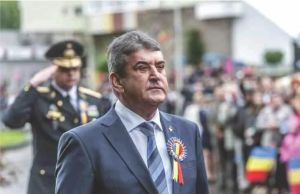
As Europe faces its most demanding security environment in decades, former Romanian Minister of Defence, General (Ret.) Gabriel Oprea, has called on Romania’s Supreme Council of National Defence (CSAT) to adopt a coherent set of long-term decisions aimed at strengthening the country’s ability to deter and respond to modern threats.
His appeal is centred on a simple but consequential idea: Romania’s national defence cannot be managed through short-term procurement cycles or shifting political priorities. It must be built around a unified national vision—one that links military capability, strategic alliances, industrial development, technological resilience and institutional continuity.
Romania occupies a critical position on NATO’s Eastern Flank, bordering the Black Sea region and standing close to the consequences of Russia’s war against Ukraine. In this context, defence is no longer limited to conventional forces, tanks or aircraft. It also concerns drones, cyber networks, electronic warfare, critical infrastructure and the capacity of a state to sustain itself during a prolonged crisis.
At the heart of Oprea’s recommendations is the adoption of a unified vision for equipping the Romanian Armed Forces between 2027 and 2036, while advancing the capabilities envisaged by the “Romanian Army 2044” programme.
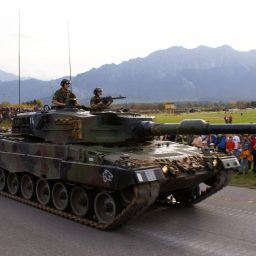
Such an approach would move Romania beyond isolated acquisitions and toward a fully integrated force-development plan. Modern defence capability depends not only on buying advanced platforms, but on ensuring that they can communicate, operate and be maintained together. Air-defence systems, fighter aircraft, naval assets, armoured vehicles, intelligence tools and command-and-control networks must form part of one operational architecture.
A clear ten-year framework would also give the military greater predictability in planning training, infrastructure, recruitment and logistics. It would offer industry a more stable outlook and would signal to allies that Romania is prepared to make durable contributions to collective defence.
A second major priority is the strengthening of the Romania–United States Strategic Partnership and the continued expansion of the American military presence on Romanian territory.
For Romania, the US presence is more than a symbolic expression of alliance solidarity. It is a practical element of deterrence. American forces, facilities, exercises and rotational deployments contribute to NATO’s ability to respond quickly to a crisis in the Black Sea region and along the Eastern Flank.
Bases and infrastructure such as those associated with Mihail Kogălniceanu have acquired increased importance in the current regional security environment. A stronger US military footprint can reinforce Romania’s own defence posture, improve interoperability between Romanian and allied forces, and make clear that aggression against an Eastern European NATO member would trigger a broader allied response.
The logic is straightforward: deterrence is strongest when it is visible, credible and supported by real capabilities on the ground.
Oprea also argues that Romania should make effective use of the SAFE programme so that defence investments create wider national benefits. The objective should not be limited to importing equipment; it should also include technology transfer, domestic production, research capacity and skilled employment.
This is one of the most important strategic questions for Romania’s future. A country that depends entirely on external suppliers for spare parts, ammunition, maintenance, software and technical expertise may possess modern equipment but remain vulnerable in a prolonged emergency.
Developing a stronger national defence industry could help Romania reduce such dependencies. It could support local production of ammunition, drones, communications equipment, electronic systems, armoured-vehicle components and maintenance services. It could also create partnerships between state-owned enterprises, private companies, universities and international defence manufacturers.
The challenge will be ensuring that investment decisions are transparent, economically sound and connected to genuine military requirements. Domestic production should not become an end in itself; it should strengthen readiness, resilience and Romania’s ability to sustain its forces when supply chains are under pressure.
Perhaps the most urgent aspect of the recommendations concerns new forms of warfare. Recent conflicts have demonstrated that relatively inexpensive drones can threaten military units, infrastructure and civilian populations. Cyberattacks can disrupt communications, public services, financial systems and energy networks. Electronic warfare can interfere with navigation, surveillance and battlefield coordination.
Romania therefore needs stronger capabilities to detect, track and neutralise drones; protect digital infrastructure; secure military and civilian communications; and defend critical assets such as ports, energy facilities, transport hubs and data networks.
Hybrid threats require a whole-of-state response. The armed forces are essential, but so are intelligence structures, law-enforcement institutions, cyber specialists, local authorities, infrastructure operators and the private sector. In a modern crisis, the line between military security and civilian resilience is increasingly blurred.
Investment in these areas is not merely a technical necessity. It is a recognition that national defence now extends far beyond traditional battlefields.
The final recommendation may be the most politically significant: strategic defence programmes must continue regardless of changes in government.
Major military capabilities take years—often more than a decade—to acquire, integrate and operate effectively. Frequent shifts in political priorities can delay projects, increase costs, weaken industrial confidence and leave important capability gaps unaddressed.
Oprea’s message is that national security should be treated as a matter of state policy, rather than party policy. This does not mean eliminating democratic debate or parliamentary oversight. It means building sufficient political consensus around essential defence priorities so that Romania’s strategic direction remains stable.
For a country on NATO’s Eastern Flank, continuity is itself a security asset. Allies, investors, defence companies and military planners all need confidence that Romania will sustain the commitments it makes.
The recommendations addressed to CSAT reflect a wider reality: Romania’s security environment has changed, and its defence planning must change with it. The country has an opportunity to consolidate its role as a reliable NATO ally, a strategic Black Sea actor and a regional centre for defence capability and resilience.
A unified force-modernisation vision, a deeper partnership with the United States, a stronger domestic defence industry, modern protection against emerging threats and cross-party continuity would together form a credible framework for the years ahead.
The central question is no longer whether Romania needs to invest in defence. It is whether it can convert that investment into an enduring national advantage—one that protects the country, strengthens NATO’s Eastern Flank and ensures that Romania is prepared for the security challenges of the next generation. 
By Roberto Casseli

Related Posts