Twenty Officers and a Nervous Nation: Romania to Send 20 Officers to the Ukraine Support Command, as Public Unease Grows
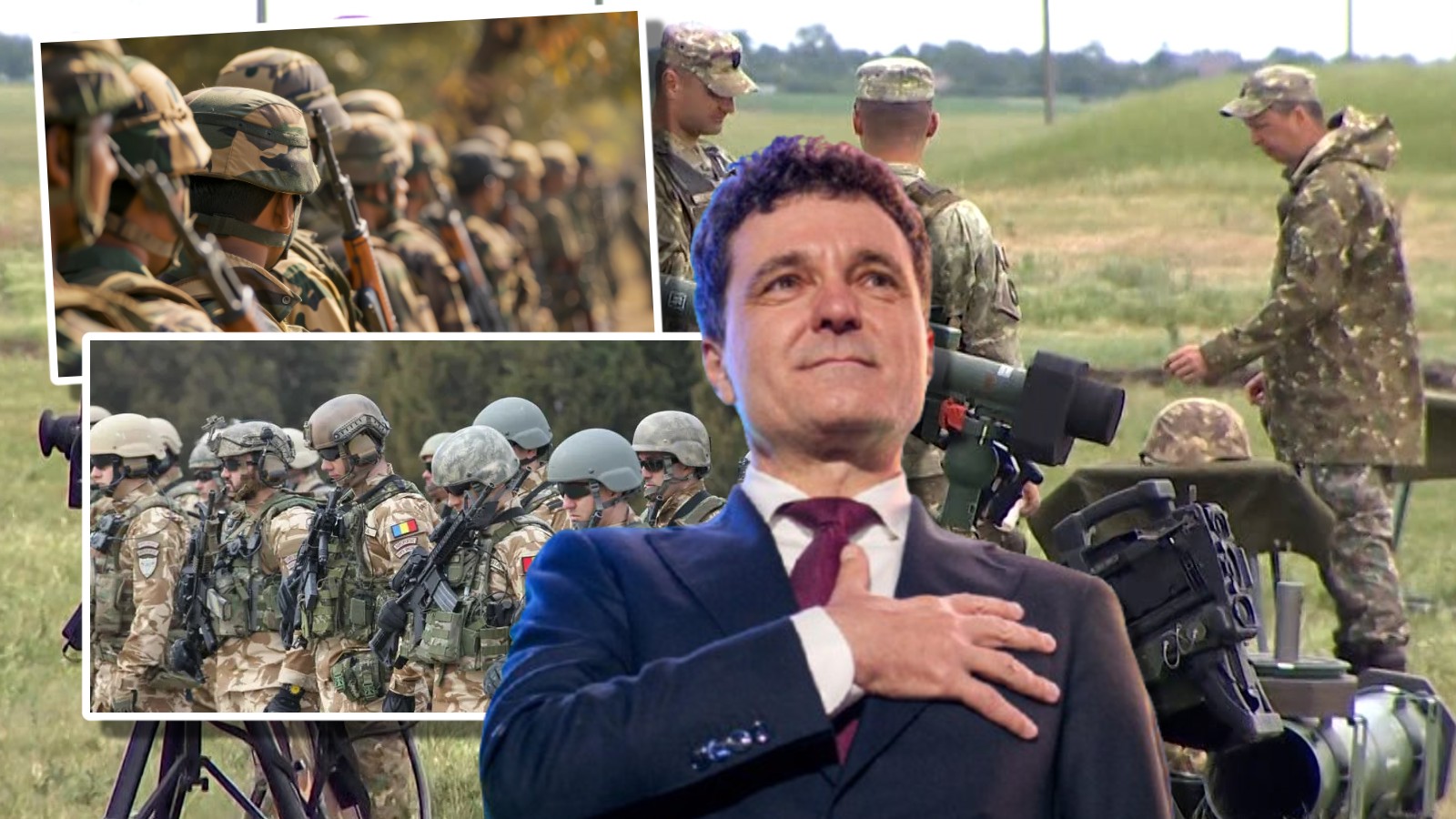
Breaking: Romania’s president Nicușor Dan has asked parliament to approve sending up to 20 staff officers to the multinational command supporting Ukraine, a modest, headquarters-only contribution. But in a country where many are weary of the war next door and fearful of being drawn into it, even twenty soldiers arrive freighted with anxiety.
The number at the center of Romania’s latest defense debate is strikingly small: twenty. But it has struck fear in a lot of Romanians, despite this apparent fact. On Monday, following a meeting of the Supreme Council of National Defence, President Nicușor Dan formally asked parliament to approve the participation of up to 20 Romanian military personnel in the operational command for the Multinational Force in Support of Ukraine, and in the command-and-control structures beneath it.
These are not combat troops. They are staff officers, and the request specifies that they would serve in headquarters roles, in fields such as multiyear strategic planning, coordination of current operations, and cybersecurity architecture. It is, by the standard of national military commitments, a token contribution. Yet in Romania in the autumn of 2026, even a token can feel heavy.
Recent polling gives unease a measurable shape. An INSCOP survey conducted in early 2026 found that 42.6 percent of Romanians believed their country should provide no assistance at all to Ukraine, while only 10.5 percent favored military aid. Another 31.5 percent supported humanitarian assistance and 12.2 percent financial help.
Perhaps more revealing is what happens when Romanians are asked about an actual treaty obligation: even if a NATO ally were attacked, only 40.9 percent said Romania should fulfil its obligations by providing military assistance, down from just over 51 percent in 2022. Another 27.4 percent preferred sending food and medical aid without entering the war, while 19.6 percent wanted Romania to remain neutral. Ukraine, of course, is not a NATO member and Romania has no Article 5 obligation to fight on its behalf. Taken together, the figures suggest a public that remains broadly attached to NATO and Romania’s Western orientation, but is considerably more cautious when solidarity begins to resemble military participation. For many Romanians, supporting the defence of their own country or a treaty ally is one question. Sending Romanian personnel into a war involving a non-NATO state is quite another.
These details matter, and they matter especially because of the fears the announcement inevitably stirs. The command Romania would be joining is a rotational structure, activated in 2025 and based by alternation in France and the United Kingdom. So, the twenty officers would be posted to headquarters in Western Europe, not to Ukraine.
Dan was explicit on this in his request, stressing that the participation does not carry any obligation to deploy capabilities on Ukrainian territory. Romania is being asked to contribute planning expertise to an allied command far from the front, not to send its soldiers into the war zone. The request also asks parliament for the flexibility to reconfigure the national contribution as circumstances change, and Dan framed the whole matter as consistent with Romania’s steady position on the conflict, its status within the European Union, and its exposed geography on the Black Sea.
And it is here that the story broadens from a narrow question of military staffing into something that touches the national mood, because the anxieties surrounding this decision are real and widely shared, and no honest account of it can leave them out.
Romania sits in an unusually difficult position. It shares a long border with Ukraine, hosts major NATO installations, and has watched drone debris fall repeatedly on its own soil as the war has ground on across the frontier. But solidarity and enthusiasm are not the same thing, and beneath the official commitment lies a substantial current of public unease.
Many Romanians have grown weary of the war next door and increasingly ambivalent about the scale of assistance being channeled to Kyiv, questioning what it costs a country already struggling with inflation, a large budget deficit and stagnant living standards. That fatigue is a real feature of Romanian public opinion, not an invention of the fringe.
More acute still is a fear that runs deeper than budgets: the fear of being drawn, step by step, into a war that is not Romania’s own. For a nation whose modern memory includes the traumas of the twentieth century, the prospect of any entanglement in an active conflict on its doorstep provokes genuine dread. This anxiety has been actively stoked in parts of the Romanian public sphere, where commentators and political figures have argued that the country is being gradually and deliberately prepared for direct involvement in the war, and where each new defense decision is read by some as another rung on a ladder toward the abyss. Whatever the merits of those claims, and they are contested, the fear itself is authentic, and it forms the emotional backdrop against which even a deployment of twenty staff officers is being received.

It is precisely this backdrop that makes the nature of the request significant. The government’s framing, headquarters roles, Western European postings, no obligation to enter Ukraine, a parliamentary vote to confer democratic legitimacy, appears designed to reassure a wary public that this is a limited, deliberate step rather than the opening of a door to something larger. The insistence that no Romanian capabilities will be deployed on Ukrainian soil is aimed squarely at the fear of entanglement. Whether it succeeds in reassuring will depend less on the text of the request than on the trust between Romanians and their leaders, which on this subject is strained.
There is a genuine tension at the heart of the matter, and it deserves to be stated plainly rather than resolved by slogan. On one side stands the strategic logic that has guided Romanian foreign policy for two decades: that a country on NATO’s most exposed flank is safest when it is a reliable, contributing member of the Western alliance, and that supporting Ukraine’s defense is also, indirectly, a defense of Romania itself.
On the other side, stands the sentiment of citizens who look at the war, at their own economic hardships, and at the drones falling near their coast, and conclude that their country should be doing everything possible to stay out, not inching closer in. Both positions are held sincerely, and both have a claim to be defending Romania’s true interest. The disagreement between them is the real substance of this debate, and it will not be settled by twenty officers one way or the other.
For now, the request moves to parliament, sent first to the defense committees before reaching the floor of the joint chambers. The vote, when it comes, will be about far more than its literal content.
A deployment of twenty staff officers to a headquarters in France or Britain is, in strictly military terms, a minor matter. But as a test of where Romania stands, between solidarity and self-preservation, between its alliance commitments and its citizens’ fears, it is anything but minor.
The number is small. The question it forces the country to answer is not. National security policy cannot be reduced to a sequence of individually modest decisions, each presented as too small to justify concern, until the cumulative commitment is far greater than the public was ever asked to endorse.
That is the uncomfortable issue behind the number twenty. The immediate military risk may be limited, but the political question is not. At a time when Romanians are clearly reluctant to move closer to direct involvement in the conflict, the responsibility of their leaders should be to draw firmer boundaries around Romania’s role, not test how gradually those boundaries can be moved.
A government confident that this decision serves the national interest should be willing to explain not only what these twenty officers will do, but where Romania’s involvement stops.
Until that line is made unmistakably clear, skepticism is democratic caution.
By I. Constantin