The Corridors of a New Order: Inside the SCO’s 25th-Anniversary Summit in Bishkek
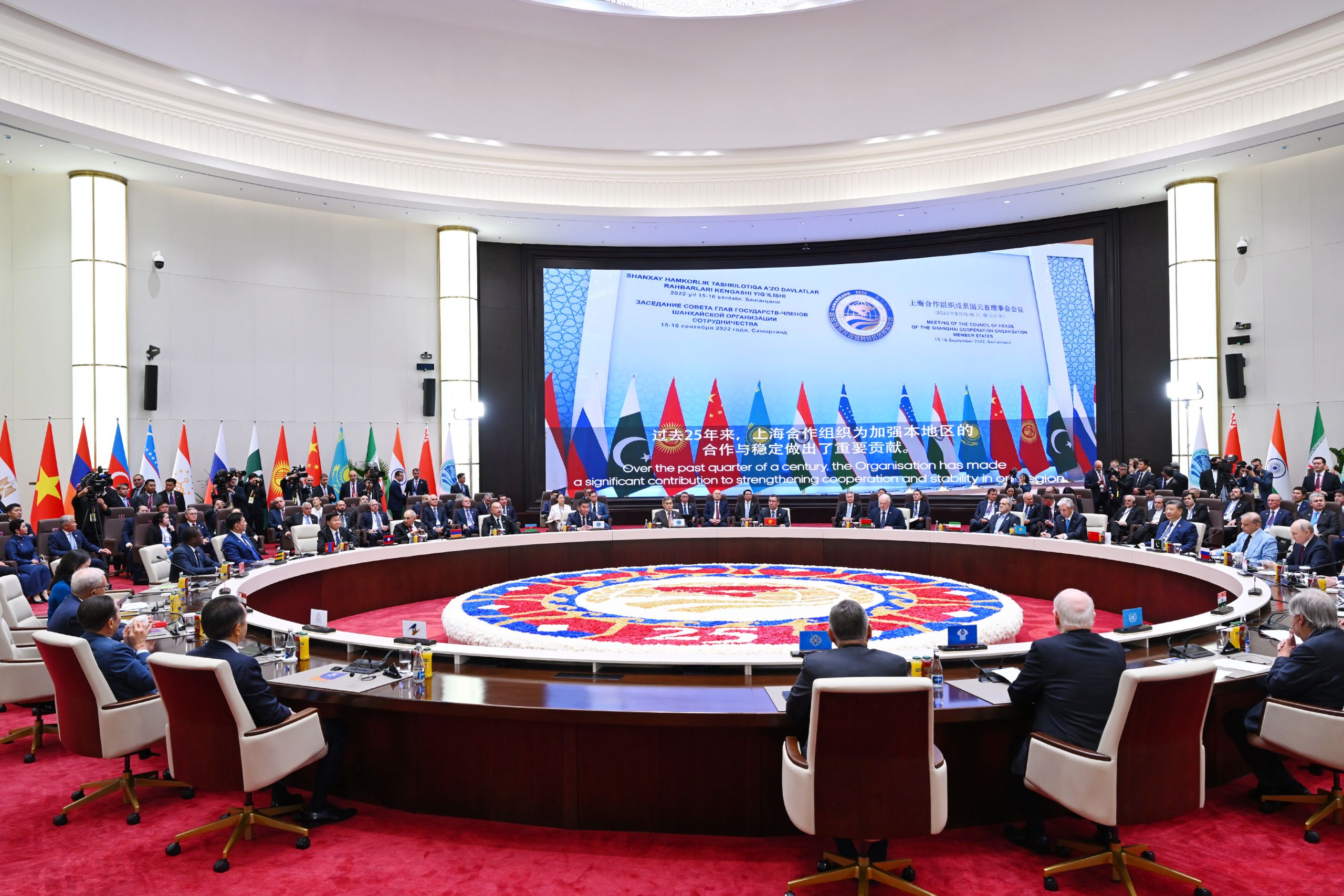
In the Kyrgyz capital, the leaders of ten nations spanning half of humanity gathered to mark a quarter-century of the Shanghai Cooperation Organisation. Behind the anniversary language of peace and prosperity lay a more concrete project: building the trade routes, energy links and diplomatic habits of a world that no longer runs exclusively through the West.
For two days at the turn of September, Bishkek became the center of a particular vision of the world’s future. On August 31 and September 1, the Kyrgyz capital hosted the 2026 summit of the Shanghai Cooperation Organisation, gathering the leaders of its ten permanent member states to mark the bloc’s twenty-fifth anniversary under the theme “25 Years of the SCO: Together Towards Sustainable Peace, Development and Prosperity.” At its close the members signed the Bishkek Declaration, a document centered on regional security and economic connectivity. But the real significance of the gathering lay less in the anniversary rhetoric than in what the SCO has quietly become: a working forum for the construction of a multipolar order.
The scale of the organization is easy to underestimate from the West, where it is often treated as a diplomatic curiosity. It should not be. The SCO’s ten permanent members, China, Russia, India, Pakistan, Iran, Belarus, Kazakhstan, Kyrgyzstan, Tajikistan and Uzbekistan, together account for a vast share of the world’s population, territory and energy resources. When Xi Jinping, Vladimir Putin, Narendra Modi, Masoud Pezeshkian and Shehbaz Sharif sit at the same table in Bishkek, the room contains a meaningful fraction of humanity and several of the powers actively working to reduce the dominance of the United States in global affairs. That is the lens through which this summit is best understood.
The dominant practical theme was connectivity, and specifically the search for trade routes that bypass the chokepoints and shipping lanes the members no longer consider reliable. With global maritime commerce disrupted by conflict and the strategic straits of the world turned into instruments of pressure, the summit devoted serious attention to alternative transport corridors. Chief among them was the International North-South Transport Corridor, the 7,200-kilometer route designed to link St. Petersburg to Mumbai through Iran, and Russia’s Northern Sea Route across the warming Arctic. These are not abstract aspirations. They are the physical arteries of an economic system its architects hope can function independently of Western-controlled sea lanes, and their prominence in Bishkek reflects a bloc thinking hard about how to insulate itself from the vulnerabilities the past year has exposed.
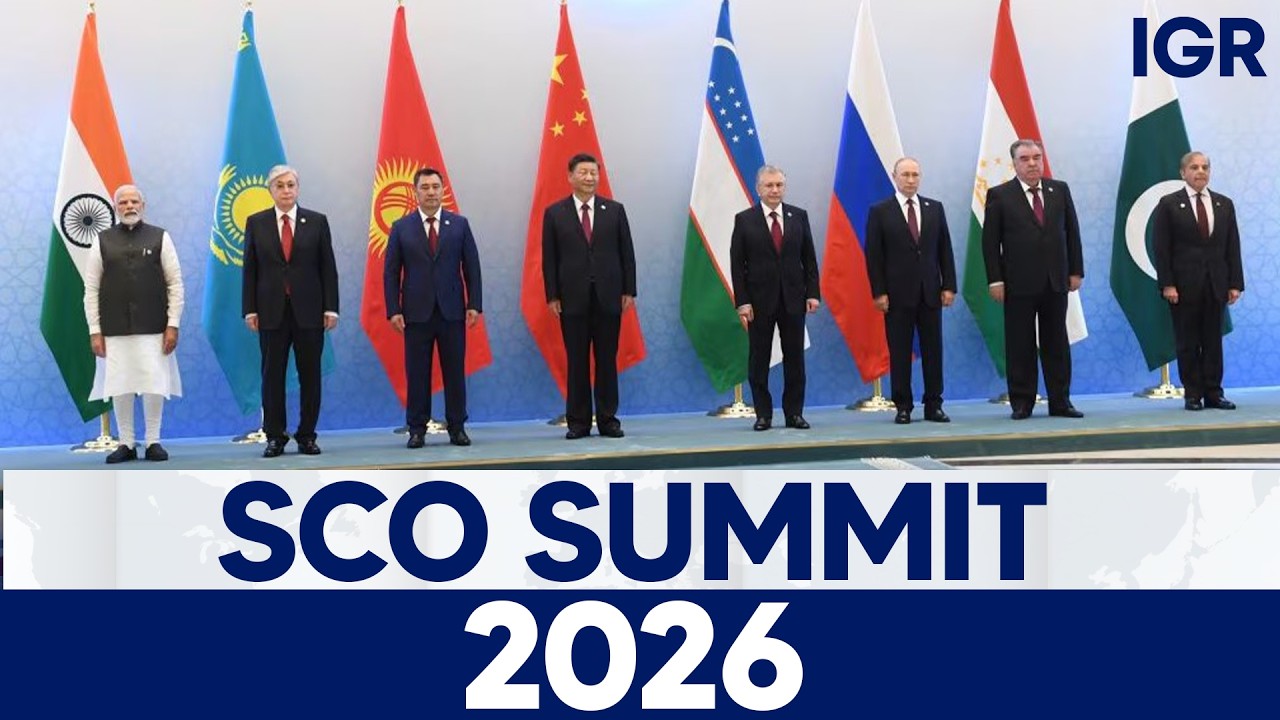
The most consequential business, as ever at such gatherings, happened on the sidelines. Putin and Xi met to advance the long-discussed Power of Siberia 2 pipeline, the project meant to carry vast quantities of Russian gas to China and to cement an energy partnership that has deepened dramatically as Moscow has been cut off from European markets. Modi, for his part, held strategic talks with both Putin and Iran’s Pezeshkian, a reminder that India continues to pursue its own interests within the bloc regardless of pressure from Washington, with which its own relationship has grown strained over trade. These bilateral encounters are the true machinery of the SCO. The plenary sessions produce declarations; the corridor meetings produce the relationships and deals that give the declarations substance.
Yet the summit also revealed, with unusual candor, the fault lines that run through the organization and limit its coherence. The SCO is not a bloc of like-minded allies but a coalition of powers with genuine and sometimes bitter disagreements, and Bishkek put one of them on open display. Pakistan’s prime minister, Shehbaz Sharif, used his plenary address to publicly criticize India over the Indus Waters Treaty, injecting a live bilateral dispute into a forum ostensibly dedicated to unity. It was a telling moment. The SCO contains within it India and Pakistan, two nuclear-armed rivals, alongside China and India, whose own relationship is marked by border tension and deep strategic mistrust. The organization’s ambition to present a united multipolar front is perpetually complicated by the fact that several of its most important members do not trust one another. This is the central paradox of the SCO, and Bishkek did nothing to resolve it.
There was, too, a cultural dimension that spoke to the organization’s deeper purpose. Leaders and attendees took part in the opening ceremony of the 6th World Nomad Games, hosted in Bishkek, a celebration of Central Asian heritage that served as a reminder of what the SCO is also trying to do: build a sense of shared identity and civilizational weight among the nations of the Eurasian heartland, distinct from and independent of the Euro-Atlantic world. Such symbolism is not incidental. Multipolarity is not only a matter of pipelines and trade corridors; it is also an argument about culture and legitimacy, about whose values and traditions define the international order, and the SCO is increasingly making that argument deliberately.
As the summit closed, the organization prepared for a change at its helm. Pakistan announced that it would assume the chairmanship of the SCO Council of Heads of State for the 2026 to 2027 term, shifting the leadership to Islamabad and setting the stage for the next summit. It is a notable moment for Pakistan, elevating its standing within a bloc dominated by its far larger neighbors, and it comes at a time when Islamabad has been busily expanding its security and economic partnerships across Asia and the Gulf.
What the Bishkek summit ultimately demonstrated is that the SCO, twenty-five years after its founding, has matured into something more than the sum of its contradictions. It remains a fractious body, riven by rivalries its declarations cannot paper over, and it is far from the unified counterweight to the West that its most enthusiastic members proclaim. But it is also no longer dismissible. Its members are actively building the alternative corridors, energy links and diplomatic routines of a world less dependent on Western institutions, and they are doing so with growing seriousness and growing success. The gap between the SCO’s rhetoric of unity and the reality of its internal frictions is real. So is the slow, patient construction going on beneath that gap. A quarter-century in, the organization’s significance lies not in what it declares, but in what it is quietly assembling: the working infrastructure of a multipolar age.
By I. Constantin