Trump Welcomes Xi as US and China Extend Their Trade Truce
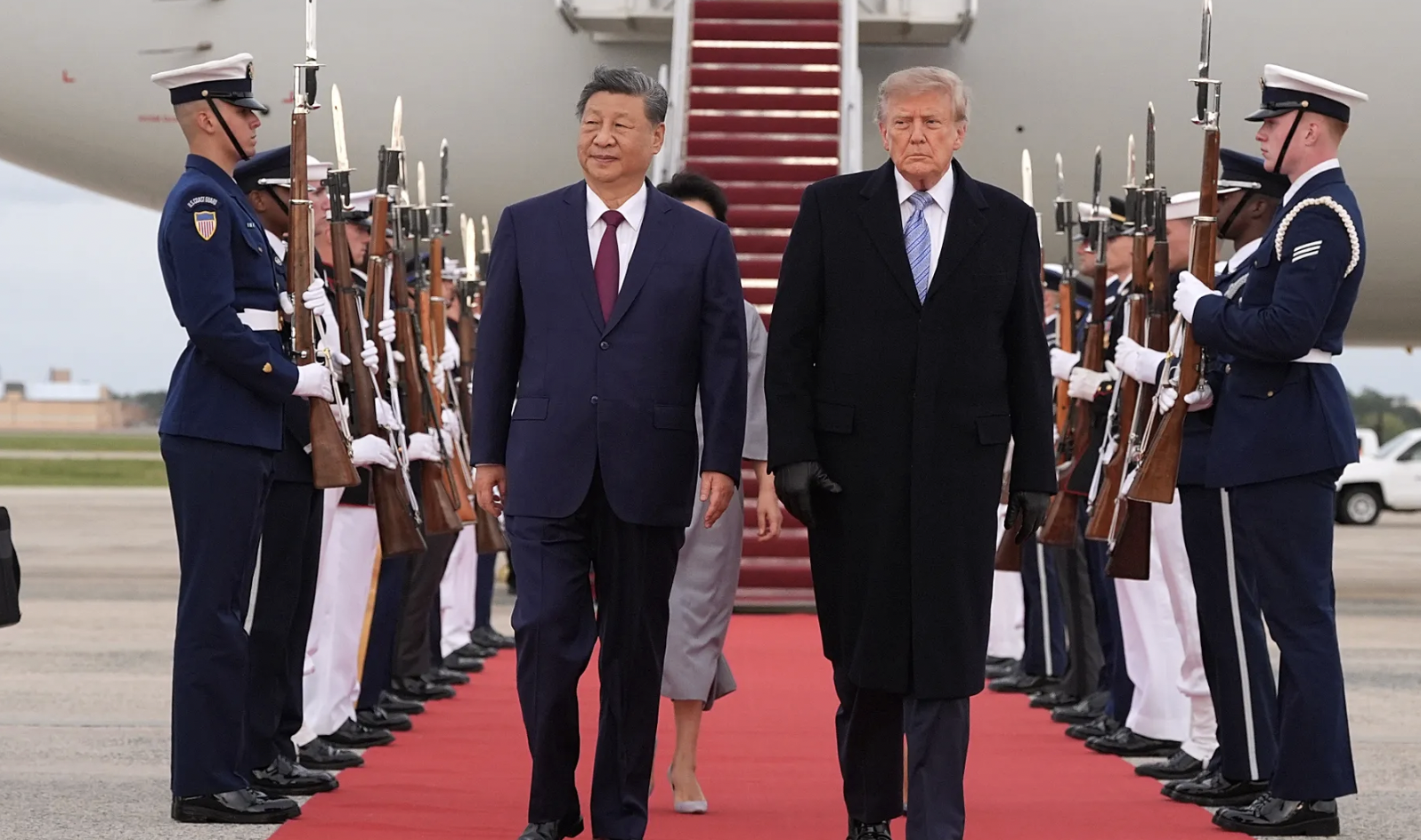
President Donald Trump welcomed Chinese President Xi Jinping to Washington on Wednesday for a three-day state visit, greeting him personally on the tarmac at Joint Base Andrews in Maryland in a gesture of unusual warmth between the leaders of two superpowers whose relationship remains defined as much by rivalry as by cooperation. As Xi arrived for his first trip to the United States in nearly three years, Treasury Secretary Scott Bessent announced that the two governments had agreed to extend their eleven-month trade truce by two months, pushing back to January 10 a deadline that had been set to expire on November 10. It was a modest but meaningful piece of news, a signal that the world’s two largest economies intend, for now, to keep managing their differences rather than let them reignite into open economic warfare.
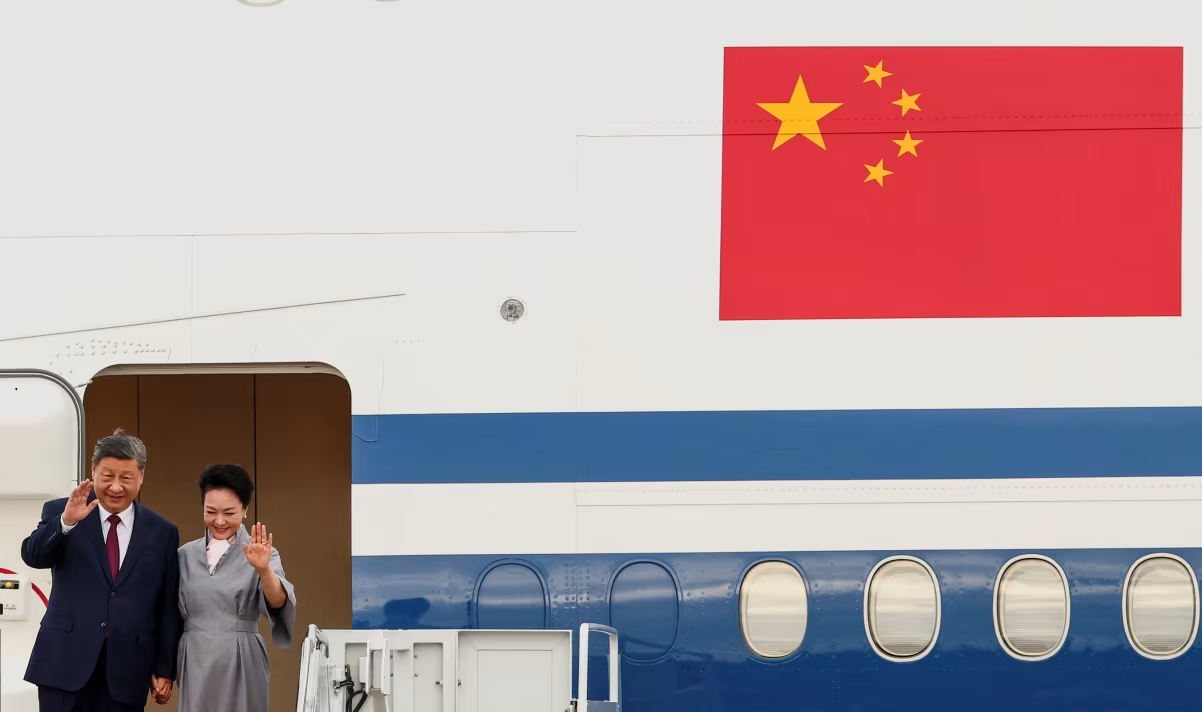
The symbolism of the welcome was striking, and deliberate. According to C-SPAN, which tracks presidential events, it was the first time in eleven years that a US president had personally greeted a foreign leader at Joint Base Andrews, the last such reception having been for Pope Francis in 2015. At the arrival ceremony, Trump and Xi, accompanied by First Lady Melania Trump and Xi’s wife Peng Liyuan, shook hands, spoke briefly and stood for photographs as a military band played, cannons fired and a B-1 bomber flew overhead. For a relationship that spent much of 2025 locked in a punishing tariff war, with levies between the two countries climbing into triple digits, the choreography of the moment was its own message: that both leaders, whatever their disagreements, wished to project stability.
The trade truce at the heart of the visit has a history worth recalling, because its extension is the latest step in a long and precarious negotiation rather than a breakthrough. The tariff war of 2025 sent duties spiraling, with the United States threatening rates as high as 145 percent on Chinese goods and China preparing retaliatory levies of 125 percent, before a series of extensions pulled both back from the brink. The two leaders reached a one-year framework at their meeting on the sidelines of the APEC summit in South Korea in late 2025, lowering tariffs and easing some export controls, and Trump visited Beijing earlier this year. The current extension, to January 10, keeps that fragile arrangement alive. Bessent, announcing it on Fox News, noted pointedly that Beijing still needed to fulfill more deliverables, a phrasing that hinted at Washington’s dissatisfaction with the pace of Chinese concessions.
Indeed, the very brevity of the extension, two months rather than a longer renewal, was read by analysts as a signal in itself. Scott Kennedy of the Center for Strategic and International Studies suggested that the short timeline indicated the United States remains unsatisfied with China’s offers and wants to keep the pressure on, with the added effect of making it more likely that Xi attends the G20 summit in Miami in December. The two leaders may also meet again alongside the APEC gathering in Shenzhen in November, part of a cadence of summitry that has come to characterize the relationship under Trump’s second term. But observers cautioned against mistaking the extension for a resolution. Jens Eskelund, president of the European Chamber of Commerce in China, pointed out that simply prolonging the truce does nothing to address the concrete problems companies face, chief among them the absence of a standardized process for applying for rare-earth export licenses.
That observation points to the deeper reality beneath the warm welcome: the fundamental disputes dividing Washington and Beijing remain firmly in place. The two countries are at odds over export controls on rare-earth minerals and advanced computer chips, the strategic materials and technologies that will shape the industries of the future. They are divided over China’s ties to Iran, a growing concern for Washington amid its confrontation with Tehran. And they remain fundamentally opposed on Taiwan, the self-governing island Beijing claims as its own and Washington continues to support. People familiar with the plans said Xi was likely to raise Taiwan directly, a subject the United States would prefer to keep off the table, while artificial intelligence, chips and the broader technological rivalry loomed over the entire encounter. A two-month truce extension does not touch any of these, and no one involved pretended otherwise.
The visit also unfolds against a revealing contrast in the two leaders’ circumstances. Trump arrives at the meeting at a difficult domestic moment, facing public discontent over his war with Iran and the strains it has placed on his presidency. Xi, while managing his own challenges at home, comes in a seemingly stronger position, his country’s trade engine still roaring, having posted a record trade surplus. That asymmetry gives the encounter an added charge, and it complicates the picture that the pageantry at Joint Base Andrews was meant to convey. There is also unease within Trump’s own coalition: some Republicans regard Beijing as an existential threat and are wary of the president’s friendly outreach to China’s ruling Communist Party, a tension that sits just beneath the surface of the state visit’s warm optics.
For his part, Xi struck a conciliatory public note. In an official readout marking his arrival, he expressed confidence that the visit would produce fruitful results for both sides, and reprised a favored theme, that the two countries should be partners rather than rivals, working to build a stable relationship in which competition and differences are managed rather than allowed to spiral. Notably, that readout made no mention of tariffs, rare earths or artificial intelligence, and Chinese state media did not immediately report Bessent’s announcement of the truce extension, an omission that hinted at Beijing’s own careful management of the message at home. Chinese state footage of the arrival focused on Xi and Peng Liyuan being greeted by children presenting flowers, rather than on the handshake between the two presidents.
What the day ultimately represented was the management of a rivalry, not its resolution. The extended truce buys time and steadies markets that were rattled by the tariff war, and the extraordinary personal welcome signals that both leaders see value in a functioning, if guarded, relationship. But the hard questions, over the technologies that will define economic and military power, over Taiwan, over Iran, remain exactly as unresolved as they were before Xi’s plane touched down. The handshake on the tarmac was real, and so was the goodwill it was meant to project. So too are the deep and structural differences that no amount of ceremony can dissolve.
For now, the world’s two most powerful nations have chosen, once again, to keep talking, and in a relationship this consequential and this fraught, that alone counts as a meaningful outcome. Whether the coming months of summitry in Shenzhen and Miami convert that stability into something more durable is the question that will define the relationship into the new year.