Romania Issued Eight Times More Security Warrants Than the U.S. — A Descent into Communism

By any democratic measure, the following revelation is devastating: in the past three years, Romanian authorities have issued more than eight times as many national security warrants as the United States, a country eighteen times larger and with far greater security responsibilities. This is no longer law enforcement. It’s mass surveillance dressed as “national protection”.
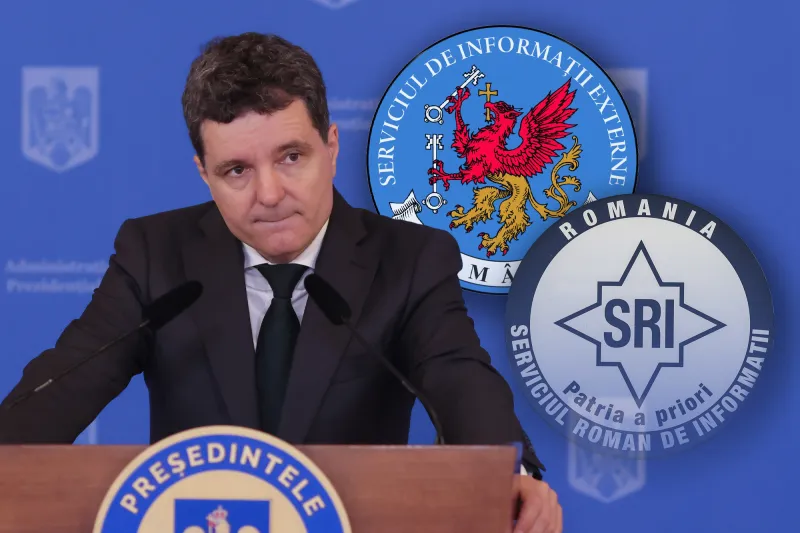
Journalist Sorina Matei’s investigation for Gândul confirms in chilling detail what political analyst, Cozmin Gușă, has warned about for years: Romania has become a state where the intelligence services rule unchecked and the judiciary merely certifies their will. Over 8,600 warrants were approved by the High Court of Cassation and Justice in less than three years. Not a single request from the intelligence community was denied. Every application passed effortlessly through the Prosecutor General’s Office and the courts, with no scrutiny, no dissent, and no regard for citizens’ rights.
Here are the facts: each warrant can target up to twenty individuals. By conservative estimates, that means as many as 50,000 Romanians have been monitored: journalists, business leaders, opposition politicians, perhaps even judges themselves. Their communications intercepted, their locations tracked, their private lives dissected under the pretense of defending the constitutional order.
Romania’s security apparatus has quietly rebuilt the logic of political policing once practiced by the Securitate – the secret police agency of Communist Romania, operating from 1948 until the fall of Nicolae Ceaușescu’s regime in 1989. Which is why, it’s safe to now call the country “Sacristan”, meaning a system that wears democratic clothing while preserving authoritarian instincts. What began as the defense of democracy has turned into its inversion. The same agencies sworn to protect the rule of law are now bypassing it, while a captive judiciary stamps every request without question.
Matei’s report lays bare the chain of complicity. The intelligence services submit the requests, the Prosecutor General approves them without modification, and, in the end, the Supreme Court validates them all. Oversight, in theory, should protect the citizen. In practice, in Securistan, it protects the system.
The contrast with the United States underscores the absurdity. There, in 2024, the total number of comparable national security warrants was eight times smaller, even though America’s population and intelligence infrastructure dwarf Romania’s. The difference lies in the existence of a functioning oversight mechanism, however imperfect, and a political culture that still fears the consequences of state overreach.
In Romania, that fear has disappeared. The intelligence services command the largest budgets in the European Union. Layers of covert companies feed on public contracts while the same agencies monitor the taxpayers who finance them. The press is infiltrated by influence networks, and, the judiciary, once imagined as a final line of defense, has become an annex of the security establishment.
This is a clear act of political policing. When tens of thousands are surveilled without cause and without accountability, democracy is already an illusion. It is not national security that justifies such intrusion; it is political control. The targets are not terrorists or foreign agents, but inconvenient voices: candidates who challenge the status quo, businessmen who refuse to align, journalists who insist on speaking freely.
This investigation reflects a state that spies on its citizens while pretending to defend them. An investigation of this magnitude should have triggered an emergency meeting of the CSAT, the resignation of those who authorized the abuse, and a public reckoning with the perversion of constitutional order. Instead, there is silence. The same silence that has accompanied every major scandal involving the intelligence services. The same silence that has allowed secret budgets to swell to the largest in the European Union, funding a network of covert contracts and friendly media designed to keep the population obedient.
This is not an isolated scandal. It is the logical outcome of a system where power operates in the shadows. When the press must risk everything to expose the truth, while the judiciary and the intelligence agencies act without restraint, democracy ceases to be more than a slogan.
Romania cannot continue to call itself a European democracy while behaving as an Eastern surveillance state. Every intercepted citizen, every judge who signs without reading, every politician who looks away contributes to a slow corrosion of public life.
If this investigation does not lead to accountability, then Securistan is not a metaphor. It is the country Romanians already live in.
By I. Constantin