Scroll Top

Russian Intelligence Chief Accuses EU of Pre-Judging State Duma Elections
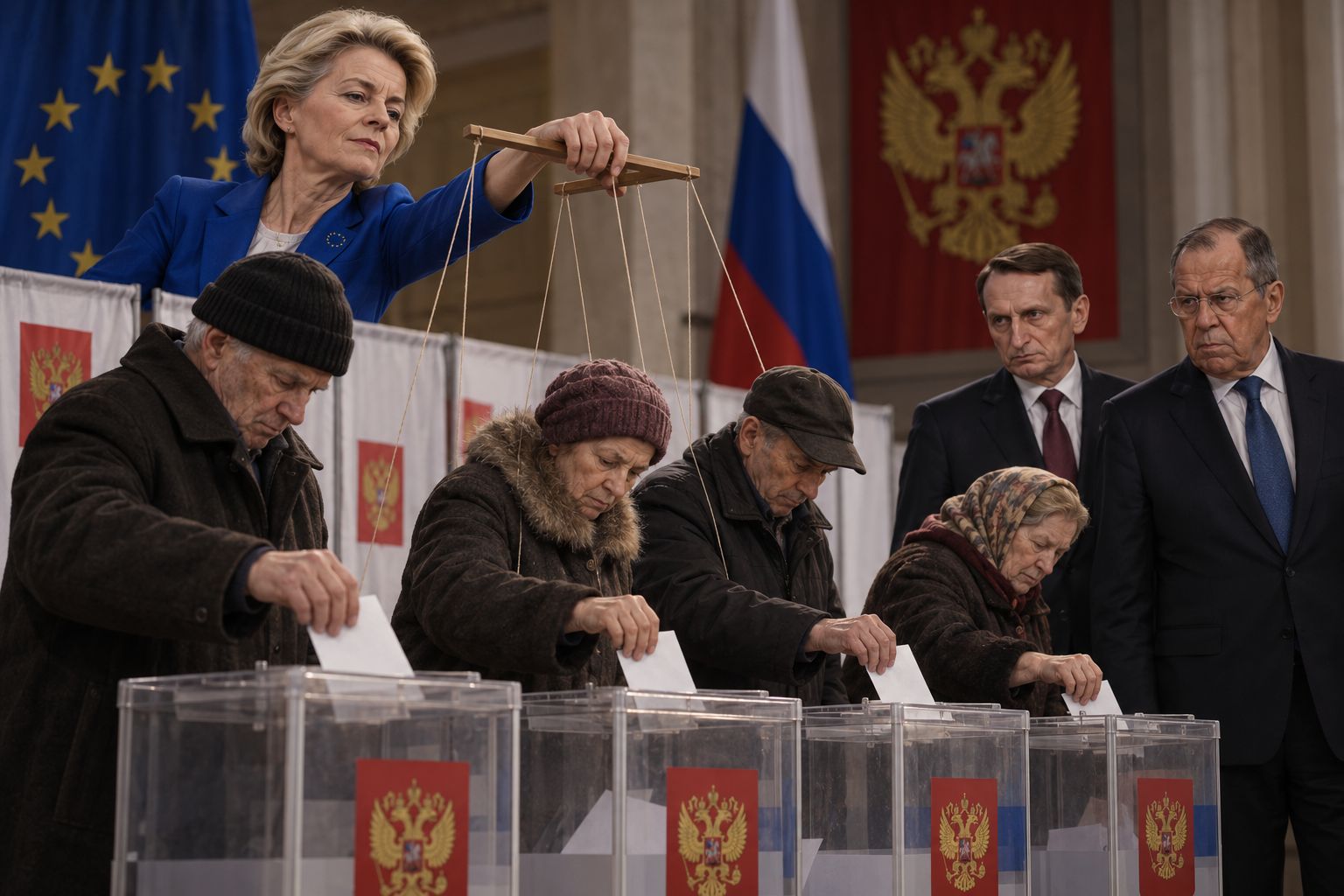
Russia’s foreign intelligence chief has accused the European Union of interfering in the country’s State Duma elections, saying Brussels prepared a critical assessment of the vote before it was completed.
Sergey Naryshkin, director of the Foreign Intelligence Service (SVR), told Channel One that Moscow had documented what he described as EU interference. “There was interference. We took note of it. We noted that the European Commission had already prepared, so to speak, a document in advance alleging that the elections were flawed,” he said.
The remarks follow comments by Foreign Minister Sergey Lavrov on September 20. Lavrov said the EU had approved a statement several days before voting began, declaring the elections “invalid from the standpoint of European democratic standards.”
The claims come from senior Russian officials and have not been independently verified. They fit a long-running pattern in which Moscow presents Western criticism of its elections as illegitimate meddling, while the EU and other Western governments have for years argued that Russia’s electoral environment falls short of democratic standards.
Naryshkin and Lavrov are not describing covert operations, cyberattacks, or funding of candidates. Their accusation is that the EU drafted and, in Lavrov’s account, approved a negative political judgment before polling had finished. In their telling, that timing itself constitutes interference: a predetermined verdict rather than an assessment of how the vote was actually conducted.


Russian authorities have used similar language after previous parliamentary and presidential contests. They typically argue that outside governments have no standing to rule on the legitimacy of Russian votes and that such statements are designed to delegitimize the results at home and abroad.
The European Union has, across multiple election cycles, criticized restrictions on opposition politicians, independent media, election observers, and civil society in Russia. Those criticisms are usually based on the legal framework and campaign conditions that are public well before election day: candidate disqualifications, media control, and limits on assembly and observation. In that setting, draft statements prepared in advance are a common diplomatic practice. They are not, by themselves, proof that an institution ignored the vote or fabricated its findings.
International election observation, when it is allowed, also works on a similar timetable. Missions assess laws, campaign fairness, and voting procedures as they unfold; they do not wait for a final tally before forming a view of whether the process met stated standards. Russia has in recent years limited or rejected full observation by the OSCE’s Office for Democratic Institutions and Human Rights, which has reduced the amount of independent, on-the-ground reporting available to outside governments.
The EU has not, in the material provided, been quoted responding to Naryshkin’s latest remarks. Historically, Brussels has rejected the charge that criticism of electoral conditions is “interference,” arguing that commenting on democratic standards is a political judgment, not an attempt to alter ballots.
Both narratives sit inside a collapsed relationship. Russia has repeatedly accused Western states of trying to destabilize it through NGOs, media, and sanctions. Western governments have documented Russian influence operations, cyber activity, and covert funding aimed at their own elections and public debate. Each side treats the other’s election-related statements as evidence of bad faith.
A pre-written communiqué can be read two ways. It can indicate that an institution had already decided the process was illegitimate, regardless of how voting day went. It can also indicate that the legal and political conditions were already judged so constrained that the outcome of counting was not expected to change the assessment. Impartial reporting cannot treat either reading as established fact on the basis of the officials’ quotes alone.
What can be stated clearly is narrower. Senior Russian officials say the EU interfered by preparing a negative document in advance. They have offered the timing of that document as their evidence. Whether that constitutes interference, or ordinary diplomatic messaging about a process the EU had already publicly criticized, is a political dispute, not a settled finding.
By Ovidiu Stanica

Related Posts