Does the World Need Another Gandhi?
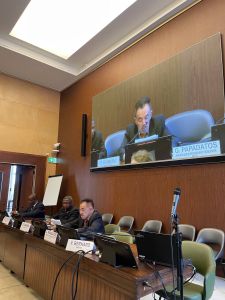
On 2 October 2026, the anniversary of Mahatma Gandhi’s birth and the International Day of Non-Violence, Ambassador George Papadatos declined the usual rites of reverence. Speaking at a side event on Gandhi’s legacy in a world in crisis and undergoing profound change, the Permanent Observer to the UN and Other International Organizations thanked his host, Biro Diawara, less for the invitation than for the difficulty of the assignment: how, exactly, does one carry a philosophy of non-violent resistance into the realities we actually inhabit?
He began with a disclaimer. He is no Gandhi scholar. He has, however, spent enough time with the subject to risk a few critical thoughts—about the man, and about us.
Gandhi’s politics of spiritual integrity shaped people far beyond India. Martin Luther King Jr., Steve Biko, Václav Havel, and Aung San Suu Kyi all drew from the same well. What earned him lasting respect was not charisma alone but an unwavering struggle for truth and justice, expressed through non-violent resistance. That philosophy helped dismantle colonial rule and later supplied moral architecture to the American civil rights movement. Entire movements proved capable of restructuring the foundations of societies precisely because they showed that political change need not arrive by violence.