Scroll Top

Handcuffs on Democracy: Romania’s Shame Has a Name
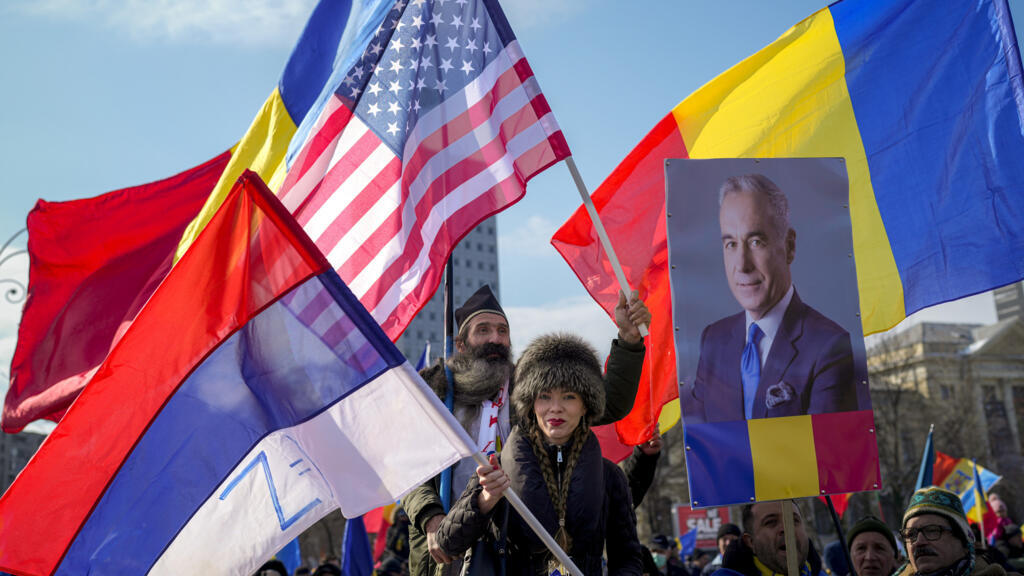
There are moments when a nation must look at itself and ask what it has become. For Romania, that moment is now, standing outside a cold building where a man sits behind locked doors, while thousands of his fellow citizens keep vigil in the streets, refusing to go home.
Călin Georgescu has been placed in 30-day pretrial detention. The official justification is an “economic case,” a phrase so vague and so conveniently timed that it insults the intelligence of every Romanian who hears it. This is not justice taking its course. It looks like power protecting itself.
Remember November 24, 2024. Romanians went to the polls, and millions of them, tired of being ignored and lectured, placed Călin Georgescu first in the presidential race. It was a political earthquake, an outsider overturning the calculations of every party machine in Bucharest.
What followed should haunt anyone who claims to believe in democracy. The election was annulled. The voters’ choice was erased. Georgescu was then barred from the rerun. Each step came wrapped in legal language and solemn assurances. Each step took more power away from ordinary Romanians and gave it to the institutions that claimed to be protecting them.
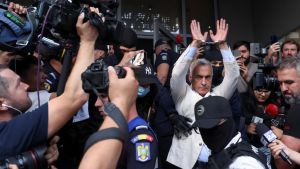
Now comes the handcuffs.

Supporters and critics alike are entitled to ask a simple question: where is the evidence? Where is the clear, public accounting that would justify locking up the most prominent opposition figure in the country for a month before any trial?
When a state jails a political figure, the burden of proof is not merely legal. It is moral. Authorities must show that the action is necessary, proportionate, and free of political motive. So far, they have offered Romanians little beyond press releases and procedural formulas. To many watching, the “economic case” looks less like an investigation and more like a pretext, a cage built around a man who could not be defeated at the ballot box.
Pretrial detention is meant to be an exception: for flight risks, for people who might destroy evidence, for real dangers to the public. Is a man whose face is known in every village in Romania truly about to vanish? Or is the real danger that he remains free to speak?
From the parliamentary podium, opposition leader George Simion did not mince words. The handcuffs on Călin Georgescu, he declared, were “ordered and applied by the illegitimate president, Nicușor Dan.”
Those are explosive words, and the government will dismiss them as rhetoric. But they voice what a large share of Romanians feel: that the line between the courtroom and the political arena has dissolved. When citizens no longer believe their justice system is blind, the damage reaches far beyond one defendant. It reaches the foundations of the republic.
For four days, they have come. Thousands of them. Grandmothers with Orthodox icons, young workers back from jobs in Italy and Spain, farmers, teachers, students. They stand in the cold outside the building where Georgescu is held, and they carry one demand: let him go.
These are not “extremists,” whatever the official narrative claims. They are citizens who watched their votes annulled, their candidate excluded, and now their leader detained. They are asking the oldest question in politics: who decides, the people or the powerful?
Their protest must remain peaceful, because peace is their strongest weapon. Every calm hour on that pavement is a rebuke to authorities who claim to be defending democracy while those citizens wonder whether their own voice still counts.
Romania fought for its freedom in 1989. Romanians died in the streets so their children would never again live in a country where opponents disappear behind official doors on official pretexts. Those sacrifice demands more than silence now.
Release Călin Georgescu. If there is a real case, try it openly, quickly, and transparently, with full defense rights, under the watchful eye of the public and independent observers. Let the evidence speak, if there is any. And let the people of Romania, not prosecutors or palace strategists, decide who leads them.
Release him. Not as a favor. Not as a negotiation. Release him because the case is a fabrication, because the handcuffs were a political act, and because a republic that detains the winner of its own election in order to protect the man who replaced him has already confessed what it is. The thousands outside are not asking for chaos. They are asking for the one thing this government has treated as optional: that the will of November 24th still means something, and that Călin Georgescu walks out of that building today. 
History is watching. So are the thousands in the street. Romania’s leaders should be very careful about which side of that history they choose to stand on.
By Ovidiu Stanica

Related Posts