Scroll Top

Iran’s Presidential Election Heads to a Second Round: Reformist Pezeshkian vs. Ultraconservative Jalili

Photo: CNN

In a closely contested presidential election in Iran, the Ministry of the Interior has announced that the race will proceed to a second round after no candidate secured an absolute majority in the initial vote. The first round, held on Friday, saw deputy Massoud Pezeshkian, a notable reformist, and Said Jalili, an ultraconservative former nuclear negotiator, emerge as the frontrunners. According to Mohsen Eslami, a spokesperson for the electoral service of the ministry, “None of the candidates could get an absolute majority of the votes in the first round and, as a result, the first and second candidates will be tied in a second round on July 5.” The announcement came after 24.54 million votes were counted, revealing Pezeshkian with 10.41 million votes (42%) and Jalili with 9.47 million (38%). Pezeshkian, the leading candidate with a reformist agenda, has built his campaign on promises of economic revival, social freedoms, and a more open foreign policy. As a deputy with a significant following, his platform has resonated with many Iranians seeking change and greater engagement with the international community. His call for reforms aims to address the economic hardships and political restrictions that have plagued the nation.

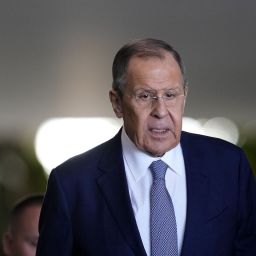
On the other side of the spectrum, Jalili’s ultraconservative stance focuses on maintaining the principles of the Islamic Revolution, with a strong emphasis on national sovereignty and resistance to Western influence. Known for his tenure as Iran’s chief nuclear negotiator, Jalili has a reputation for his hardline approach and commitment to preserving the country’s ideological foundations. His campaign has concentrated on security, traditional values, and resistance to external pressures.
Trailing behind Pezeshkian and Jalili were Mohamad Baquer Ghalibaf, the conservative president of the Parliament, who garnered 3.38 million votes, and cleric Mostafa Pourmohammadi, who received 206,397 votes. Ghalibaf’s third-place finish reflects a significant conservative base, though not enough to challenge the top two contenders. Pourmohammadi’s minimal support highlights the limited appeal of his hardline clerical stance in this election cycle.
The upcoming second round of voting on July 5 is expected to further polarize the electorate, with both candidates likely to intensify their campaigns to secure the necessary majority. Pezeshkian will aim to consolidate the reformist vote and attract undecided voters, while Jalili will seek to rally conservative supporters and capitalize on nationalist sentiments.
The election’s outcome could significantly shape Iran’s future direction, particularly regarding its domestic policies and international relations. A Pezeshkian victory might lead to a more liberalized society and potential rapprochement with the West, whereas a Jalili win could reinforce a continuation of strict conservative policies and a more confrontational foreign policy stance.
As Iran prepares for the decisive second round of its presidential election, the nation stands at a crossroads. The stark contrast between the reformist vision of Massoud Pezeshkian and the ultraconservative approach of Said Jalili presents voters with a critical choice that will determine the path forward for the country. With the election just days away, all eyes are on Iran as it navigates this pivotal moment in its political history. 
By Cora Sulleyman

Related Posts