Under fire and over the threshold: how the US and Israel turned a shadow conflict with Tehran into a bid to reshape the Middle East

Fifteen hours ago, two bombs tore through western Tehran. The blasts were reported near University Street and the Jomhouri district, in broad daylight, as millions were commuting to work or heading into classrooms. Fars news agency confirmed that several missiles struck the area, as smoke rose quickly above the capital.
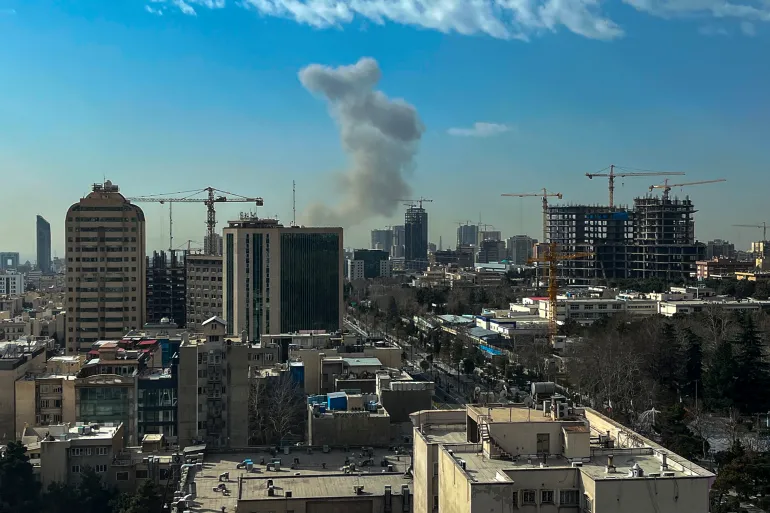
Minutes later, sirens wailed across Israel and the Israeli army issued a nationwide alert instructing residents to remain close to protected areas. In two separate statements on Telegram, the military announced that the country was shifting from “full activity” to “essential activity.” Schools were closed, public gatherings were banned and most workplaces were shut down.
By early afternoon, President Donald Trump stepped before cameras and reframed the explosions as the opening phase of something far larger. The United States and Israel, he said, had launched a major joint assault on Iran. The objective was expressed straightforward: devastate Iran’s military capacity, dismantle its missile program, and create conditions for regime change. Later, in a video posted to Truth Social, Trump claimed that Iran’s Supreme Leader, Ayatollah Ali Khamenei, had been killed in the strikes. Iranian officials insisted their leadership remained “safe and sound.” Two Israeli sources told international media that Israel had obtained photographic confirmation of Khamenei’s body.
As of right now, the death of Ayatollah Ali Khamenei is confirmed, and this single fact marks the most consequential targeted killing in modern Middle Eastern history.
More than 200 people have been reported killed in Iran, according to state media and over 700 were wounded. Among the dead are 85 individuals said to have died after a strike hit a girls’ school in Minab. Explosions were also reported in Tehran’s Pasteur district, near the highly secured compound that houses the Supreme Leader’s residence and office.
The United States military has reported no combat related American casualties. FBI counterterrorism teams have been placed on high alert domestically. The State Department advised US citizens worldwide to exercise increased caution and secretary of State Marco Rubio canceled a planned trip to Israel. The signals from Washington are clear: this is not a limited symbolic exchange, it’s a sustained campaign. Sources told US media that bombing could continue throughout the week.
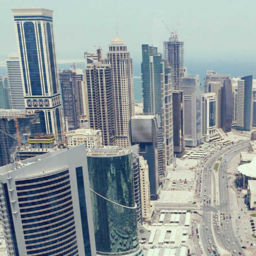
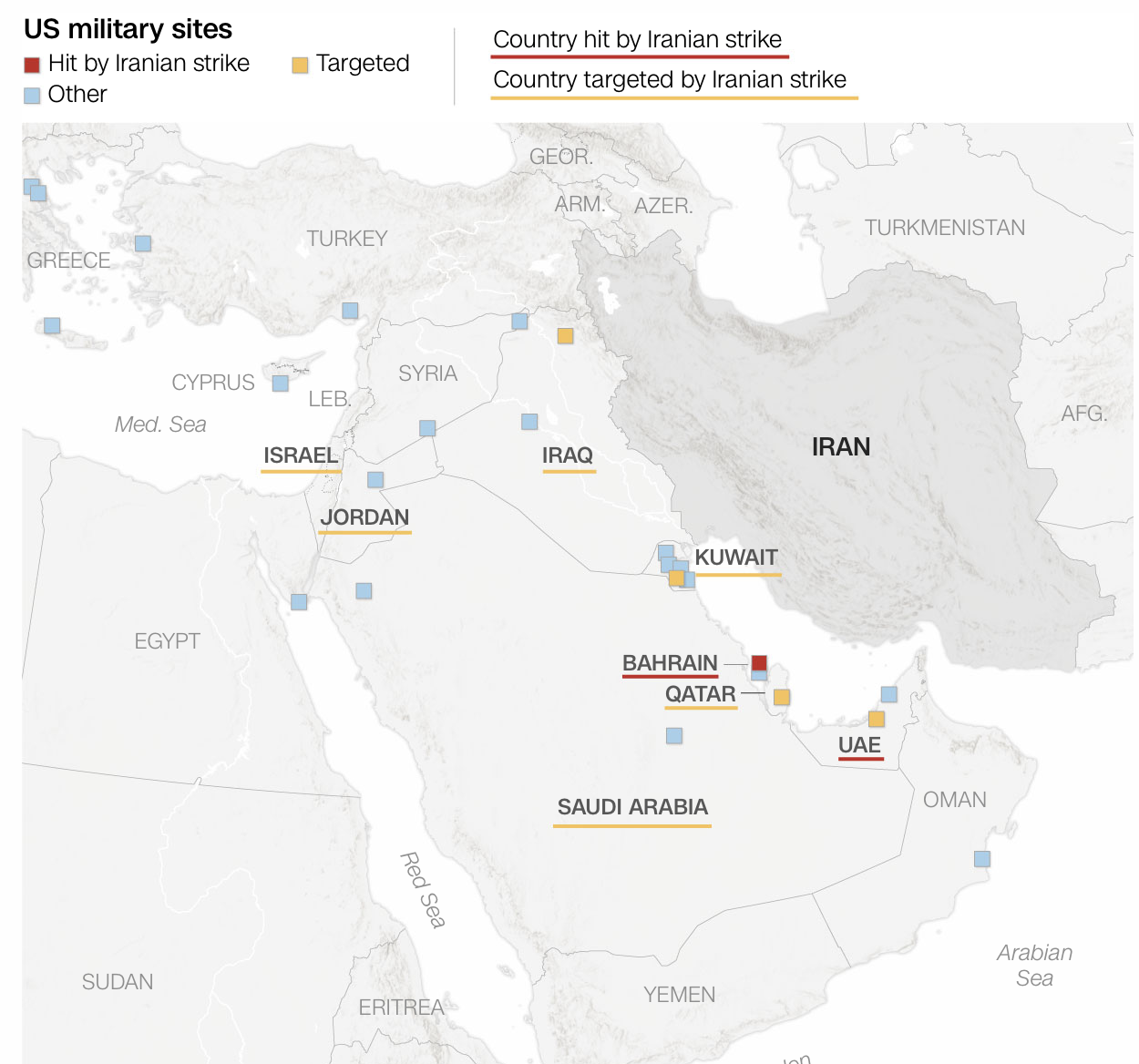
What we saw today was that Iran’s response was immediate and expansive. Tehran launched what regional analysts are calling an unprecedented wave of retaliatory strikes. Missiles and drones targeted US military bases, Israel, and several Gulf states that host American forces. Explosions were reported in the United Arab Emirates, Qatar, Bahrain, Jordan, and Saudi Arabia. A drone strike caused damage and injuries at Kuwait International Airport. One Iranian Shahed drone struck a densely populated area in Dubai, igniting a large fire. Air defenses intercepted several missiles, but debris killed at least one person in Abu Dhabi. Traffic in the Strait of Hormuz was disrupted, rattling global energy markets.
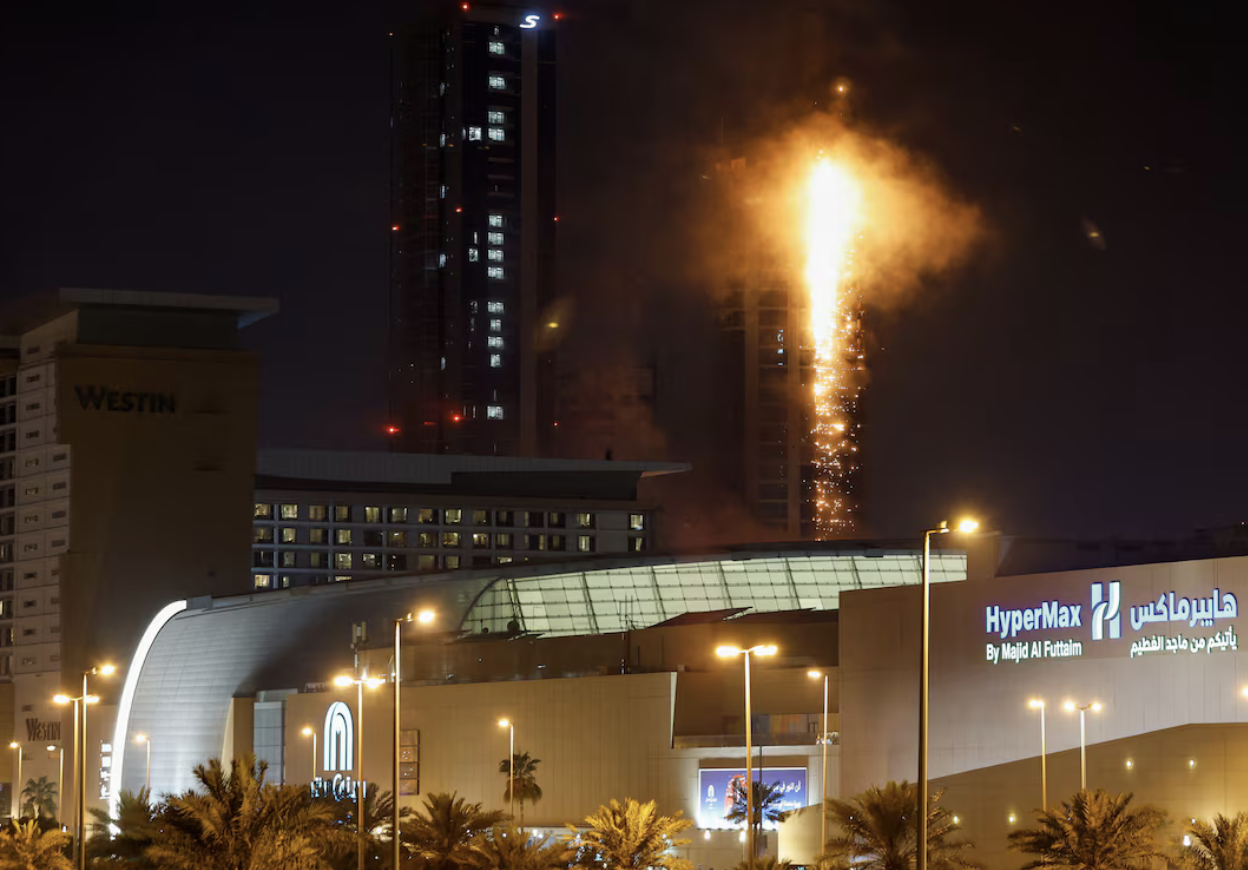
Smoke rises from a burning building hit by an Iranian drone strike, after Israel and the U.S. launched strikes on Iran, in Seef district, Manama, Bahrain, February 28, 2026. REUTERS
In strategic terms, Iran has done exactly what it has long promised it would do if attacked directly. And, to be fair, this moment did not erupt out of the blue. Just days ago, indirect US–Iran talks were underway in Switzerland. Iran had reportedly agreed “never” to stockpile enriched uranium, according to mediators. The Omani foreign minister described progress as significant, yet Tehran insisted that its ballistic missile program and regional militia networks were not open for discussion in talks dominated by Washington. Gulf states, for their part, viewed any arrangement that sidelined the United States as structurally weak.
Trump publicly warned that the US was “locked and loaded.” Troop movements and materiel shipments into the region increased, and Iran, already weakened by last summer’s conflict with Israel and battered by economic crisis and internal protests, faced mounting external and internal pressure.
What changed today was the threshold.
Trump talked about the assault as preemptive defense. He argued that Iran’s nuclear ambitions and missile development posed imminent threats to the US. He repeated claims that Iran was working toward ballistic missiles capable of reaching the US mainland. Yet previous US intelligence assessments have suggested that while Iran possesses advanced regional missile capabilities, there is no verified evidence that it is actively developing an intercontinental missile aimed at the United States in the near term. A 2025 Defense Intelligence Agency report assessed that Iran could develop a viable ICBM by 2035 if it chose to pursue that path.
Israel’s reasoning, on the other hand, is rooted in doctrine. Prime Minister Benjamin Netanyahu has long described Iran as Israel’s primary existential threat. After crippling Hamas in Gaza and Hezbollah in Lebanon, Israeli strategy shifted toward the source of those networks. The decision to strike now may also be shaped by domestic political realities, as elections loom in October. And, as we’ve seen in the past, a decisive security posture has often consolidated Netanyahu’s support in times of crisis.
Both leaders have moved beyond deterrence language into overt regime change rhetoric. Trump addressed the Iranian people directly, telling them that “the hour of your freedom is at hand.” Netanyahu urged Iranians to cast off what he called tyranny and take their destiny into their own hands.
This shift matters because, once regime change becomes the declared objective, the conflict transforms from punitive strike to transformative war.
However, history offers us a cautionary tale. In 2003, the United States dismantled Saddam Hussein’s regime swiftly, only to spend years navigating the violent aftershocks of state collapse. This campaign appears designed to avoid ground invasion and long occupation, relying more on air power, leadership decapitation, and the expectation that internal dissent will fill the vacuum.
But that is a gamble.
Iran is not Iraq in 2003. Its political system, while authoritarian, is layered and institutionalized. Power is distributed among clerical bodies, the Revolutionary Guard, and elected structures. The death of a Supreme Leader will trigger a succession process overseen by the Assembly of Experts. Internal rivalries could intensify, and, alternatively, external attack could consolidate factions around a narrative of national survival.
The civilian toll complicates any narrative of liberation. The reported deaths of students in Minab will resonate far beyond political ideologies. Images of damaged neighborhoods in Tehran will travel across social media in real time and Iranian officials have described the assault as an illegal act of aggression. They argue that their retaliatory strikes are legitimate self defense.
Across the Gulf, opinions are divided. Analysts in the United Arab Emirates have warned that Iran’s missile strikes prove that regional allies, not the United States, are in the direct line of fire. By targeting oil rich Gulf states, Tehran is raising the cost of alignment with Washington. The conflict now touches the arteries of global commerce, because, The Strait of Hormuz is a shipping corridor through which a significant portion of the world’s oil flows.
It is not a stretch or an exaggeration of any kind to realize that, if this war expands, the consequences will not be confined to Tehran or Tel Aviv. Energy markets will react, insurance premiums on shipping will spike, supply chains will strain, and, finally, political pressure will mount in capitals far from the Middle East.
In Washington, the domestic response is fractured as well. Protesters gathered near the White House carrying signs that read “Stop the war on Iran” and “No new US war in the Middle East.” and Iranian Americans expressed grief over civilian casualties. Others voiced support for the strikes, arguing that the Iranian people are ready for regime change.
The United States is once again debating the meaning of intervention in the Middle East, this time in an era defined by economic fragility and geopolitical rivalry with China. And, speaking of China, reports came in throughout the day claiming that China has sent “offensive weapons” to Iran, including suicide drones. This was reported by Middle East Eye, citing Arab officials and regional intelligence representatives. The decision to supply offensive weapons, even in small quantities, indicates that Beijing is going beyond defensive support, the publication notes.
French President Emmanuel Macron has called for an urgent meeting of the United Nations Security Council, warning that the escalation poses serious consequences for international peace and security. European leaders, already managing war in Ukraine and instability in Africa, now face another front of uncertainty.
The essential question remains this: is this attack a contained campaign or the opening act of a regional war? Are we maybe witnessing the begining of War World 3?
Trump appears to be betting on speed: a short, intense air campaign, visible degradation of Iranian military assets, minimal American casualties, contained economic fallout. A political narrative of strength before domestic electoral cycles intensify. Netanyahu appears to be betting on strategic inevitability: confronting Iran directly now prevents a more dangerous confrontation later.
Iran, by contrast, is betting on endurance. On the ability to absorb punishment and retaliate and the belief that regional allies will fracture under sustained pressure.
Fifteen hours after the first bombs struck western Tehran, the Middle East stands at a precipice shaped by three competing bets. The facts are still emerging, and the smoke has not cleared. Yet one reality is already visible. We are witnessing a gamble on the future of a fractured region, a test of global norms, and a stark reminder that once great powers decide the fate of distant nations with explosive force, the world is left to deal with the ruins of their ambition.
By I. Constantin