The Puppet Master of Progressivism: How Qatar Is Buying the Soul of the West
There is a peculiar irony buried beneath the glittering skyline of Doha. In a country where homosexuality is punishable by up to seven years in prison, where women require male guardianship for major life decisions, and where apostasy from Islam carries consequences too severe to be taken lightly — the government of Qatar has spent billions of dollars funding the very institutions and movements that champion LGBTQ rights, deconstruct traditional gender roles, and dismantle the foundational values of Western civilization. This is not accidental. This is not a contradiction born of naivety. This is strategy.
And it may be the most audacious, most corrosive geopolitical operation of the 21st century.
The flow of Qatari money into American higher education has been staggering in its scale and deliberate in its targeting. Under the Higher Education Act, foreign donations to American universities above $250,000 must be reported to the Department of Education — yet compliance has been notoriously inconsistent, and the true figures are almost certainly far higher than what appears on record.
Cornell University received hundreds of millions of dollars from Qatar to establish and operate its Weill Cornell Medicine campus in Doha. At the same time, Cornell’s main campus in Ithaca has been a breeding ground for some of the most radical progressive ideological programming in American academia, with diversity, equity, and inclusion bureaucracies that have ballooned into administrative empires.
Georgetown University has operated the Georgetown University School of Foreign Service in Qatar since 2005, with Qatari funding flowing generously into its operations. Georgetown’s Washington D.C. campus has simultaneously become a flagship institution for progressive legal theory, gender studies programming, and advocacy-driven academic research that systematically challenges Judeo-Christian moral frameworks.
Northwestern University established its Qatar campus in 2008, with the state-backed Qatar Foundation as its primary financial partner. Northwestern’s journalism school, enriched by this relationship, has produced graduates and research that overwhelmingly tilts toward progressive narratives on race, gender, and institutional power.
Texas A&M, Carnegie Mellon, Virginia Commonwealth University, and others have all accepted Qatari funding through Education City — Qatar’s ambitious academic hub designed, in the words of its own promotional materials, to “transform” global educational culture. The question of whose culture is being transformed, and in which direction, deserves far more scrutiny than it has received.
A 2019 investigation by the Department of Education found that universities had failed to report a staggering $6.5 billion in foreign funding, with Gulf States — Qatar prominently among them — identified as major undisclosed sources. Six and a half billion dollars, quietly injected into the intellectual bloodstream of American academia.
The NGO Network: Funding the Revolution
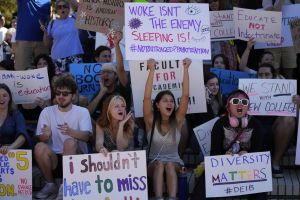
Beyond the university system, Qatari money has flowed — often through deliberately obscured channels — into a web of non-governmental organizations that form the activist infrastructure of the progressive movement in the United States and Europe.
The Education Above All Foundation, chaired by a member of Qatar’s royal family, funnels resources into global education initiatives that consistently promote progressive frameworks around gender identity, sexual orientation, and the deconstruction of traditional family structures — all while the Qatar government imprisons people at home for acting on those very identities.
Organizations connected to the Qatar Foundation for Education, Science and Community Development have partnered with NGOs across the Western world that actively lobby for policies fundamentally incompatible with conservative, Christian, or traditionally rooted social structures.
Brookings Institution’s Brookings Doha Center, financed directly by Qatari government entities, has functioned as an influential policy shop shaping American foreign and domestic discourse, with alumni and affiliated scholars producing research that reliably advances globalist, progressive policy prescriptions. The relationship between Brookings and Qatar was so fraught that the New York Times exposed it in a landmark 2014 investigation, revealing how Qatari funding created unspoken obligations in research conclusions.
Think tanks, media organizations, and advocacy groups have all received funding traced back to Qatari sovereign wealth instruments, creating an ecosystem of ideological production that serves Doha’s long-term strategic interests while presenting itself as organic, grassroots American progressivism.
The Question No One Wants to Ask
How does a government that arrests gay men fund organizations that celebrate gay pride? How does a kingdom that enforces gender segregation bankroll gender studies departments? How does a state that considers Christian evangelism a criminal offense pour money into institutions that systematically undermine Christian cultural influence in the West?
The cynical answer — and unfortunately, the most honest one — is that Qatar is not confused. Qatar is not being hypocritical out of ignorance or contradiction. Qatar is engaged in something far more calculated: the deliberate weaponization of the West’s own internal divisions.
The woke movement, in this reading, is not a cause that Qatar believes in. It is a tool. A crowbar inserted into the fault lines of Western society — race, gender, sexuality, religion, historical guilt — and twisted with extraordinary patience and financial commitment. A civilization that is busy tearing down its own statues, canceling its own heroes, dismantling its own moral traditions, and teaching its own children to regard their heritage as a source of shame is a civilization that is not watching the horizon. It is not defending its borders, its values, or its coherence.
And a distracted, self-flagellating West is an extraordinarily convenient West for a small but enormously wealthy Gulf kingdom that seeks influence, security, and immunity from accountability.
Qatar’s foreign policy has always operated on the principle of strategic ambiguity — maintaining relationships with actors as ideologically opposed as Hamas and the United States Central Command, which operates its largest regional base, Al Udeid, on Qatari soil. The funding of progressive extremism in the West fits this same playbook perfectly: cultivate leverage everywhere, commit to nothing sincerely, and ensure that no single power can afford to confront you directly without cost.
The Double Standard That Will Not Hold Forever
Within its borders, Qatar applies sharia-influenced law with an unapologetic firmness that Western progressive institutions would, under any other flag, denounce with thunderous outrage. Migrant workers constructing the gleaming towers of Doha have died by the thousands under the kafala labor system — a condition of near-indentured servitude that human rights organizations have compared to modern slavery. The same NGOs that receive Qatari-connected funding have been conspicuously muted on this subject.
LGBTQ advocacy organizations that benefit, directly or indirectly, from Qatari financial networks have not marched outside Qatari embassies. Progressive academics employed at Qatari-funded institutions have not dedicated research centers to the study of labor exploitation in the Gulf. The silence is not coincidental. The silence has been purchased.
But the architecture of this arrangement is beginning to show cracks.
Congressional scrutiny of foreign university funding has intensified dramatically since 2019. The House Foreign Affairs Committee has called for tighter enforcement of disclosure requirements. Investigative journalists have mapped the money trails with increasing precision. Several European governments have begun restricting Gulf-state funding to domestic think tanks and advocacy groups. The public, sensing something deeply wrong about the relationship between petrodollar wealth and ideological transformation, is growing restless.
History has a way of exposing arrangements that depend on collective willful blindness. The moment the West — America and Europe together — decides that no amount of oil revenue, no strategic military access, and no diplomatic convenience justifies the funding of movements designed to rot its cultural foundations from within, Qatar will face a reckoning for which its enormous sovereign wealth fund will offer limited protection.
The international community has sanctioned nations for far less. It has isolated governments for human rights violations far less systematic than what Qatar practices at home. It has named and shamed state actors for foreign influence operations far less sophisticated than what Qatar runs through its academic and NGO networks.
The question is not whether Qatar’s double standard will one day be held to account. The question is how much damage will be done before the West finds the courage — and more importantly, the clarity — to say that petrodollars do not purchase the right to dismantle a civilization.
Qatar has been playing a very long game. But long games eventually end. And when the ledger is finally opened, the accounting will be severe.
The most dangerous enemy is not the one at the gates. It is the one writing the curriculum, funding the activist, and endowing the chair — all while smiling across the diplomatic table.
For the fifth time in the last two years, a record in the European Union (EU), Bulgarians started voting on Sunday to elect their parliament, in a country divided in the face of the Russian invasion launched in Ukraine
In a recent symposium commemorating the legacy of Mao Zedong, Chinese President Xi Jinping made a forceful declaration regarding the future of Taiwan, asserting that the island, which Beijing
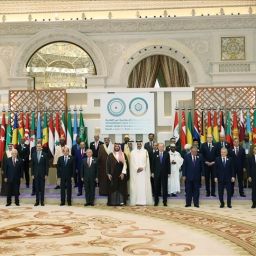
Saudi Arabia announced on Sunday the appointment of Faisal bin Saud Al-Mejfel as the new ambassador to Damascus, marking the first such appointment in over a decade.
The landmark treaty, a Council of Europe accord that was signed by 45 countries and the European Union, was designed to promote gender equality and prevent violence against women. In 2012, Turkey became the first country to ratify the convention, named after its largest city Istanbul where the treaty was forged.
As Finland prepares for its pivotal presidential election on Sunday, the role of the president has come under the spotlight, gaining new significance in the wake of the country’s entry into NATO.
On Monday evening, in a significant development, the United Nations Security Council voted against a resolution proposed by Russia, which sought to institute a “humanitarian ceasefire”
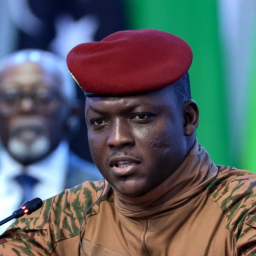
In a time of great uncertainty and challenge, Burkina Faso finds a beacon of hope in the charismatic President Ibrahim Traoré, the country’s interim leader since 30 September 2022.
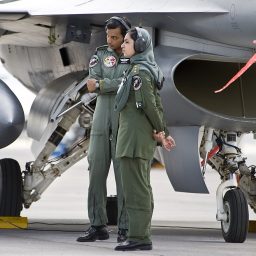
The perpetually volatile Middle East has witnessed a worrisome escalation in tensions as Pakistan and Iran, two neighboring countries with complex histories, have entered into a series of military engagements.
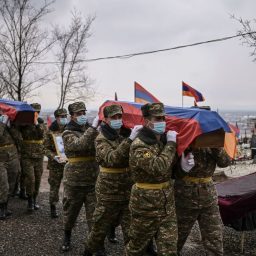
An exchange of fire on the border between Azerbaijan and Armenia resulted in the death of seven soldiers from both sides, in a region that the two countries dispute, the scene of regular clashes


 The NGO Network: Funding the Revolution