The Price of a Protected Life: How Humanitarianism Stopped Being a Right and Became a Bargaining Chip
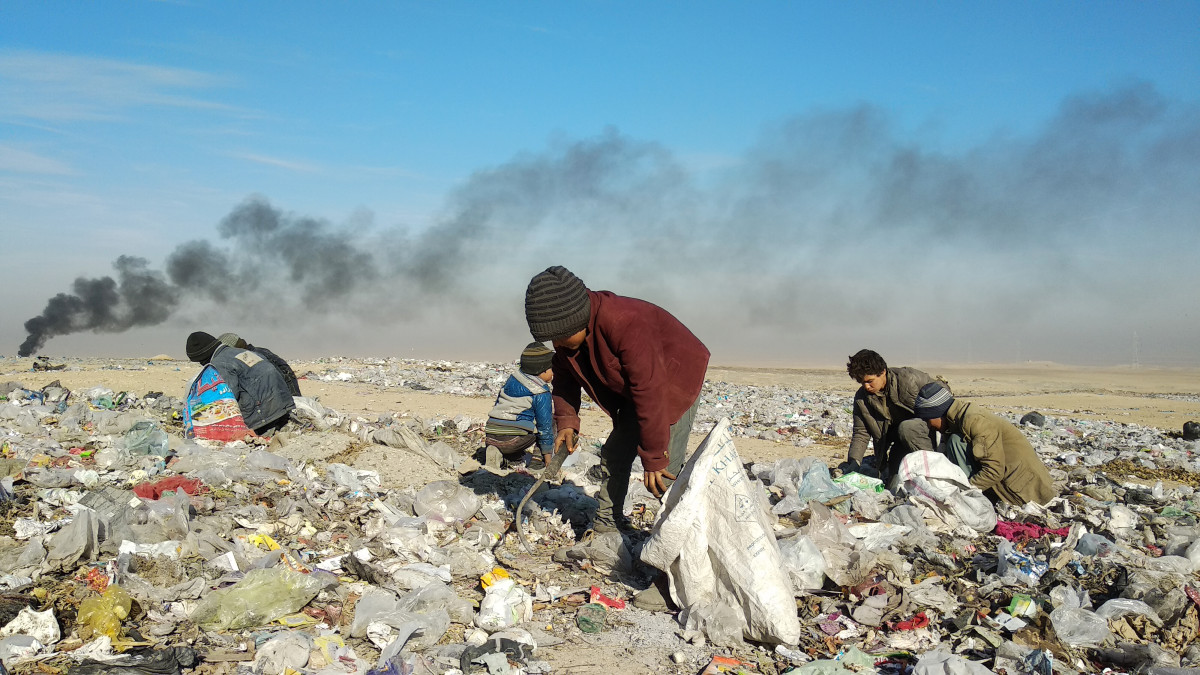
A record number of aid workers are being killed, and the laws written to shield them are being quietly renegotiated by the very governments that drafted them. For a generation, the world operated on a shared fiction so widely honored that it functioned almost like a fact. The fiction was that certain acts were sacred even in the middle of slaughter. A doctor stitching a wound, a worker handing bread to a starving child, an ambulance moving toward the sound of an explosion rather than away from it, these were not favors, not gestures of mercy to be granted or withdrawn.
They were rights, written into binding international agreements, backed by the signatures of the powerful, and understood to hold even when everything else had failed. That understanding is what the humanitarian system was built on. And it is that understanding, more than any single building or budget, that is now being dismantled.
The argument made recently by Amitabh Behar, the executive director of Oxfam International, on the occasion of World Humanitarian Day, is worth taking seriously precisely because it resists the easy word. Humanitarianism, he insists, is not collapsing. Collapse would imply an accident, a system buckling under weight it could not bear. What is happening is deliberate. The protection of civilians and aid workers, once treated as a universal obligation, is being converted into a commodity, something that can be bargained over, withheld, or handed out selectively depending on who is doing the killing and who is doing the dying. Protection, in this new logic, has become a political investment that expects a political return. That is, basically, a market.
And the price of said market can be counted in bodies. At least a thousand aid workers have been killed in the past three years, nearly triple the toll of the three years before. In 2025 alone, according to United Nations figures, hundreds of attacks were carried out on humanitarian operations, leaving 350 aid workers dead, 322 injured, 235 kidnapped and 280 detained. These are not the random casualties of chaotic wars. Behar makes an observation that should stop any honest reader cold: the killing of aid workers often happens in places where the fighters responsible are armed, funded or shielded by the very same governments that are simultaneously paying for the humanitarian response. The same hand signs the aid cheque and protects the shooter. That is the contradiction at the heart of the modern system, and it is not an accident of administration. It is a choice.
To understand why the numbers have tripled, one has to understand what has changed above them, in the conduct of states. The rules-based order was never self-enforcing; it worked because governments, most of the time, chose to uphold it, and expected others to do the same. That expectation is what has broken. Some governments now openly disregard international law when it becomes inconvenient. Others, more corrosively, apply it selectively, thundering against the violations of their adversaries while tolerating identical conduct from their allies. And a great many more simply fall silent at the exact moments when condemnation is most needed, calculating that silence costs less than principle. Each of these choices sends the same signal to every armed actor watching: the laws are negotiable, enforcement is inconsistent, and impunity is available to anyone with a powerful enough friend. Bad actors break the rules more readily because they have correctly concluded they will not be held to account.
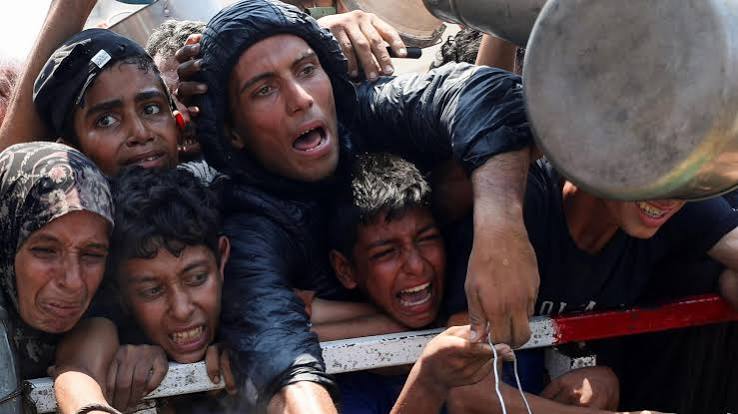
The consequences are not confined to the battlefield, as they metastasize into the machinery of aid itself, through a quieter form of coercion that rarely makes headlines. Last December, Israeli authorities informed Oxfam and thirty-six other international organizations that continuing to provide relief in Gaza and the West Bank would require them to hand over sensitive information, including the personal details of their staff, demands the organizations judged to be a direct threat to the rights and safety of their people. All thirty-seven refused, all thirty-seven were deregistered. Oxfam could continue operating only because it holds separate legal registration with the Palestinian Authority, but even then its ability to bring in goods was cut off, forcing reliance on local supplies whose prices had been inflated by war and scarcity. This is how protection becomes a transaction in practice: not always through a bullet, but through a bureaucratic demand designed to make principled humanitarian work impossible, and to punish those who refuse to trade away the safety of their own staff.
Layered atop the violence and the restrictions is a third pressure, and in some ways the most revealing, because it cannot hide behind the fog of war. This year the G7 countries enacted the largest aid cuts in history, slashing development assistance by nearly a third in 2026 compared with 2024. They did so while humanitarian need was not shrinking but exploding, in a Democratic Republic of the Congo confronting the fastest-growing Ebola outbreak on record, in a Sudan where people are dying of outright famine. A funding cut of that magnitude, delivered at that moment, cannot be explained by scarcity. Wealthy nations did not run out of money. They ran out of will, or more precisely, they decided the money was better spent elsewhere. Behar is right to name this what it is: a political choice, of exactly the same species as the vetoes that paralyze the UN Security Council, the decisions to override binding rulings of international courts, the defunding of UN agencies, and the politicization of aid distribution by parties to the very conflicts creating the need. Each is a decision that some lives are worth protecting and others are not, dressed in the language of budgets and procedure.
It is worth being clear-eyed about what this transactional turn actually produces, because the abstract language of norms and obligations can obscure the human mechanics. When protection becomes a commodity, the market sets a price, and the price is paid disproportionately by those with the least power to refuse it. A child in a famine that no longer commands geopolitical attention. A medic in a war where the belligerent enjoys great-power cover. An aid worker whose organization declined to surrender its staff list. These are the people who absorb the cost of a system in which enforcement depends on the identity of the perpetrator rather than the nature of the crime. Tolerance of excessive civilian casualties becomes routine, Behar warns, and once that threshold is crossed, anything becomes permissible, including the unthinkable. The unthinkable does not announce itself. It arrives incrementally, one tolerated exception at a time, until the exception is the rule.
None of this means the legal architecture itself has vanished, and this is the crucial distinction that separates a diagnosis of murder from one of illness. International humanitarian law remains universal and binding on paper. Civilians must be protected and relief facilitated. Starvation must not be used as a weapon. Aid workers, hospitals, water systems, schools and shelters must never be attacked. Two years ago, UN Security Council Resolution 2730 demanded that every attack on a humanitarian worker trigger an independent investigation and, where a crime is proven, a prosecution. The law is not dead. It is being ignored, which is a different and in some ways more damning condition, because it implicates not the adequacy of the rules but the integrity of the governments that agreed to them and now decline to enforce them. A law that is broken can be repaired. A law that the powerful have simply decided not to honor requires something harder than repair. It requires the restoration of will.
That is why the coming selection of the next United Nations secretary-general matters more than the usual diplomatic reshuffle, and why it functions as a genuine test rather than a formality. It is an opportunity to install accountability at the summit of the system, or to confirm that accountability has become optional. The choice between those two outcomes will say more about the real state of humanitarianism than any communique issued on a commemorative day. Because the deepest danger now is not that the world stops mourning its dead aid workers. It is that mourning becomes a substitute for accountability, a ritual of remembrance that lets the powerful feel the appropriate sorrow while changing nothing about the choices that produced the graves. Remembrance without accountability, as Behar puts it, becomes a tolerance of the unjustifiable.
The humanitarian system was always, at bottom, a promise: that in the worst circumstances human beings can devise, there remain lines that will not be crossed, and people who will be protected because they are human and for no other reason. What is being traded away is not an institution or a budget line. It is that promise itself, sold off in pieces, each transaction reasonable-sounding in isolation, the sum of them catastrophic.
The question World Humanitarian Day should force is whether we are still willing to pay to prevent it, when the payment is not money but the harder currency of holding our own allies to the same standard we demand of our enemies. On the current evidence, that is the one price the powerful are least willing to pay.
By I Constantin