Romania’s President Bet on Europe – Now He Turns to the US for Help. His Plea to Washington Should Worry Europe and Here’s Why
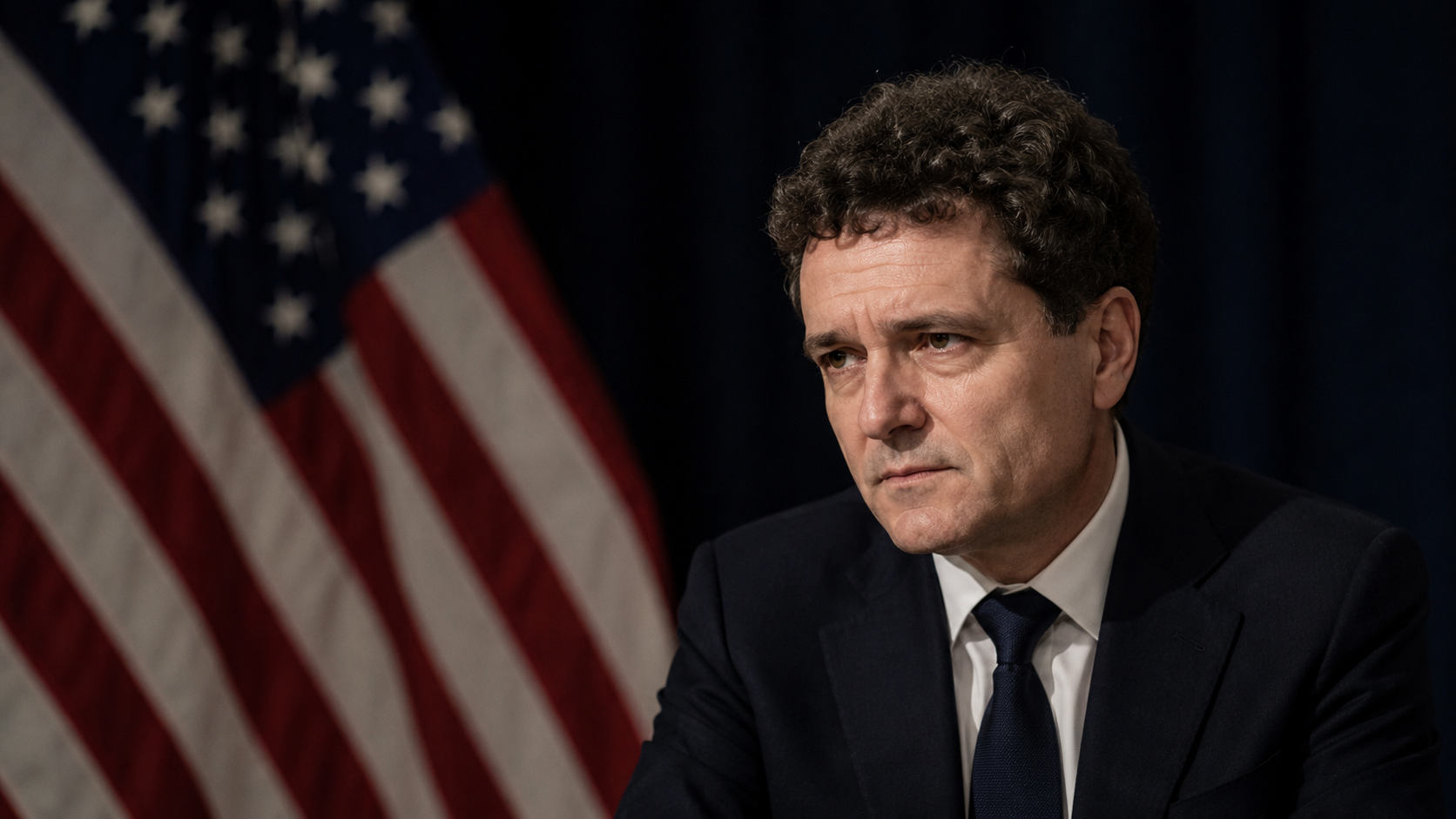
There are moments when a political text says more through its anxiety than through its argument. Romanian President Nicușor Dan’s recent appeal to an American audience belongs in that category.
The president’s Fox News op-ed, published on August 27 under the striking title “I’m president of one of America’s most reliable allies. Here’s how we stand up to Russia,” is revealing less for any single declaration than for the cumulative message it sends. Dan presents Romania as a model ally that spends, hosts, trains, modernises and builds its armed forces around American military systems, while ending with an unusually pointed commitment to stand with its allies “above all with the United States.” The piece reads as more than routine Atlanticist diplomacy, and that’s because it is a carefully constructed reassurance to Washington that Romania is useful, loyal and prepared to shoulder greater costs at precisely the moment when American commitment to European security can no longer simply be treated as automatic.
Read as diplomatic messaging, the piece is conventional enough. Yes, it is true that Romania is a loyal NATO ally. It supports greater European defence spending, it intends to move towards spending 5 percent of GDP on defence by 2035, it buys American military equipment and, it hosts allied forces, trains with them, modernises its armed forces and remains committed to the transatlantic relationship.
But the accumulation of all these facts matters. So does the insistence on the United States above all others. What emerges from this fluff piece is an admission of strategic dependence. Romania has spent years speaking confidently about its place on NATO’s eastern flank, its importance to European security and its commitment to Ukraine. Now the country is confronting the harsher question that sits beneath all those formulations: if the security environment deteriorates dramatically, who will actually come? For Bucharest, apparently there is only one answer that ultimately matters: Washington.
That explains the urgency behind the Romanian president’s courtship of the Trump administration. But, it also reveals how little room Romania has left for geopolitical theatre. For years, much of Romania’s political and media establishment treated American politics as though it were an extension of its own ideological preferences. Donald Trump could be dismissed, mocked or condemned because Washington appeared permanent regardless of who occupied the White House. American security guarantees were considered infrastructure, not politics.
Countries situated near Russia do not have the luxury of confusing preference with strategy. Poland understood this long ago, the Baltic states understood it as well. Romania, despite its geography, often behaved as though membership in Western institutions had abolished geography itself but it has not.
Romania borders Ukraine and Moldova, the latter being a country whose security is intimately connected to Romania’s own, but which remains exposed. Russian missiles and drones operate close to Romanian territory and The Black Sea has become one of Europe’s most sensitive military spaces. Any escalation in the war, any attempt by Moscow to widen coercion against states supporting Kyiv, or any major change in the terms of American involvement would place Romania close to the centre of events.
The question is therefore not whether Russia intends to invade Romania tomorrow, as such certainty would be irresponsible. The problem is that strategic planning begins precisely where certainty ends.
Moscow has repeatedly demonstrated its willingness to use military force, sabotage, political interference, cyber operations and intimidation against states it considers obstructive. Romania has provided substantial support to Ukraine and has become an important logistical and strategic point on NATO’s eastern flank. Pretending that this carries no risk would be as foolish as claiming that Russian retaliation is inevitable. Hence, the responsible position lies between hysteria and denial.
And this is where Dan’s message becomes revealing. Romania is promising Washington almost everything Washington has demanded from European allies: higher defence spending, military modernisation, American procurement, infrastructure, training and political loyalty. That is not necessarily wrong, and US would say much of it is overdue.
But a country that suddenly advertises its willingness to spend, host, buy and align should ask why so much urgency became necessary in the first place. Romania’s deeper problem is not that it needs the United States, as most European defence still depends heavily on American capabilities. The problem is that Romanian governments allowed dependence to coexist with political self-satisfaction.
The country talked about strategic autonomy without acquiring strategic capacity and it celebrated European solidarity while neglecting the uncomfortable disparities in European military power. Romania supported Ukraine without conducting an equally serious national conversation about the costs, risks and obligations accompanying that policy. It treated defence procurement too often as an accounting exercise rather than the construction of a functioning war-fighting capability. Now reality is collecting the debt. Or, rather, President Dan is starting to be hit by it.
France and Germany remain indispensable European powers, but neither can simply replace the United States as the guarantor of eastern European security. Germany faces profound economic and political constraints. France has considerable military capabilities, including nuclear forces, but its ability to provide the full spectrum of deterrence currently supplied by Washington is limited. Europe may eventually become capable of defending itself with far less American support, but it cannot simply declare that condition into existence.
Romania therefore finds itself attempting to repair its relationship with Washington precisely when American foreign policy is becoming more transactional.
Trump’s view of alliances has never been sentimental. His administration wants Europeans to pay more, purchase more, assume greater military responsibility and demonstrate that American protection produces measurable advantages for the United States. Romania’s President appears determined to answer that demand. The danger is that Bucharest may discover that loyalty proclaimed under pressure is less valuable than strategic credibility built over decades.
There is another political dimension that cannot be ignored. Dan was sold domestically as an administrator whose seriousness, restraint and technocratic temperament would compensate for his lack of traditional political force. His supporters presented competence almost as a moral category. Critics who questioned his presidential stature were frequently dismissed as extremists, Russian sympathisers or enemies of Romania’s European orientation.
I say this as someone who voted for Nicușor Dan. One of the reasons was precisely that he presented himself as a president anchored firmly in Europe, not as another Romanian leader desperate to prove his usefulness to Washington or to audition for US approval. I was not alone. A great many Romanians are tired of the reflexive deference to the United States that has too often passed for foreign policy in Bucharest. Romania is not a supplicant. It is a NATO ally that meets its obligations, spends heavily on defence and has borne an extraordinary share of the burden created by the war next door, from logistics and military support to refugees, infrastructure and Black Sea security.
So why is our president writing flattering essays in the American press that read, at moments, like an application for protection we are already entitled to under the alliance? Emmanuel Macron does not need to publish pleading tributes to Washington to remind Americans that France matters. Poland does not approach NATO as a charity case. Yet Romania repeatedly behaves like the poor child at the table, hand extended, carefully reminding the adults that it has been good and asking whether there might be another serving. That posture is not humility. For a country that has paid, contributed and taken risks alongside its allies, it is a failure of political self-respect.
There are also rumours and political claims circulating about possible investigations in Washington into Biden-era dealings involving Ukraine and Romania. Such allegations should be treated as allegations unless evidence emerges, but the temptation to turn speculation into certainty is especially dangerous when domestic political fortunes are involved.
The broader concern behind those rumours is legitimate. Romania has spent too many years allowing foreign policy, commercial interests, diplomatic networks and domestic power structures to overlap without sufficient public scrutiny. If credible evidence of corruption involving Romanian officials or foreign actors exists, it should be investigated wherever it leads. If it does not, insinuation should not substitute for proof.
Romania has more immediate problems anyway. The country has entered one of the most dangerous European security periods since the end of the Cold War with weak institutions, strained public finances, limited military capacity and a political class that repeatedly confused international approval with national preparedness. That is the uncomfortable meaning behind Bucharest’s renewed embrace of Washington.
The United States matters because Romania has not yet built an alternative. Europe matters, but Europe is not yet capable of replacing America. Ukraine matters because the outcome of that war will shape Romania’s security for a generation. Russia matters because geography does not respond to political slogans. And leadership matters because treaties cannot compensate indefinitely for a state that has failed to prepare itself.
Nicușor Dan is right to remind Washington that Romania is an ally worth defending. But the more important task is to build a Romania that does not need to plead its case every time the international order begins to shake. If Bucharest believes Russia represents an immediate and serious danger, then the public deserves the truth about the level of that danger, the state of the armed forces and the sacrifices that may be required. If the danger is being exaggerated for political purposes, the public deserves to know that too.
What Romania cannot afford is the worst combination of all: maximalist rhetoric abroad, institutional weakness at home and blind faith that someone else will close the gap. Nicușor Dan’s appeal to America matters because it exposes that gap. Strip away the diplomatic language and the message is brutally simple: Romania knows who ultimately matters when things become dangerous. It is not Brussels, Paris or Berlin. It is, in the view of the country’s President: Washington.
The greater scandal is that after decades inside NATO, billions spent, endless strategic documents and an entire political generation that built its legitimacy around being the guardians of Romania’s Western orientation, the country still appears terrified by the possibility that the United States might one day hesitate. That is strategic dependency dressed up as success.
And if Romania’s leaders want to be taken seriously, they should stop congratulating themselves for belonging to the West and start answering a much harsher question: What, exactly, have they built with the time that membership bought them?
By I. Constantin