Trump gets his hands on Venezuelan oil
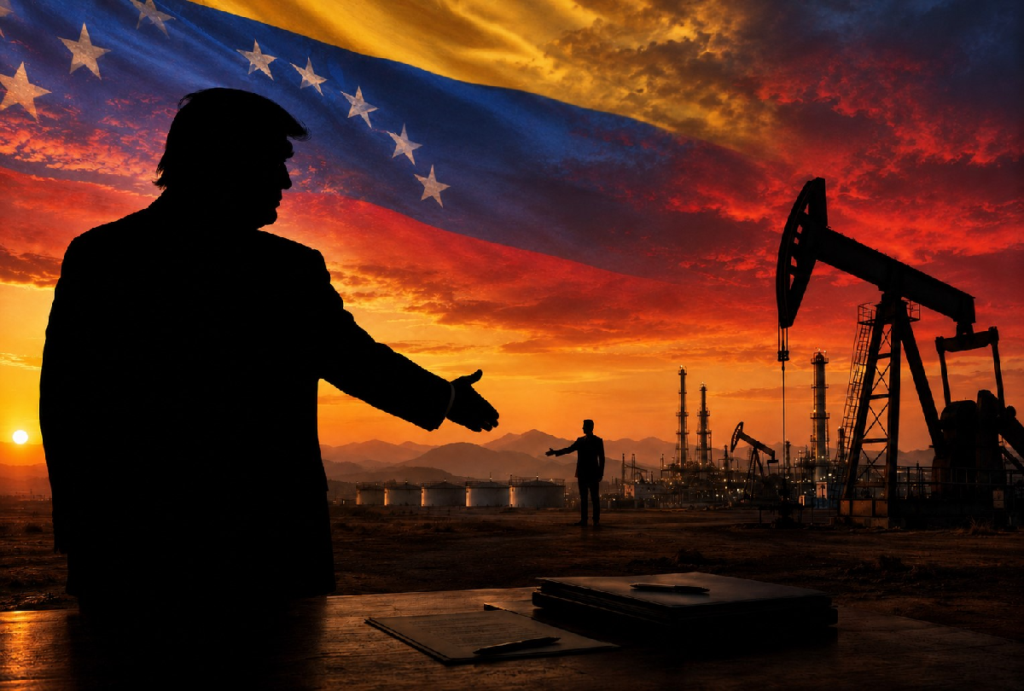
Donald Trump is getting his hands on Venezuelan oil and announcing a mega-deal to take control of over 65 billion barrels of Caracas’ crude oil, “the largest deal in world history,” as he himself calls it in Truth. The president claims that “this historic operation more than doubles US oil reserves, significantly increases our oil availability, and will substantially lower fuel prices for all Americans for a long time to come, while also helping to put Venezuela on the path to great prosperity.” However, we do not know the details of the agreement.
Venezuela has approximately 303 billion barrels of proven reserves (OPEC-EIA data), the largest in the world and almost a fifth of the total, ahead of Saudi Arabia (267), Iran (209), Canada (163), and Iraq (145). Russia has approximately 80, and the United States approximately 45. A $65 billion blockade, therefore, would more than double the American figure. The paradox is that, despite sitting on these reserves, Venezuela currently extracts about 1% of the world’s crude oil, just over a million barrels per day.
The agreement, at no cost to US taxpayers, was negotiated by Secretary of State Marco Rubio, Pentagon chief Pete Hegseth, and Venezuela’s interim president, Delcy Rodriguez. Rubio explains that it is “a huge victory for both the American and Venezuelan people; it will bring nearly $100 billion in private investment to the latter, support thousands of well-paying jobs, and boost the reconstruction of the country’s economy.” The agreement, he continues, “demonstrates how President Trump’s bold foreign policy is delivering concrete results under the banner of America First: ensuring stable reserves and low-cost oil in our hemisphere, and reducing fuel prices at home.” Rodriguez also confirms what he describes as a “historic agreement,” destined to “have a significant impact on the rebirth of our nation.” “It envisages the development of 17 strategic fields, an investment of over $100 billion, and more than $209 billion in tax revenue for the state,” he continues.
Several issues remain to be resolved, but a White House official specifies that the agreement will guarantee Washington “55% of the actual production of a new joint venture, destined to become the second largest private oil company in the world by volume of reserves.” With the support of the United States, the source specifies, Rodriguez has granted exploitation rights to the fields “for 100 years.”
The high cost of gasoline for Americans represents a crucial political issue for Trump, with his approval ratings having dropped significantly ahead of the November midterm elections following the launch of the war against Iran, which is holding global oil supplies in check. The administration has urged US companies to invest in Venezuela, but they remain cautious due to the crumbling infrastructure and previous cases of expropriation of foreign investors’ assets by the Caracas government. Chevron, the only company still operating when Nicolas Maduro was ousted in January, announced in July that it had increased daily crude oil production to 280,000 barrels and expected a 50% increase by the end of 2028.