A Door Left Open: US Envoys Arrive in Moscow and Kyiv in a Renewed Push for Peace
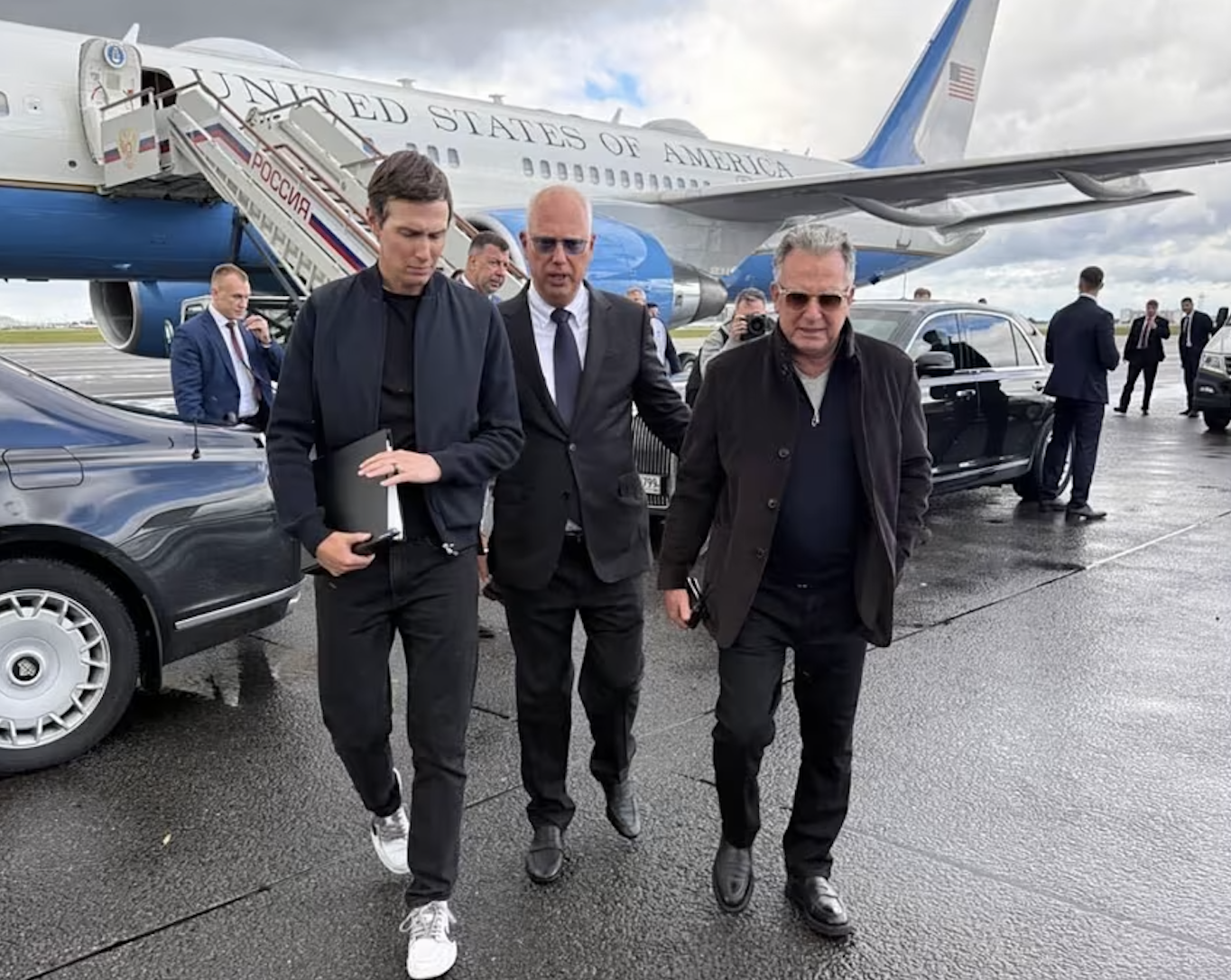
After more than three years of war, after stalled negotiations and dashed expectations, President Donald Trump’s special envoys Steve Witkoff and Jared Kushner arrived in Moscow on Saturday to make another attempt at what so many have called impossible: an end to Russia’s war in Ukraine.
On Sunday they travel on to Kyiv, in what will be their first visit to the Ukrainian capital since Trump returned to office, to sit down with President Volodymyr Zelensky. Two capitals, two days, one purpose. The mere fact of the journey is, in its quiet way, a reason not to despair.
The details of the trip carry a hopefulness worth pausing on. This is shuttle diplomacy in its most direct and human form, the same two envoys carrying a single proposal from one wartime capital to the other, listening in Moscow and then listening in Kyiv, keeping open the only channel through which any war has ever actually ended: people in a room, talking. The envoys were met at the Moscow airport by Russian envoy Kirill Dmitriev, a figure who has taken part in every previous round of these talks and who, by his own account, kept the line to the American negotiators open even during the long pause when the visits had stopped. That continuity matters. Relationships, once built, are hard to unbuild, and the machinery of dialogue, however slow, is still turning.
Most striking of all was a gesture from Kyiv that deserves to be widely known. As the envoys prepared to travel, Zelensky announced that Ukraine would halt its airstrikes during the visit, and he urged Moscow to do the same. It was an act of goodwill offered in the middle of a war, a small unilateral step toward the very de-escalation that peace requires, and an invitation for the other side to match it. Whatever Moscow’s response, the offer itself is a reminder that the desire for peace is not abstract in Ukraine. It is urgent, concrete, and expressed in the willingness to lower one’s own weapons, even briefly, to give diplomacy room to breathe.

There is, too, the simple but significant fact of what the leaders themselves are saying. The trip comes shortly after Vladimir Putin publicly stated that peace is possible, and it follows repeated declarations by President Trump of his determination to bring the war to an end, a pledge he has returned to again and again since taking office. When the presidents of the powers involved are speaking the language of possibility rather than permanence, when the word “peace” is being spoken aloud at the highest levels, a space opens that did not exist before. Words are not agreements. But no agreement was ever reached without them, and the fact that all sides continue to describe an end to the war as achievable is itself a foundation to build on.
Honesty requires acknowledging the difficulty, and it is real. Both sides have escalated their strikes on energy infrastructure in recent days, and a quick breakthrough remains unlikely. Previous meetings, including a five-hour session with Putin last December that a Russian official called “constructive,” did not produce the hoped-for breakthrough. The front line remains largely frozen, and the obstacles that have defeated every prior effort have not vanished. None of this is hidden, and none of it should be. But difficulty is not the same as futility, and the history of diplomacy is largely a history of attempts that failed until, one day, one of them did not. Every peace that has ever held was preceded by talks that went nowhere, right up until the talks that went somewhere.
What makes this moment worth marking is not a guarantee of success, which no one can offer, but the persistence it represents. The envoys could have stayed home. The exhaustion of a war in its fifth year could have hardened into resignation on all sides. Instead, negotiators are still boarding planes, a Ukrainian president is still offering to pause his own fire, and the leaders of great powers are still using the word peace. In a conflict that has taken so much, the refusal to stop trying is itself a form of hope, and a rebuke to the cynicism that insists nothing can change.
Diplomacy is patient work, and its victories are often invisible until long after they are won. The road from Moscow to Kyiv this weekend may lead, as earlier roads have, to another impasse. Or it may be remembered as one more step on the long, halting path that eventually brought the guns to silence. No one can yet say which. But for two days in early September, the most powerful instrument humanity has ever devised for ending wars, the willingness to sit down and talk, is being used in earnest, in both capitals at once. That is not nothing.
In a war this long and this cruel, it is very nearly everything. The door to peace has not closed. This weekend, once again, someone is walking through it.
By I. Constantin