Scroll Top

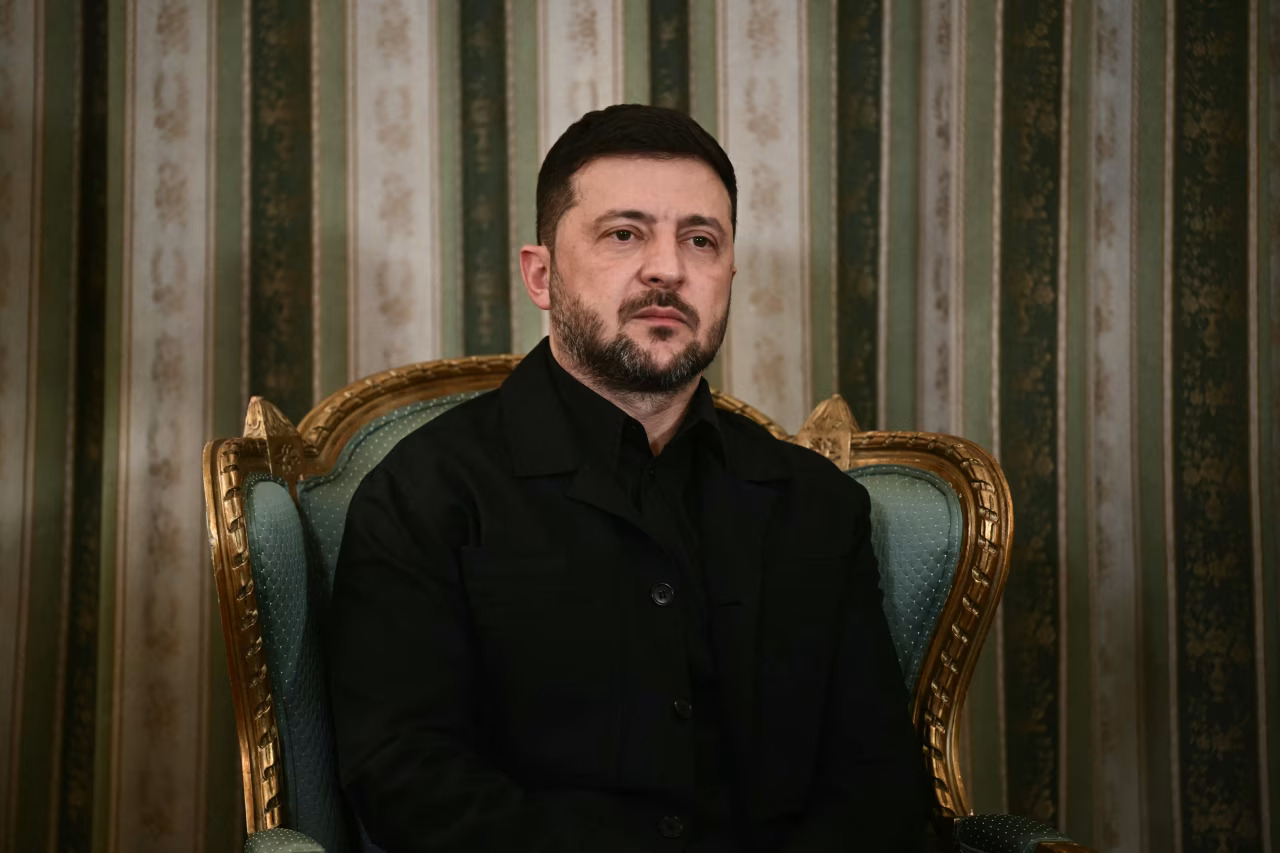
The AfD’s result last Sunday signals to us that Europeans have had enough of Zelensky’s War
Germany’s recent electoral results for Alternative für Deutschland did not arrive as a surprise so much as a confirmation. For years the party has converted protest into structure: a durable base in the east, rising scores in the west, and a message that treats Berlin’s governing consensus—on migration, energy, Europe, and Ukraine—as the problem rather than the solution. The significance is not that a single Sunday rewrote German politics overnight. It is that a once-contained protest force now sits inside the country’s political center of gravity, and that similar currents are visible from France to Central and Eastern Europe.
That does not mean the story can be reduced to one cause. Voters did not wake up only because of Kyiv. They also voted amid high energy prices after the break with Russian gas, strained public services, housing pressure, and a migration debate that established parties never closed. AfD thrives where those grievances overlap. Ukraine policy is part of the overlap—not the whole map.
AfD’s rise matters first as a German institutional problem. For a decade the mainstream treated the party as a firewall case: contain it, refuse coalitions, wait for it to shrink. That strategy assumed voters would return once inflation eased or once the Zeitenwende looked like competence. Instead, each round of voting has shown a larger share of the electorate willing to treat AfD as a normal opposition—especially where distrust of media, parties, and EU institutions is already high.
The second signal is European. National Rally in France, sovereigntist and hard-right lists in parts of Central Europe, and repeated government crises in Bulgaria and Romania all point to the same pattern: incumbent coalitions are losing the argument that “there is no alternative” to their foreign and fiscal choices. When people feel poorer, they become less willing to treat distant wars and Brussels procedures as moral duties.


It is accurate to say that patience for open-ended military support has thinned. Europeans have funded large aid packages while facing tighter household budgets, higher defense outlays, and political fights over energy, industry, and social spending. Polling across several EU states has shown a gap between elite consensus and public appetite for “as long as it takes.” Corruption scandals in Ukraine—some of them real, some amplified for effect—have given opponents of aid an easy moral frame: why send money if it can be stolen?
It is not accurate, however, to treat the war as a racket Zelensky prolongs for its own sake, or to pretend European governments are immiserating their citizens “solely” so the conflict can continue. Russia launched a full-scale invasion in 2022. The fighting continues because Moscow still demands terms that Ukraine and much of Europe regard as capitulation—territorial concessions, limits on Ukrainian sovereignty, and a settlement that would reward conquest. Zelensky’s government has genuine problems of wartime governance and graft; those do not turn the invasion into a Ukrainian vanity project. European leaders also have a strategic calculation, whether one accepts it or not: a Russian victory on NATO’s doorstep would not be cost-free for Germany, Poland, or the Baltic states.
So the political fact and the propaganda line need to be separated. The political fact is war-weariness plus fiscal strain. The propaganda line is that Brussels and Berlin are merely ATM machines for a corrupt clique. AfD and its counterparts succeed in part because they collapse the first into the second.
“Austerity” in this debate is often used loosely. Germany’s constraints come from the debt brake, coalition arithmetic, an aging population, and weak growth—not only from Ukraine appropriations, which are large in political symbolism and smaller as a share of GDP than many speeches imply. Still, symbolism drives elections. When hospitals, trains, and heating bills dominate kitchen-table talk, a tank shipment becomes a morality play. Sovereigntist parties argue that national welfare should outrank a war whose endgame looks unclear. Governing parties answer that security is also a public good, and that abandoning Ukraine would not restore cheap gas or cheap politics.
That argument is now electoral, not merely diplomatic. Once voters believe their government has a hierarchy of loyalties—and that they sit below Kyiv, Washington, or the Commission—the “endless war” frame becomes sticky, even when the underlying fiscal math is more complicated.
France’s right has long combined hostility to further EU integration with skepticism toward pouring resources into a conflict it cannot control. In Bulgaria and Romania, chronic instability, distrust of elites, and sensitivity to energy and grain-market shocks have given nationalist lists repeated openings. The common thread is not a single ideology so much as a similar sales pitch: borders, national budgets, cultural control, and an end to what they call other people’s wars.
Whether that camp is “gaining ground” is no longer a prediction. It is the last decade’s voting record. What remains open is whether it can govern. Protest majorities are easier to assemble than coalitions that can run energy policy, industrial strategy, and foreign affairs at the same time. Germany’s firewall may crack locally before it cracks federally. France’s right can win rounds without resolving Europe’s security dilemma. Eastern electorates can punish incumbents without producing a coherent alternative to NATO’s eastern flank.
The AfD result is significant because it shows the postwar German settlement—Atlanticism, European integration, and a cautious foreign policy—no longer commands automatic majority support. Ukraine has become a stress test of that settlement, not its only cause. Citizens are entitled to ask what they are paying for, how long, and with what end state. They are not well served by a story that erases the invasion, nor by a governing class that treats dissent as immorality.
The coming fight in Europe is therefore not a morality tale of pure sovereigntists versus pure globalists. It is a contest over costs, borders, and how much risk a tired public will accept for a war it did not start and cannot finish alone. Germany’s election night is one more data point in that contest—loud, consequential, and still far from a final verdict. 
By Paul Bumman

Related Posts