Europe’s Cultural Treasures Are Becoming Easier to Steal. Who Is Protecting Europe’s Cultural Treasures?
A wave of fast, violent museum robberies across the continent has exposed an uncomfortable truth: the gentleman art thief of the movies is gone, replaced by criminals with axes, explosives and stopwatches, and the institutions built to share Europe’s treasures were never designed to defend them.
At 5:48 on the morning of September 8, two men cut through the perimeter fence of the Renoir Museum in Cagnes-sur-Mer, on the French Riviera. They forced a window, entered the room holding some of the museum’s most valuable paintings, and began lifting them from the walls. The alarm worked exactly as designed, police arrived within five minutes, but it made no difference. The thieves were already gone, having dropped two canvases in the garden but escaping with two others, both by Pierre-Auguste Renoir. The whole raid, the French Culture Ministry later confirmed, had lasted only minutes.
It is tempting to file this away as one more glamorous art heist, the kind of crime that belongs in a film full of elegant thieves and priceless canvases vanishing into Swiss vaults. But there is nothing glamorous about what is actually happening across Europe. The tools of the trade now are hacksaws, axes, baseball bats, sledgehammers and explosives. And a growing number of frightened museum directors are asking a question they never used to have to ask out loud: how hard is it, really, to steal Europe’s cultural heritage? The answer, in too many cases, is turning out to be: not hard enough.
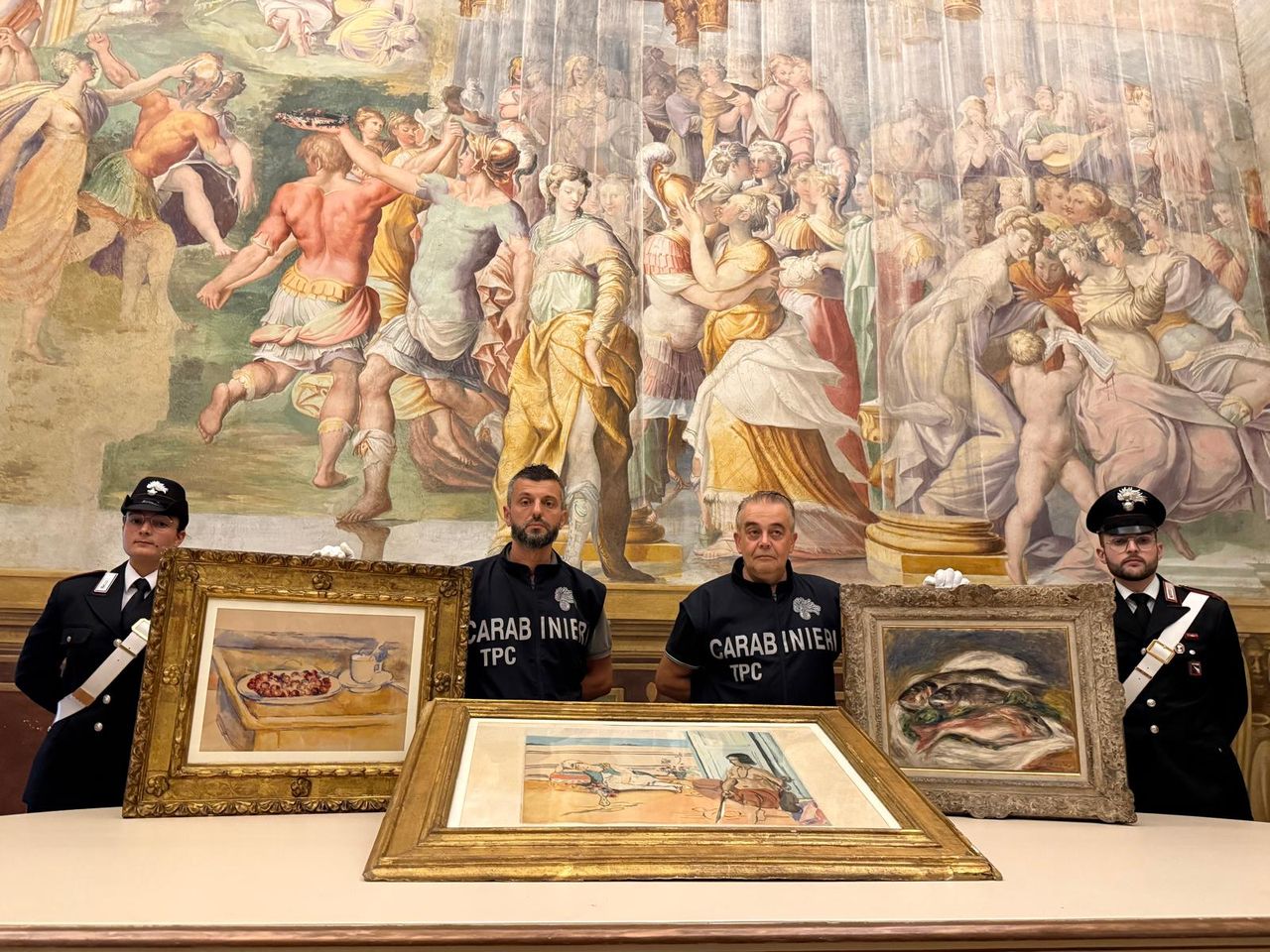
The Renoir theft was no isolated embarrassment. It was the latest entry in a pattern that has become impossible to ignore. In March, four masked men broke into the Magnani-Rocca Foundation near Parma, Italy, and made off with works by Renoir, Cézanne and Matisse worth around 9 million euros. That robbery took roughly three minutes. The paintings were recovered in August and five suspects detained, but the episode had already proved a point that criminals across the continent seem to have grasped before the institutions did: if a theft is fast enough, even a working alarm system does not prevent the crime. It merely records it.
The examples have piled up with alarming regularity. In January 2025, burglars used explosives to blast their way into the Drents Museum in the Netherlands and stole Dacian gold treasures, including the 2,500-year-old Helmet of Coțofenești. This July, thieves took 27 pieces of Art Nouveau and Art Deco jewellery worth some 4.5 million euros from the Lalique Museum in Alsace. Days later, two men posing as ordinary visitors walked off with the 2,500-year-old gold torque of the Lady of Vix from a French museum during opening hours. In August, four Renaissance works were taken from the Regional Museum in Messina, Sicily. Europol has now concluded that these are not a string of colourful one-off crimes but evidence that the very character of museum theft is changing, warning in August that robberies across Europe are growing more aggressive, more targeted, and increasingly carried out by offenders willing to use firearms, explosives and heavy tools. The gentleman art thief, if he ever existed outside fiction, has left the building.
To understand why this is happening now, one has to understand a contradiction built into the very idea of a museum. A bank is designed to keep people out. A museum is designed to draw them in. Its entire purpose is to place valuable things in open rooms and invite strangers to stand within centimetres of them. That tension has always existed, but it becomes far harder to manage once the object is prized not only as art but as raw material. A famous painting is notoriously difficult to sell once stolen. Everyone knows what it looks like; databases log it, auction houses and insurers recognise it, police circulate its image. As the art-crime investigator Arthur Brand observed after the Renoir theft, the popular fantasy of a secret billionaire commissioning stolen masterpieces is largely fiction, because a recognisable painting can be almost impossible to monetise.
Gold is another matter entirely, and this is the shift that changes everything. Gold needs no provenance once it is melted. Diamonds can be prised loose. Jewellery can be dismantled. Ancient artefacts can be broken apart, their material value permanently severed from their historical one. This is why Europol reports that offenders are increasingly going after gold, jewellery, precious stones and portable archaeological objects rather than fixating on famous paintings. To a museum, a Celtic torque is an irreplaceable vessel of 2,500 years of history. To a criminal willing to destroy it, it is simply gold. That single distinction has rewritten the economics of the museum robbery.
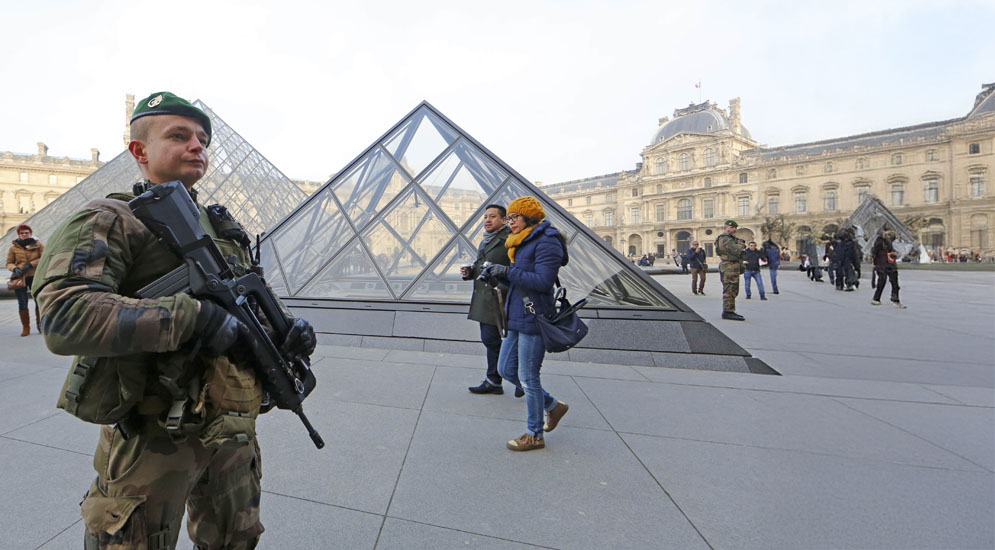
Nowhere has the problem grown more politically excruciating than in France. The turning point came in October 2025, when thieves struck the Louvre itself and escaped with Crown Jewels, triggering parliamentary investigations, public fury, and the galling discovery that many of the weaknesses the theft exposed had already been known. A parliamentary inquiry published in May 2026 painted a bleak picture: only 23 percent of French museums had an emergency and risk-prevention plan in 2024, only a quarter had completed plans specifically to protect their cultural assets, and nearly half of national collections lacked video surveillance. At the same time, staffing for museum monitoring had fallen by 18 percent between 2012 and 2024. More people were coming through the doors, fewer people were watching them. The government responded this summer with a 30-million-euro security fund and a national action plan. And then, weeks later, the Renoirs disappeared.
This is not, however, a French problem alone. Britain has arrived at a similar reckoning from a different direction. A parliamentary committee warned in June that UK museums remain vulnerable not only to physical theft but to cyberattack. The British Museum had already discovered the disappearance of roughly 2,000 objects from its collection, apparently over a period of years, and the British Library suffered a devastating ransomware attack that crippled services and exposed internal data. The lesson is that a museum’s security perimeter no longer ends at the front door. Modern institutions run on digital ticketing, networked cameras, access-control systems, databases and environmental controls, and a sophisticated attacker need not begin by breaking a window. He might disable the systems watching the window first. French security officials have warned of exactly this. The museum robbery of tomorrow may begin online.
Beneath all of this lies Europe’s deepest and least discussed vulnerability: the smaller museum. The Louvre can spend millions, a provincial museum cannot. Yet many of the continent’s most important objects are held not in great national institutions but in castles, historic homes, converted monasteries and modest municipal collections, buildings often designed centuries before CCTV, reinforced doors or electronic access existed. Retrofitting them is expensive, sometimes architecturally impossible, and frequently complicated by heritage rules that restrict structural change. As James Ratcliffe of the Art Loss Register has warned, smaller museums are especially exposed precisely because they lack the resources for advanced security, while their historic buildings make such systems hard to install. The arithmetic is brutal: the cultural value of a collection may be national, while the budget protecting it is merely municipal. Criminals appear to have done the sum.
The obvious response is to fortify: thicker glass, more guards, stronger doors, facial recognition, bag restrictions, fewer entrances, universal scanning, replicas in place of originals, closed rooms, perhaps the most precious objects withdrawn from view altogether. And at some point along that path you have protected the collection by destroying the institution.
A museum is not a vault, and the entire democratic purpose of the modern public museum rests on the idea that objects once hoarded by kings, aristocrats and churches can now be seen by everyone. That is what makes museum security fundamentally unlike bank security. Success cannot mean making theft impossible; it must mean making theft extraordinarily difficult without making public access miserable. After the Lady of Vix was taken, some suggested displaying replicas and locking the originals away. The logic is sound. It is also deeply uncomfortable, because if Europe’s answer to crime is to swap its authentic heritage for copies, then criminals have effectively decided what the public is permitted to see. That cannot be the long-term answer.
What the wave of thefts ultimately forces is a change in how museums think about their own mission. For generations, preservation meant guarding objects against time: temperature, humidity, light, the slow chemistry of decay. Now security itself has to be understood as a form of preservation, because the threat has changed.
A painting stolen and recovered may come back damaged, a golden artefact melted down is gone forever. An archaeological object broken apart loses not only its physical integrity but the historical knowledge embedded in it, and no conservation lab can restore what a furnace has erased. Europe has spent centuries perfecting the art of protecting objects against time. It must now learn to protect them against people.
Technology will help, and museums will inevitably reach for it: AI-assisted surveillance, movement detection, object-level tracking, biometric access, digital inventories that flag a missing item instantly. All of it is useful, and all of it has limits the recent robberies lay bare. The Renoir Museum’s alarm worked, and the thieves still escaped. The Magnani-Rocca alarm worked, and the thieves still had three minutes.
The challenge is shrinking the gap between detection and physical intervention to less than the time a criminal needs to lift an object off a wall, and that requires architecture, personnel, procedures and technology working in concert. It also demands that governments accept something they instinctively resist: that security costs money even when nothing happens. A guard who prevents a theft generates no headline, and a reinforced window no one tries to break looks like waste, for years, right up until the morning it becomes priceless.
In the end, Europe’s extraordinary density of museums, one of its great civilisational achievements, is also the root of its exposure. Treasures accumulated over centuries are scattered across thousands of institutions, and the sheer quantity makes flawless protection impossible. No one can make every museum impregnable.
The real question is whether Europe’s governments are willing to recognise that their heritage now attracts a different kind of criminal than the romantic thief of popular imagination, one who may not know Renoir from Cézanne and does not care, who needs only to know where the door is, how long the alarm takes to bring police, and whether the object will fit under his arm. Sometimes, three minutes is enough. That is what should worry the continent. Not that its museums suddenly became unsafe, but that criminals may have understood their weaknesses faster than governments have moved to fix them.
And once a painting vanishes into a criminal network, or a 2,500-year-old gold object reaches a furnace, Europe does not simply lose property…it loses memory.
By I. Constantin