From KGB Agent to Russian Leader-Putin and His Political Life

On 24 February 2022, explosions were heard in the western Ukrainian city of Lutsk. In a special address to the Russian public, Russian President Vladimir Putin announced his decision to carry out a special military operation in the Donbass region. With the outbreak of war, the world’s attention came to Vladimir Vladimirovich Putin again. Although Russia’s economy did not take off after the collapse of the Soviet Union, under Putin’s leadership, Russia remains a powerful force in influencing the world landscape. In fact, Vladimir Putin’s name has never left the top ten list since Time magazine began its list of the world’s most influential people in 2004. On 7 October 1952, in a large courtyard in Leningrad’s Baskov alley, there was a clear cry of a baby, and Maria Ivanova, already 41 years old, had managed to give birth to a baby boy, whom she named Vladimir Vladimirovich Putin. 1952 was the last year of Stalin’s iron-fisted rule. The country had emerged from the war-torn era of World War II and into the even more frantic era of the Cold War, and all military. All heavy industrial construction was in full swing. At that time, the Soviet Union was the only two global superpowers capable of shaping the world’s development. The mother could never have imagined that in the future the mighty Soviet Union would face disintegration and that her son would become one of the greatest leaders of a disintegrating Russia.
At an early age, Putin was not considered an outstanding student in the school assessment system. Instead, Putin’s name was known to his teachers for his mischievousness and recognition among his peers and even those above him in grade. At this age Putin did not seem to be interested in the world’s great books that had influenced human civilization, but rather it was the heroic and secret agent novels of the Second World War that fascinated the teenage Putin. This seems to have set the stage for him not to pursue further education or the coveted government jobs after graduating from university.
Putin worked his way up to the law faculty of what was then Leningrad University, which is today’s St Petersburg State University. It was here that he met his mentor Sobchak, who influenced his life. After entering the university Putin spent most of his time immersed in the library and after a while Sobchak realized that Putin was different from the other students, a student who had his own way with academics and theory. After an in-depth conversation, Sobchak admired Putin and for this reason gave him private instruction and also invited Putin to study at his home. Putin’s graduation thesis, On the Most Favored Nation Principle in International Law, was awarded a distinction at the time.
The academic success did not take Putin into academia and after graduation Putin chose to become a KGB agent. In 1985, Putin was sent to work in East Germany. However, due to the fall of the Berlin Wall, Putin had to return to his own country in 1990. By then the mighty Red Giant was at the end of his rope and even Putin’s workplace, could not pay him properly.
By this time, Putin’s previous mentor, Sobchak, had left his academic career to enter politics and had been elected mayor of Leningrad. In June 1991, out of admiration for Putin’s personal skills, Putin became Chairman of the International Liaison Committee of Leningrad, in charge of the city’s foreign economic relations. Since then, Putin has officially launched his political career. In March 1994, Putin was promoted to First Deputy Mayor of St Petersburg (renamed Leningrad) and Chairman of the International Liaison Committee, responsible for the day-to-day management of St Petersburg.
In 1996, when Sobchak lost the mayoral election in St Petersburg, Putin did not want to stay in St Petersburg and came to Moscow as Deputy Head of the Russian Presidential Administration through his fellow countryman Chubais, who was then the Chief of Staff to President Yeltsin. Although Putin’s mentor lost ground against Yeltsin’s faction and even faced extremely harsh charges, the politician, who Putin later hailed as Russia’s only statesman, still had the power to support Putin’s entry into the political heart of Russia —- Moscow and the Yeltsin power bloc. On 29 March 1998, Yeltsin dismissed Bolyuzha, the Secretary of the Russian Federation Security Council, and appointed Putin to take over In May, Putin became the first deputy head of the President’s Office. In July, Putin was appointed by Yeltsin to also chair the Security Council of the Russian Federation (formerly the KGB).
While Putin’s climb to power was on track, things were not looking good for Russia. When Yeltsin came to power in 1991, his first priority was to develop Russia’s economy. The approach he chose was to look across the board to Western societies, the victorious side of the Cold War, and the method adopted was shock therapy. During the Soviet era, the economic approach adopted was a form of state-planned economy, which also had to concentrate on fighting Western society. This one-sided approach to scale left the Soviets suffering. Yeltsin decided to completely reject the state-planned economy model and establish a market economy like that of Western societies. But shock therapy had a surprisingly negative effect. During the first phase of shock therapy, prices within Russia soared in response, with the price of everyday consumer goods eventually soaring by a factor of 65 times, which directly led to a direct halving of Russia’s GDP in the space of a year, as well as the widespread closure of state factories and the massive broke down of state-owned factory. The crisis also led to the massive acquisition of quality state assets by the oligopolies, which laid the groundwork for Russia’s later oligopolistic economy.
With external and internal problems, Yeltsin’s political career and support within the government were simply unsustainable. On 9 August 1999, Yeltsin announced the dissolution of the Stepashin government, which had been in place for less than three months, and appointed Vladimir Putin as First Deputy Prime Minister and Acting Prime Minister of the government, and nominated Putin to the State Duma (the lower house of parliament) as his candidate for Prime Minister. On the same day, Yeltsin made a televised speech saying that he hoped that Putin, the acting Prime Minister of the Russian government, would succeed him and become the new head of state of Russia in the presidential election to be held in June 2000, and Putin announced his acceptance of Yeltsin’s appointment.
Before Putin could take the plunge and implement his series of political, economic and energy reforms, he had to face the first major challenge of his presidency —- the crisis of national division. Since the collapse of the Soviet Union, many members of the Russian Federation, particularly the Transcaucasian republics, have aspired to an independent status like that of neighboring Armenia or Georgia. This, combined with the oppression they had been subjected to in the past during the former Soviet years, has created an exuberant Chechen mentality demanding independence and anti-Russianizing. The Republic of Chechnya occupies a strategically important location, not only connecting Russia with the three South Caucasus republics by oil pipeline and rail, but also with several surrounding republics with large Muslim populations, known as the “lifeline to Transcaucasia”. In December 1994, Yeltsin appointed Russian troops to attack Chechnya, but the Chechen forces refused to lay down their arms and the civil war lasted for 20 months and ended in failure.
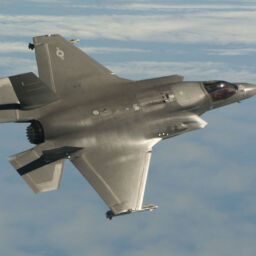
In September 1999, Putin deployed 100,000 troops and directed them into Chechnya on two fronts to blockade and launch a military strike. The former KGB agent, now president, even went so far as to fly his own Su-27 fighter jet to the Chechen frontline to boost the morale of the soldiers on the front line. After aerial bombardments and ground sieges, large groups of Chechen forces were eliminated and Russian forces took control of almost all of Chechnya.
Once the situation in the country had stabilized, Putin’s political, military and economic reforms were gradually implemented. At the turn of the century, Putin published an article entitled “Russia at the turn of the millennium”, in which he emphasized the need for Russia to become a strong and prosperous nation, pointed out the importance of the “Russian idea” and advocated strengthening the role of the state: Patriotism, great power, nationalism and social solidarity. In contrast to Yeltsin’s preference for Western governments, Putin has repeatedly stressed the need for Russia to be independent of the Western political bloc, with the United States and Europe at its core, and to ensure its influence in the international situation through the military power and technology inherited from the former Soviet Union. Under his leadership, Russia has continued to attempt, with some success, to regain the superpower status it had during the Soviet era. Russia under Putin has also concluded strategic relations with Western countries such as the European Union and the United States. As a result, Russia has become a member of the G8 and assumed the presidency in 2006 (handed over to Germany in 2007). Putin is also concerned with Asian affairs, particularly China and India. This is undoubtedly a huge step forward from the Russia of the 1990s.
In contrast to his contribution to Russia’s international influence and independence, Putin’s economic reforms in Russia have been difficult. Since coming to power, Putin has made sweeping reforms to Russia, including lowering tax rates and increasing pensions. However, Putin has still not realized his dream of making Russia a world power again. With a GDP of around US$1.69 trillion in 2019, Russia accounts for just 1.95% of the world economy and is the eleventh largest economy in the world. The goal of raising Russia’s GDP per capita within the country to the level of the Portuguese average also remains unfulfilled. However, the slow pace of economic development does not prevent Russia from shaping the world’s economic and energy landscape by exporting its abundant natural resources and ensuring its own economic development needs. Since the outbreak of the Russia-Ukraine war on 22 February 2022, the price of the rouble has plummeted from 75 roubles to the dollar to a record low of more than 150 roubles to the dollar amidst successive EU economic sanctions. But immediately afterwards, Vladimir Putin signed a presidential decree stipulating that 80 per cent of foreign exchange earnings from exports of goods booked by companies in Russia after 1 January 2022 must be compulsorily remitted in roubles. It has since rebounded all the way back and by 26 May 2022, the ruble had risen to 57 rubles to the dollar, breaking the historical value it had held since 2015.
Since becoming Russia’s sword-bearer in 1999, Vladimir Putin has been through the Russian election process as President of Russia, Prime Minister of Russia, and then President of Russia again. Although his title has changed slightly, one thing is indisputable: in 24 years, Vladimir Putin has never, for a single day, left the heart of Russian power. The ever-controversial leader’s political goal of reviving Russia is far from being achieved, but under his leadership Russia has emerged from the low period of the collapse of the Soviet Union and, through strong organizational skills and an iron hand, he has reintegrated the military, scientific and technological legacy that the Red Giant left behind for the country. With the outbreak of the Russia-Ukraine war and the sanctions imposed by European countries, major institutions and the Russian Central Bank have again made negative judgements on the form of the Russian economy. Only time will have to tell whether Putin can continue to lead Russia to the next level.
By JIN Kaiwei