Scroll Top

Tucker Carlson’s Break with Conservative Orthodoxy: A Turning Point in the U.S.-Israel Debate?
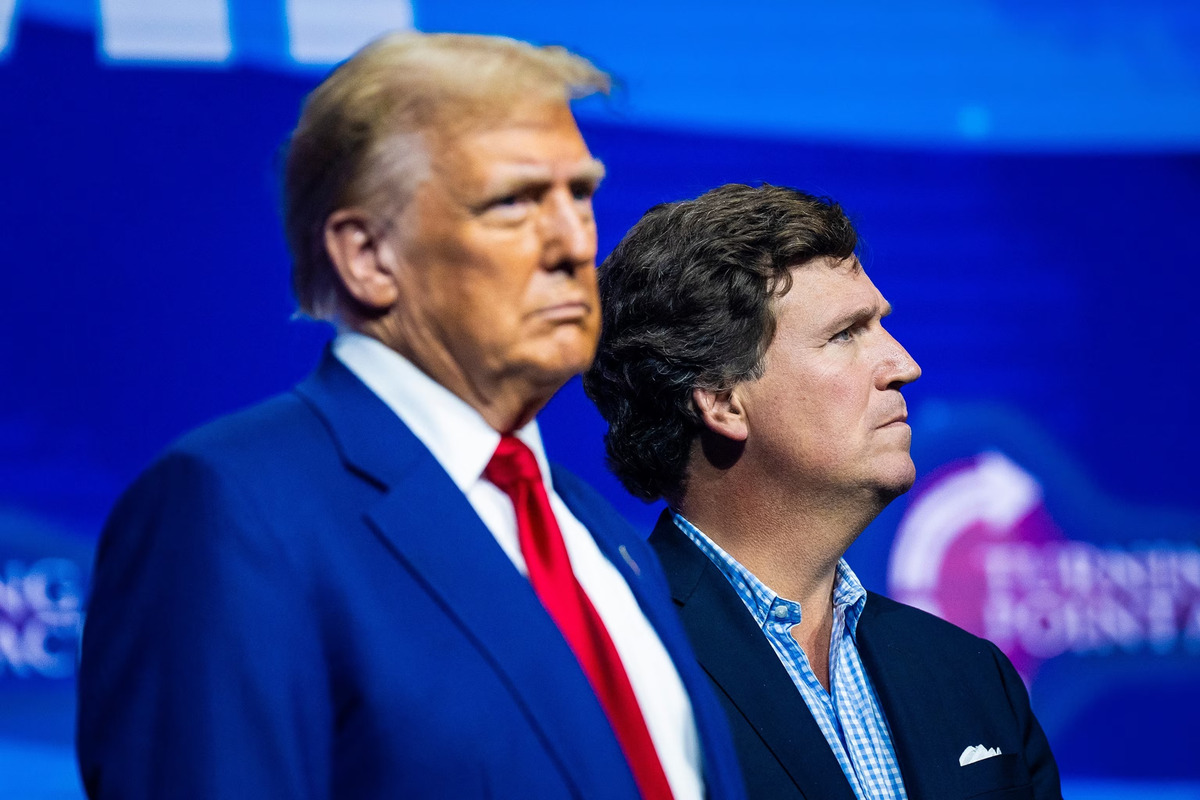
In American political media, few subjects have been treated with more caution — more deliberate, almost ritualistic deference — than U.S. support for Israel. For decades, unconditional backing of the Jewish state has functioned less like a policy position and more like a loyalty oath, particularly on the American right. To question it was to invite accusations of antisemitism, to be dismissed as a fringe figure, or worse, to be politically destroyed.
That may be changing. And the man potentially changing it is Tucker Carlson.
Carlson’s statement was blunt to the point of being almost shocking in the context of mainstream conservative discourse. “Not one more dollar,” he declared. “Not one more fighter jet or bomb or missile defense system or ammunition of any kind.” His reasoning? That Israel is “aggressively acting against our interest.”
But here’s where Carlson’s framing becomes genuinely interesting — and strategically deliberate. He was careful to draw a sharp distinction between treating Israel as an “enemy” versus treating it as a normal ally. He isn’t calling for hostility. He’s calling for normality. A “healthy conventional relationship,” in his words, where Israel “can pay its own bills and fund its own military.”
That framing is important. It strips the argument of ideological venom and replaces it with something far more difficult to dismiss: cold, transactional logic.
To understand the weight of this moment, you have to understand how deeply embedded unconditional Israel support has been in the conservative movement’s DNA — particularly since the 1970s and the rise of the evangelical-political alliance. Supporting Israel has long been considered both a moral imperative and a strategic necessity on the right. Politicians who wavered faced brutal consequences at the ballot box and in the donor class.

Carlson is one of the most-watched and most-followed media figures in the United States. He commands an audience of millions across television, podcast, and social media platforms. When someone of that reach makes this kind of statement, it doesn’t just reflect public opinion — it *shapes* it. He has a documented history of moving the Overton window on issues that were previously considered untouchable, from interventionist foreign policy to immigration to media trust.
This statement represents arguably the most consequential challenge to the bipartisan consensus on Israel aid ever made by a major right-wing media figure. Not a fringe blogger. Not an academic. Not a third-party politician with any audience. Tucker Carlson.
Carlson’s comments don’t exist in a vacuum. They arrive at a moment when American public opinion — particularly among younger voters across the political spectrum — has shifted meaningfully on the question of unconditional support for Israel, driven in large part by the humanitarian catastrophe unfolding in Gaza since the October 7th attacks and Israel’s subsequent military campaign.
Polling has consistently shown growing discomfort among Americans of all political backgrounds with the scale and nature of U.S. military aid, particularly as civilian casualty numbers climbed into the tens of thousands. Even within the Democratic Party — historically a bedrock of pro-Israel sentiment — fissures have appeared that would have been unthinkable a decade ago.
The right, however, had largely remained immune to this shift — or at least publicly silent about it. Carlson’s statement breaks that silence loudly.
At its core, Carlson’s position is a nationalist one, rooted in a specific worldview that has increasingly defined his brand of conservatism: America First, in the most literal sense.
His argument rests on a few interlocking claims. First, that the U.S. receives insufficient strategic return on its investment in Israel relative to the political, diplomatic, and financial costs it bears. Second, that the relationship as currently structured is not a partnership between equals — it’s a one-way transfer of resources with few enforceable conditions. And third, that a truly healthy alliance, one built to last, should be able to withstand honest scrutiny and real negotiation.
None of these arguments are inherently antisemitic. They are, in fact, arguments that serious foreign policy analysts across the political spectrum have made for years — though rarely with Carlson’s megaphone or bluntness.
Predictably, Carlson’s comments have been met with fierce criticism. He has been accused of abandoning a key American ally, of feeding antisemitic narratives, and of undermining Western solidarity. These critiques are not new — they are the standard weapons deployed against anyone who questions the relationship.
What’s different this time is the audience receiving the message. Carlson’s viewers are not progressive college students or antiwar leftists. They are conservative, often evangelical, often deeply patriotic Americans who have been told their entire lives that supporting Israel is part of what it means to love America. When their trusted voice tells them otherwise — and frames it not as hostility but as common sense — the argument lands very differently.
That’s what makes this moment genuinely volatile in the best sense of the word. It has the potential to fracture a decades-old consensus from within the coalition that has most strongly upheld it.
Whether Carlson’s position remains a lonely outlier or becomes the seed of a broader conservative realignment on Israel policy remains to be seen. Much will depend on how Republican politicians respond — whether they quietly begin echoing his logic or double down on unconditional support as a point of differentiation.
What is clear is that the conversation has changed. The wall of silence has a crack in it. And in politics, as in architecture, that’s often all it takes.
Tucker Carlson may be wrong. He may be right. He may be somewhere in between — raising legitimate questions through an imperfect lens. But one thing is certain: he said what millions of Americans were already thinking, in a language their political tribe could actually hear.
That alone makes it one of the most significant media moments in U.S. foreign policy discourse in a very long time. 
By Roberto Casseli

Related Posts