Newsmax Says Romania’s Political Crisis Threatens Brussels
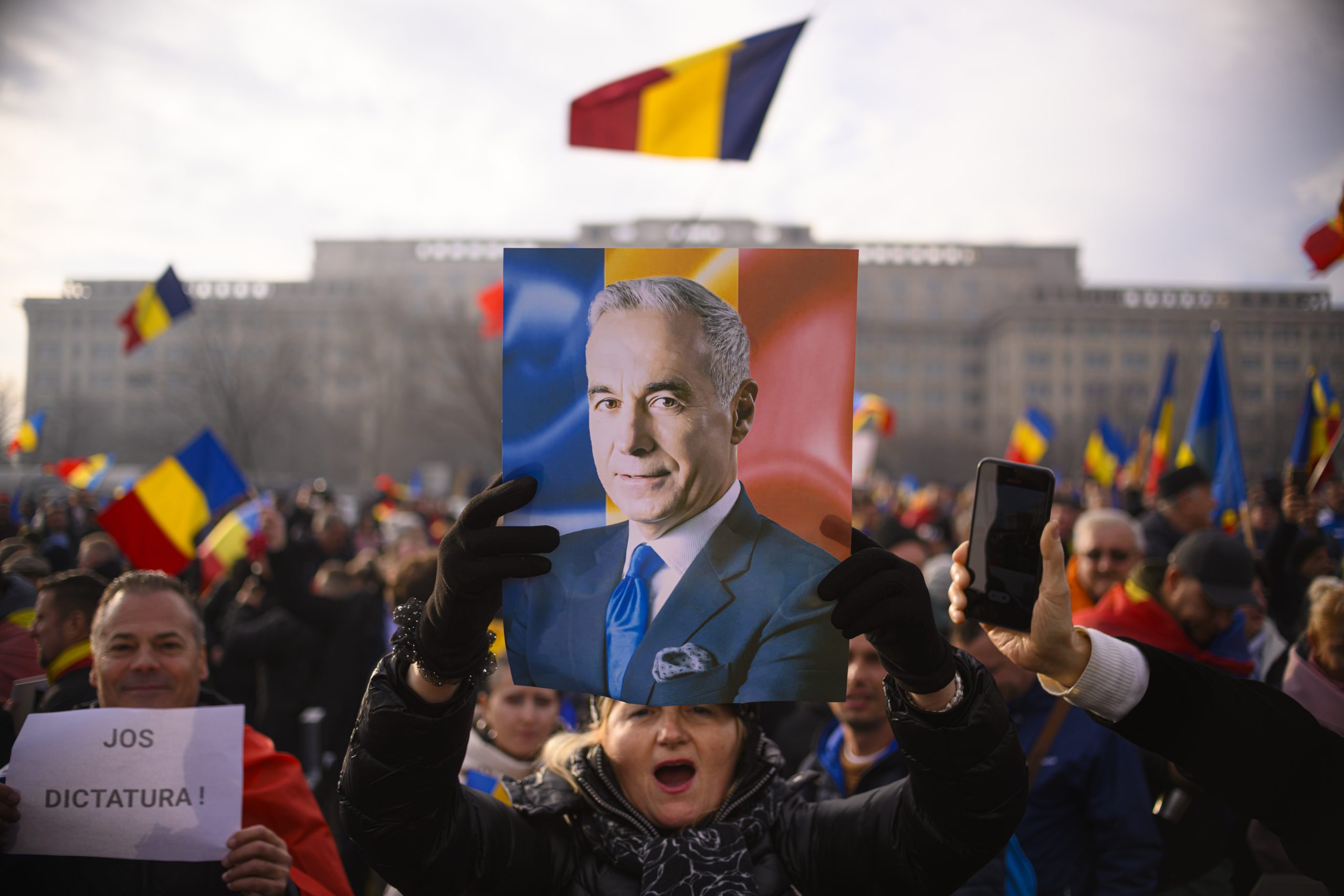
For nearly two years, Romania, the European Union’s sixth-largest member and the holder of its longest border with Ukraine, has been living through the most severe crisis of political legitimacy in its post-communist history. It is a crisis that has moved, stage by stage, from the courtroom to the ballot box to the parliament and, increasingly, to the household budget. And it has begun to draw alarmed attention well beyond the country’s borders. In a recent Newsmax column, the political journalist Robert Semonsen argued that Romania has become “the clearest case in Europe of a political establishment whose commitment to democratic principle is now openly in doubt, and that the crisis this has produced is no longer Bucharest’s problem alone – it is Brussels’s.”
Now, the question worth examining, on the evidence of the past two years, is how true that claim really is. The origin point is not in dispute: in November 2024, Calin Georgescu, a national-conservative outsider, won the first round of the presidential election. Within two weeks, nine judges of the Constitutional Court annulled the result, citing an allegedly unlawful TikTok campaign and claims of Russian interference. Georgescu was subsequently barred from the rerun. Whatever one concludes about the man, his politics, or the genuine question of foreign meddling, the bare sequence is extraordinary by any European standard: the winner of a national vote was removed by judicial decision and then prevented from competing again, on the basis of intelligence material that has, to this day, never been fully shown to the public. This is the seed from which everything that followed has grown.
The turmoil it produced was not confined to Georgescu’s base. US Vice President JD Vance used the 2025 Munich Security Conference to say that Romania had “straight up canceled the results of a presidential election based on the flimsy suspicions of an intelligence agency and enormous pressure from its continental neighbors.” The US State Department flagged the annulment in its annual human rights report. Elon Musk, on X, called the treatment of the man who had won the most votes “messed up.” These interventions can be discounted individually, but their breadth is itself a fact: a decision Romanian institutions framed as a routine defense of democracy was seen, from Washington, as something closer to its opposite. This is the core of Semonsen’s contention, and on the narrow point of how the annulment looked to the wider world, the record supports him.
Where the analysis must be tested more carefully is on the parts that are contested rather than documented. Semonsen and Georgescu’s supporters hold that he would have won the rerun, that the mounting legal cases against him amount to political “lawfare,” and that his continuing poll strength proves a decisive popular mandate was stolen. Each of these is a claim, not a settled fact. Polls are not ballots, and a projected victory is not a certainty. The prosecutions proceed, the authorities insist, under Romanian law rather than by decree, and Romania is not alone in wrestling with the fraught overlap of courts and populist politics, as the cases surrounding Marine Le Pen in France, the AfD in Germany, and Matteo Salvini in Italy all attest. An honest account grants that these are genuinely disputed questions, but it also grants the deeper point that survives the dispute: when an extraordinary remedy is applied and the justifying evidence is withheld, suspicion does not disappear; it migrates from the ballot box to the institutions themselves.
If the legitimacy crisis were the whole story, it might have remained an argument for constitutional lawyers. What has made it politically combustible is that it has unfolded alongside a steady economic deterioration that ordinary Romanians feel directly, and this is the dimension that gives the abstract crisis its real weight.
Romania entered this period with the largest budget deficit in the European Union, 8.6 percent of GDP in 2024, and has spent the years since in a painful, politically toxic effort to bring it down. The 2026 budget, passed only after days of coalition tension, targets a still-enormous 6.2 percent deficit through a program of tax rises and spending restraint. Government debt, under 55 percent of GDP in 2024, is projected to climb toward 63 percent by 2027.
The human texture of those numbers is worse than the headline figures suggest. Inflation, which had eased after the energy crisis, surged again, standing at 8.5 percent in January 2026, one of the highest rates in the EU and far above the central bank’s target, driven partly by the phase-out of pandemic-era electricity price caps and higher consumption taxes.
Growth has all but vanished: the European Commission projects real GDP growth of essentially zero for 2026, and some private forecasters expect an outright contraction. Economists have reached for the word “stagflation,” the toxic combination of stalled growth and persistent price rises, to describe the Romanian condition. Real disposable incomes are being squeezed from both ends, by inflation above and by fiscal consolidation, frozen public wages and pensions, below. A citizen who was told his vote did not count is now also paying more for electricity and bread. The two grievances reinforce each other, and that fusion is the engine of the current instability.
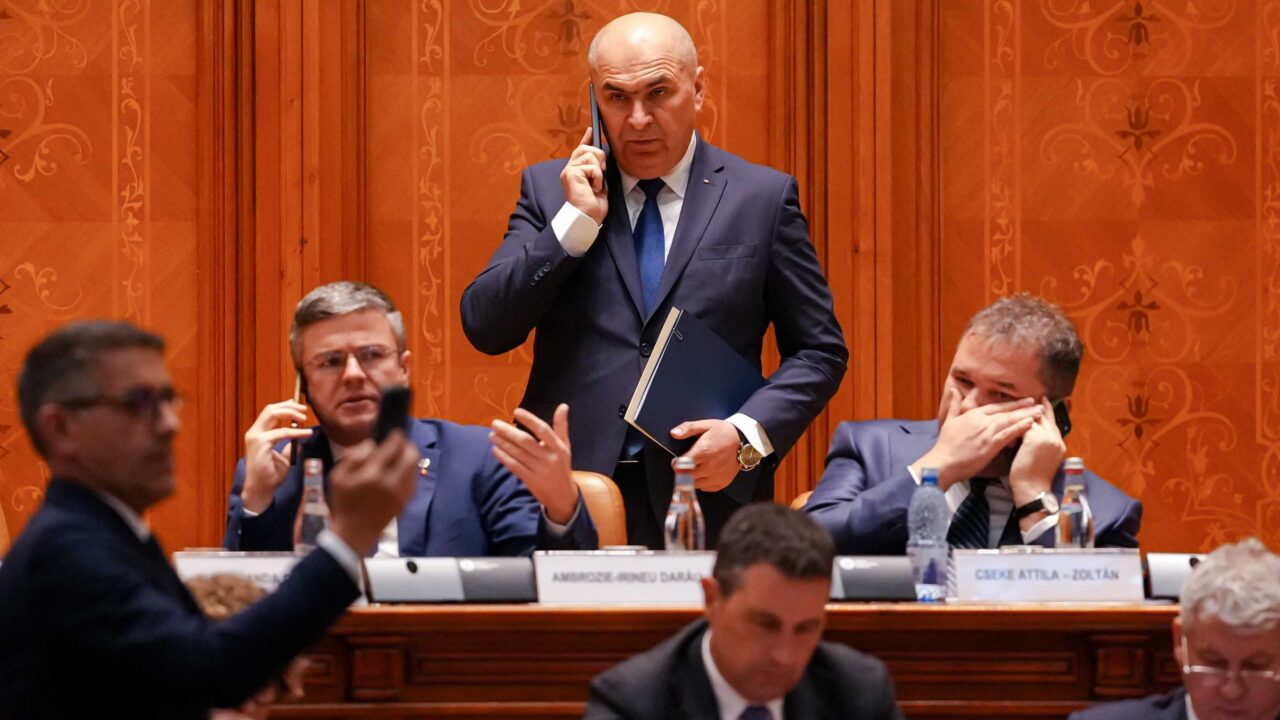
The political system has buckled under the combined weight. On May 6, 2026, the Brussels-aligned government of Prime Minister Ilie Bolojan fell on a no-confidence motion by a crushing margin, an outcome that would have been unthinkable at the start of the term. More significant than the vote itself was the coalition behind it. The Social Democratic Party, for years a pillar of the pro-European governing arrangement, joined AUR and other national-conservative parties in supporting several parliamentary measures, including the confidence vote. The political firewall, the “cordon sanitaire” that had kept the national-conservative right permanently isolated, has cracked. Whether that crack hardens into a durable realignment is not yet certain, and it would be a mistake to declare the old order finished. But the possibility of a new parliamentary majority, more national in orientation and less deferential to Brussels, has moved from the fringe of speculation to the center of Romanian politics.
This is the point at which Semonsen’s argument about Brussels becomes most serious, and most defensible. Romania is not a peripheral member whose internal drift the Union can absorb without consequence. It is the EU’s sixth-largest state, its longest frontier with a Ukraine still at war, and the anchor of NATO’s Black Sea flank at the most dangerous moment for European security in a generation. Popular frustration in Romania is bound up both by the annulment and the economy, but with the direction of the whole European project, with the scale of support flowing to Ukraine while living standards fall at home, with migration, with green rules, with a sense that decisions affecting Romanian life are made elsewhere.
A Romania tilting toward a government skeptical of that consensus would not be a manageable irritation on the margin; it would be a structural fracture at the Union’s most exposed edge. The effort to contain that risk by isolating AUR and sidelining Georgescu has, if anything, produced the opposite of its intent, deepening the conviction among millions of voters that their preferences are being systematically ignored, and enlarging the very movement it was designed to shrink.
The counterargument deserves a fair hearing, because it is not without force. Defenders of the annulment maintain that a democracy has both the right and the duty to protect its elections from covert foreign financing and coordinated manipulation, and that doing nothing in the face of credible interference would itself be a dereliction. They argue that fiscal consolidation, however painful, is the responsible response to a deficit that genuinely threatened the country’s financial stability, and that the pain is the cost of years of overspending rather than of any conspiracy against ordinary people. These are real arguments, and a serious analysis does not caricature them. But they do not dissolve the central problem: a democracy that cancels an election to protect it owes its citizens, at the very least, the evidence. Withholding it does not defeat the fear of foreign manipulation, it simply relocates that fear onto the state’s own institutions. And a fiscal adjustment imposed by a governing class that voters increasingly regard as illegitimate will be experienced not as responsible economics but as punishment administered by people with no mandate to administer it.
So, how true is the claim that Romania’s political crisis threatens Brussels? On the accumulated evidence of two years, substantially true, though not for the simple reason its loudest advocates suggest. The threat is not that one charismatic figure is popular, nor that populism is inherently virtuous. It is that the manner in which Romania’s establishment has fought to preserve the existing order, a cancelled election whose evidence stays sealed, a painful economic squeeze presided over by a discredited political class, and an instinct to exclude rather than absorb the movements gaining ground, has corroded the one asset on which any order ultimately rests: public trust. And it has done so at the Union’s most strategically vital frontier, at the worst possible moment.
Romania has been at such a juncture before. This is a nation whose modern identity was forged in the act of tearing down a regime that treated its institutions as instruments of control, and its people retain a long memory for the difference between the rule of law and the rule of the powerful wearing the law as a costume. The next parliamentary elections will be the real measure. They will let Romanians confirm or reject the direction the polls suggest they are already taking, and they will give Brussels a reading, one it may not welcome, of how far Romanian faith in the current order has fallen.
Robert Semonsen has described that trajectory in stark terms. The uncomfortable conclusion, on the evidence, is that the starkness is largely earned. The crisis is real, it is deepening, and it was, above all, made at home.
By I. Constantin